Repair TipsLocal Guides
Why does my drain keep clogging no matter what I do
If your drain keeps clogging in Houston no matter what you pour down it, the blockage isn't where you think. Here are the real causes and how to fix them.
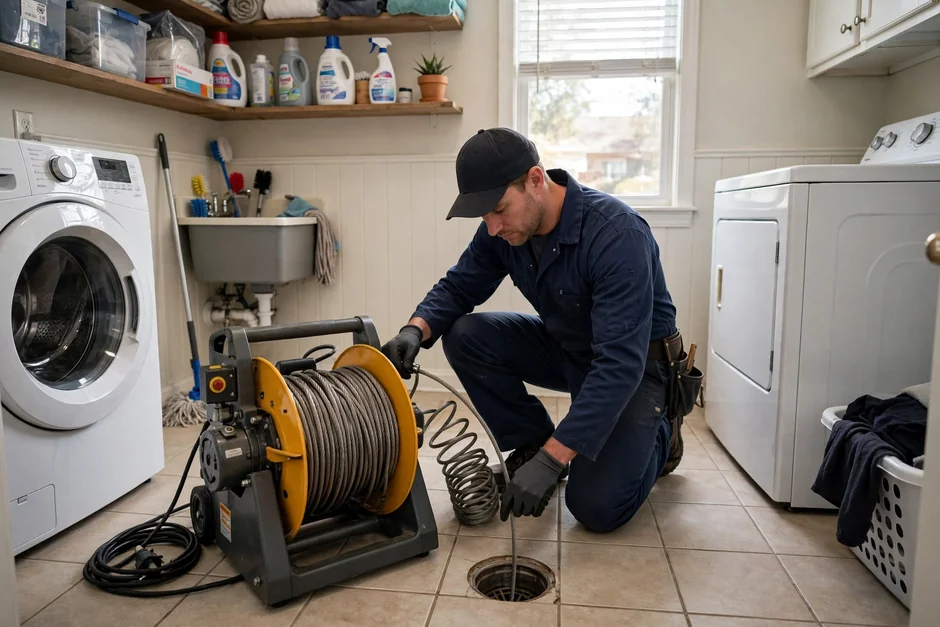
Your drain keeps clogging because the blockage is almost never in the drain you're treating - it's further down the line, in a section of pipe you can't see or reach with a plunger. In Houston, that hidden section is usually a belly in the line, a root intrusion, or decades of cast iron scale that grabs every bit of grease and hair that passes through. This post breaks down the real reasons a drain keeps clogging Houston homeowners fight every week, what our crews find when we run a camera, and the steps that actually stop the cycle.
The short answer: your clog isn't where you think it is
A recurring drain clog in Houston is a symptom of a pipe problem, not a debris problem. When a drain backs up, clears with a plunger, and backs up again two weeks later, the pipe isn't fully open - something is catching material and rebuilding the blockage every time you use the fixture. That's the difference between a one-time clog and a recurring drain clog Houston residents call us about.
What you're clearing is the tip of the iceberg. The actual restriction sits 10, 20, or 40 feet down the line, past the trap and past the fixture drain. A plunger moves water; it doesn't remove scale, roots, or a sagging pipe section.
Why does my drain keep clogging in Houston TX?
Houston's combination of aging cast iron drain lines, expansive clay soil, and year-round root growth creates recurring clogs that most other cities don't see at the same rate. The four causes below account for nearly every repeat clog we clear in this city.
1. Cast iron scale and corrosion
Homes built before 1980 in neighborhoods like the Heights, Montrose, and Garden Oaks often still have original cast iron drain lines. After 40 to 60 years, the inside of that pipe roughens and narrows. A 4-inch cast iron line can close down to 2 inches or less. Grease and soap scum catch on the rough surface, and the clog returns every few weeks no matter how much you snake it.
2. Tree roots in the lateral line
Houston's live oaks, pecans, and crepe myrtles send roots toward moisture, and a sewer lateral is a steady moisture source. A hairline crack or a loose joint is enough for a root to enter. Once inside, roots grow into a mat that catches paper and waste. Snaking cuts the roots back, but they regrow - usually within 6 to 18 months.
3. Bellies and sagging pipe sections
Houston's clay soil shifts with wet and dry cycles. That movement can create a low spot - a belly - where water and solids sit instead of draining. Every flush adds to the pile until the line backs up. A camera inspection is the only way to confirm a belly; snaking a sagging line just pokes a hole through the debris.
4. Incorrect slope or old repairs
We find this often in homes that had a previous repair done cheaply. A section replaced with too little fall, or a joint that wasn't properly aligned, creates a permanent catch point. The drain works fine for a while, then clogs on a schedule.
The Houston-specific culprits nobody warns you about
Houston's climate and soil add two clogging factors that homeowners moving from other parts of the country don't expect. The first is root activity that never really stops. Our mild winters mean roots stay active almost year-round, so a root cut in November can be regrowing by February.
The second is the soil itself. Houston's expansive clay swells when wet and shrinks when dry, and that cycle stresses older pipes at the joints. If you've noticed your drain clogs more after a heavy rain or a dry spell, soil movement is likely part of the story. Homeowners across Plumbing Houston TX deal with this constantly, and it's why we run a camera before recommending any permanent fix.
Older neighborhoods carry more of this risk. In areas with 1950s and 1960s housing stock, the drain lines have been through 60-plus years of soil movement. If you're in one of these areas and your drain clogs every few months, the pipe itself is usually the issue, not your habits.
What causes recurring drain clogs in Houston TX?
Beyond pipe condition, everyday use patterns determine how fast a restricted line clogs. These are the causes we see most often when a customer tells us the drain keeps clogging no matter what they do.
- Grease and cooking oil: Even small amounts poured down the kitchen sink cool and stick to pipe walls. Over months, that layer narrows the line.
- Hair and soap scum: Bathroom drains bind hair with soap residue into a mat that a plunger can't move.
- Paper products: "Flushable" wipes and paper towels don't break down like toilet paper. They catch on scale and roots.
- Food scraps and coffee grounds: These settle in a belly or a low-slope section and build up.
- Heavy use on an already-restricted line: A line that's 60% blocked works fine until a dinner party or a full house pushes it over.
If your kitchen sink is the repeat offender, that's a specific pattern. Recurring kitchen sink clog Houston Texas homeowners report usually traces back to grease buildup combined with a long, flat run to the main line. We cover that repair path in more detail under sink repair Houston TX.
Why store-bought drain cleaner makes it worse
Chemical drain cleaners don't fix recurring clogs, and on older pipes they can cause real damage. Most use caustic soda or sulfuric acid to dissolve organic material. They eat through hair and grease, but they also attack cast iron, galvanized steel, and older plastic. Repeated use thins pipe walls and accelerates corrosion.
They also only clear a channel through the clog. The restriction remains, so the drain clogs again in weeks. And if the line is fully blocked, the chemical sits in the pipe and can damage the trap or splash back when you run water. We've pulled traps that were nearly eaten through by repeated cleaner use.
Common mistakes that keep your drain clogging
The habits below are the ones we see most often when a customer has tried everything and the drain still clogs. Fixing them won't repair a damaged pipe, but they'll stop you from making a bad line worse.
- Snaking the same spot over and over. A hand snake clears the clog but doesn't remove scale or roots. The line stays restricted.
- Using chemical cleaner as maintenance. It damages pipes and doesn't address the cause.
- Ignoring slow drains. A drain that drains slowly is already partially blocked. Waiting for a full backup means the clog has grown.
- Flushing wipes and paper towels. They don't break down and they catch on every rough spot in the line.
- Pouring grease down the sink. Even "just a little" adds up over months.
- Skipping the camera inspection. Without seeing the pipe, you're guessing at the cause.
If you've made these mistakes and the drain is still backing up, the next step is a proper inspection. Our drain cleaning Houston TX service starts with a camera run so we know exactly what we're dealing with before we clear anything.
How to stop drains from clogging in Houston
Stopping recurring clogs comes down to fixing the pipe condition and changing the habits that feed it. Here's the sequence we recommend to homeowners who want the problem gone, not just cleared.
Step 1: Get a camera inspection
A camera run tells you whether the line has scale, roots, a belly, or a break. It's the only way to know which fix is right. Without it, you're paying to clear a clog that will return.
Step 2: Clear the line properly
For grease, scale, and soft debris, hydro jetting at 3,000 to 4,000 PSI scours the pipe wall back to bare metal. For roots, a cutting tool removes the intrusion. Snaking alone doesn't do either.
Step 3: Repair or replace what's damaged
If the camera shows a belly, a cracked section, or root intrusion through a joint, clearing the line is temporary. The permanent fix is a spot repair or, in older homes, a larger section of sewer line repair Houston TX. We tell you which one the camera supports before any work starts.
Step 4: Change the daily habits
No grease down the sink, no wipes down the toilet, and a hair catcher in every shower. These cost almost nothing and they extend the life of every repair.
Step 5: Schedule maintenance if you have older pipes
Homes with cast iron lines benefit from a yearly or every-other-year jetting to remove scale before it becomes a blockage. On a 60-year-old line, that maintenance is cheaper than an emergency call.
When to call a professional
Call a professional when the same drain clogs more than twice in a year, when multiple fixtures back up at once, or when you smell sewage in the yard or the house. Those are signs the problem is in the main line, not a single fixture.
At El Primo Lalo Plumbing, we run a camera first, show you what's on the screen, and give you a free estimate before we clear or repair anything. If the line only needs jetting, that's what we do. If it needs a repair, we explain why. We don't sell a replacement when a cleaning will solve it, and we don't clear a line and leave a known root problem to come back next season.
Frequently Asked Questions
Why does my drain keep clogging no matter what I do in Houston?
The clog is almost always deeper in the line than the fixture you're treating - usually scale, roots, or a sagging pipe section. Clearing the visible clog doesn't remove the restriction, so it rebuilds within weeks. A camera inspection identifies the actual cause.
What causes recurring drain clogs in Houston TX?
Cast iron scale in pre-1980 homes, tree roots entering cracked joints, soil movement creating bellies, and grease or hair catching on rough pipe walls. Houston's clay soil and year-round root growth make all four more common here than in most cities.
Does hydro jetting stop clogs in Houston Texas?
Hydro jetting removes grease, scale, and soft debris from the pipe wall, which stops clogs caused by buildup. It does not fix a belly, a break, or root intrusion through a joint - those need a repair. On a maintained line, jetting keeps the line clear longer than snaking, because it removes the buildup instead of just poking a hole through it.
Who should I call for a clogged drain in Houston?
Call a licensed plumbing company that runs a camera before clearing the line. A company that only snakes the drain will clear it temporarily. Ask for the camera inspection and a free estimate before work begins.
What should a drain clearing visit include?
A camera inspection to find the cause, the clearing itself, and a free estimate before any work starts. Ask what the visit covers — clearing alone is temporary if the line has scale, roots, or a belly.
Get help with Plumbing in Houston
If your drain keeps backing up, we'll run a camera, show you the cause, and clear or repair it the same visit. Call El Primo Lalo Plumbing at (346) 776-8560 and we'll get your line moving again.
We take calls Monday through Sunday, 7:00 AM to 10:00 PM.
Sources
- Houston Public Works — Drinking Water Operations
- El Primo Lalo Plumbing — Drain Cleaning
- El Primo Lalo Plumbing — Sewer Line Cleaning