Written scope
what we found and what we will fix
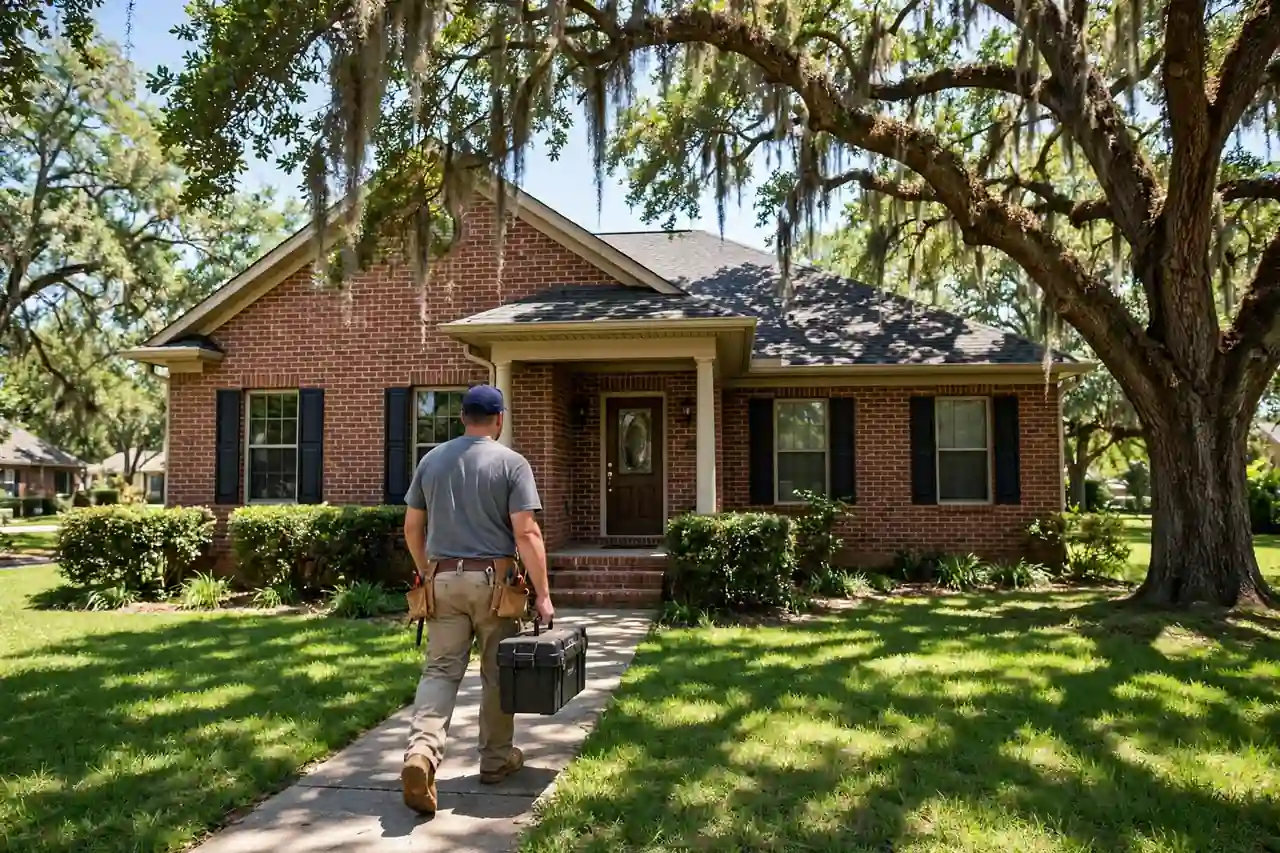
Residential plumbing in Houston is the everyday work across every housing era, from 1940s pier-and-beam bungalows to 1980s slab ranches to new PEX builds. Houston homes range from 1940s pier-and-beam bungalows to 1980s slab ranches to new PEX builds, and each era fails differently. El Primo Lalo Plumbing handles the everyday work across all of them: repairs, fixture installs, leak finding, drain clearing and water heaters, with a free estimate before we start.
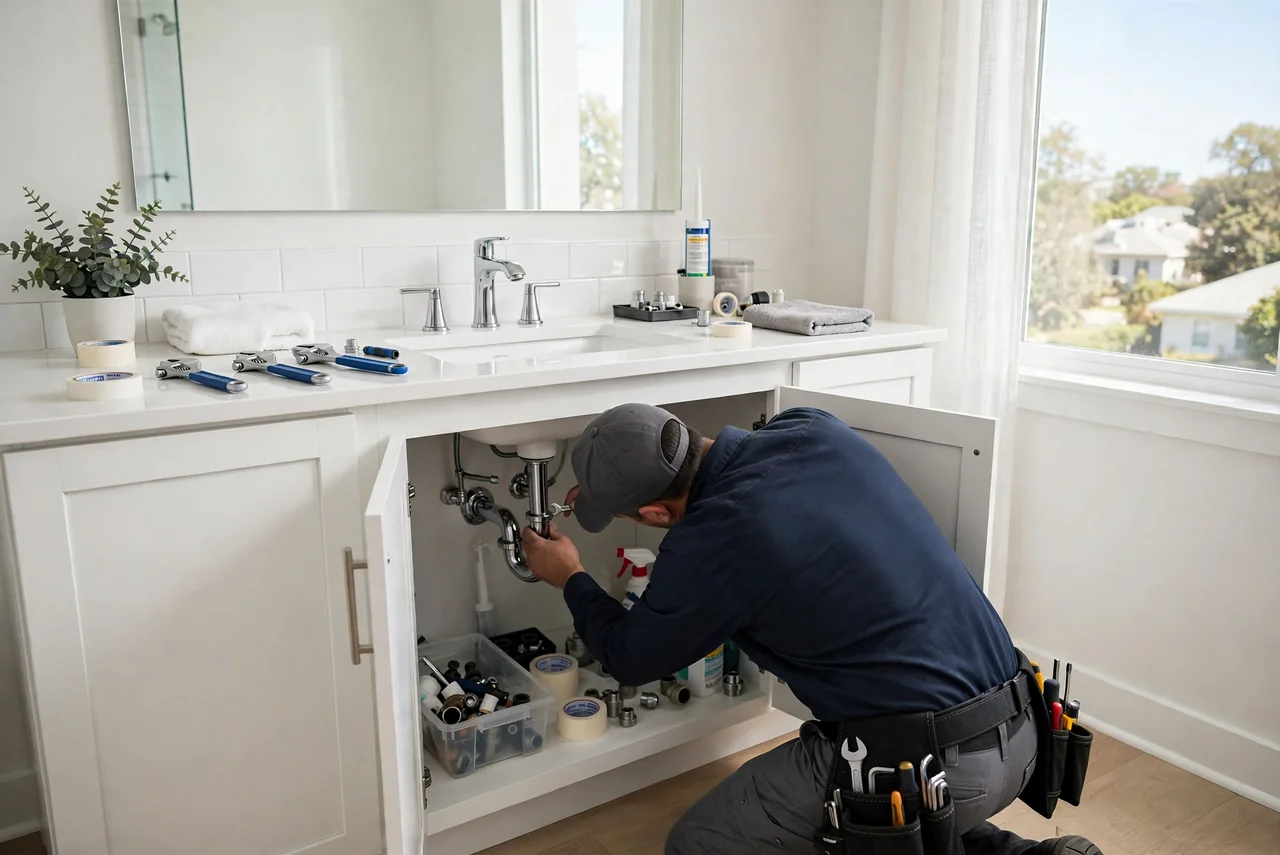
Every call includes a diagnosis, a written estimate before work, and a test of the repair before we leave. Some jobs need parts or permits beyond the base price, and we tell you that upfront instead of adding it to the bill later.
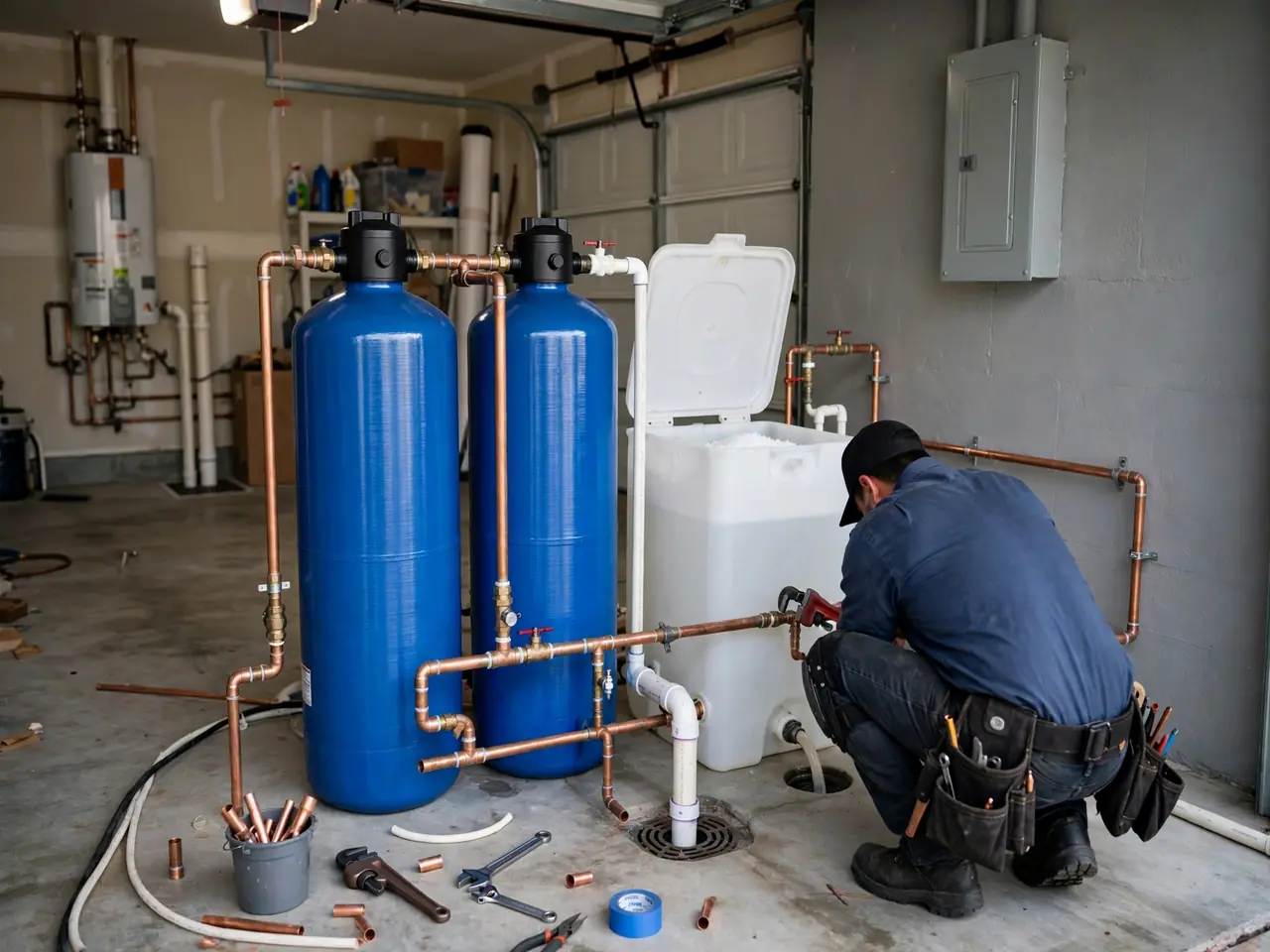
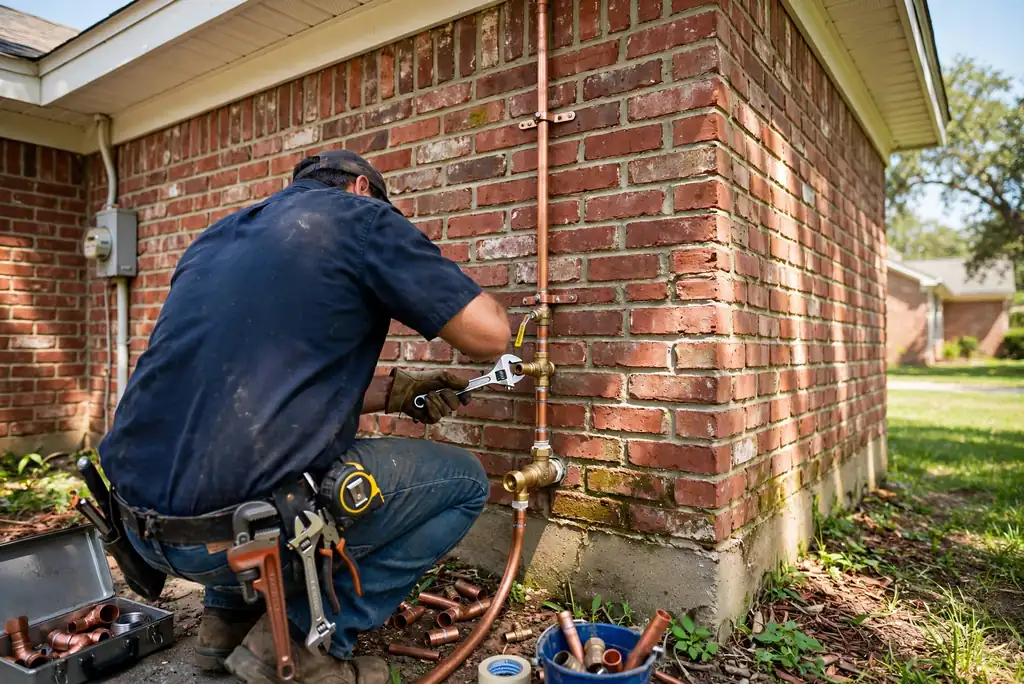
We handle the water and drain systems in houses across Houston, from dripping faucets to full repipes. You get a diagnosis, a written estimate, and a repair that is tested before we go.
We also serve small commercial properties that need the same code-correct work with scheduling that respects business hours. Property managers get one point of contact and clear pricing.
A residential plumber in Houston has to read the house first. Pre-1960s homes usually carry galvanised supply lines and cast-iron drains under a wood floor. Homes from the 1960s to the 1980s sit on slab-on-grade with copper water lines under the concrete and cast-iron drains. Newer builds run PEX and PVC. The material decides the repair, the tool and the permit.
Houston enforces the 2021 Uniform Plumbing Code with Houston Amendments (Ordinance 2023-907, effective 1 January 2024). Bigger jobs such as water heater replacement, whole-house repiping, sewer replacement and gas work need a permit and an inspection. Smaller repairs do not. We tell you which side of that line your job falls on before we start.
Read the house first. The era of the pipes decides the repair.
No mystery, no waiting around all day. Here is the sequence from your first call to the final test, whether it is a clogged main drain or a full repipe.
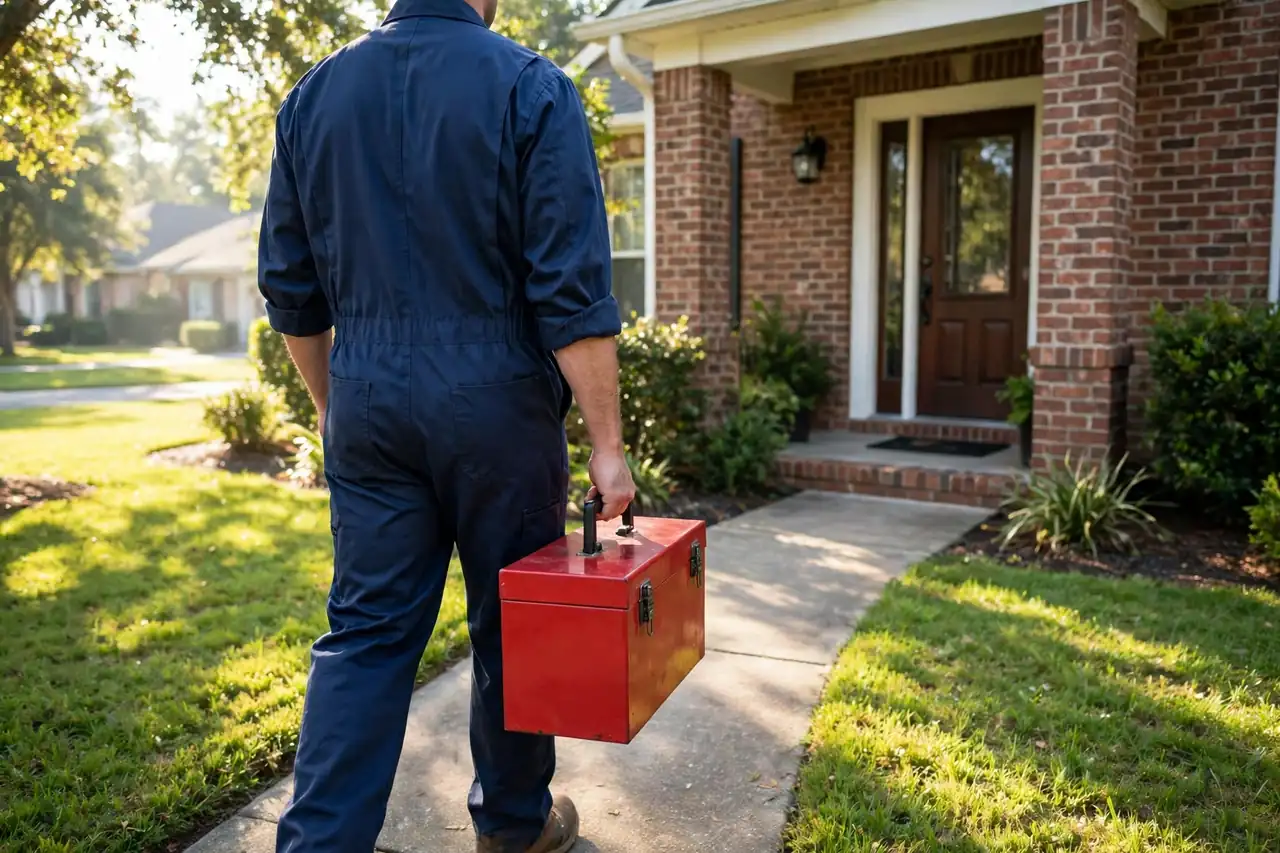
You call (346) 776-8560 and tell us what is happening: water where it should not be, no hot water, a drain that gurgles. We ask a few questions to sort an emergency from a routine call and give you a arrival window, usually two hours or less.
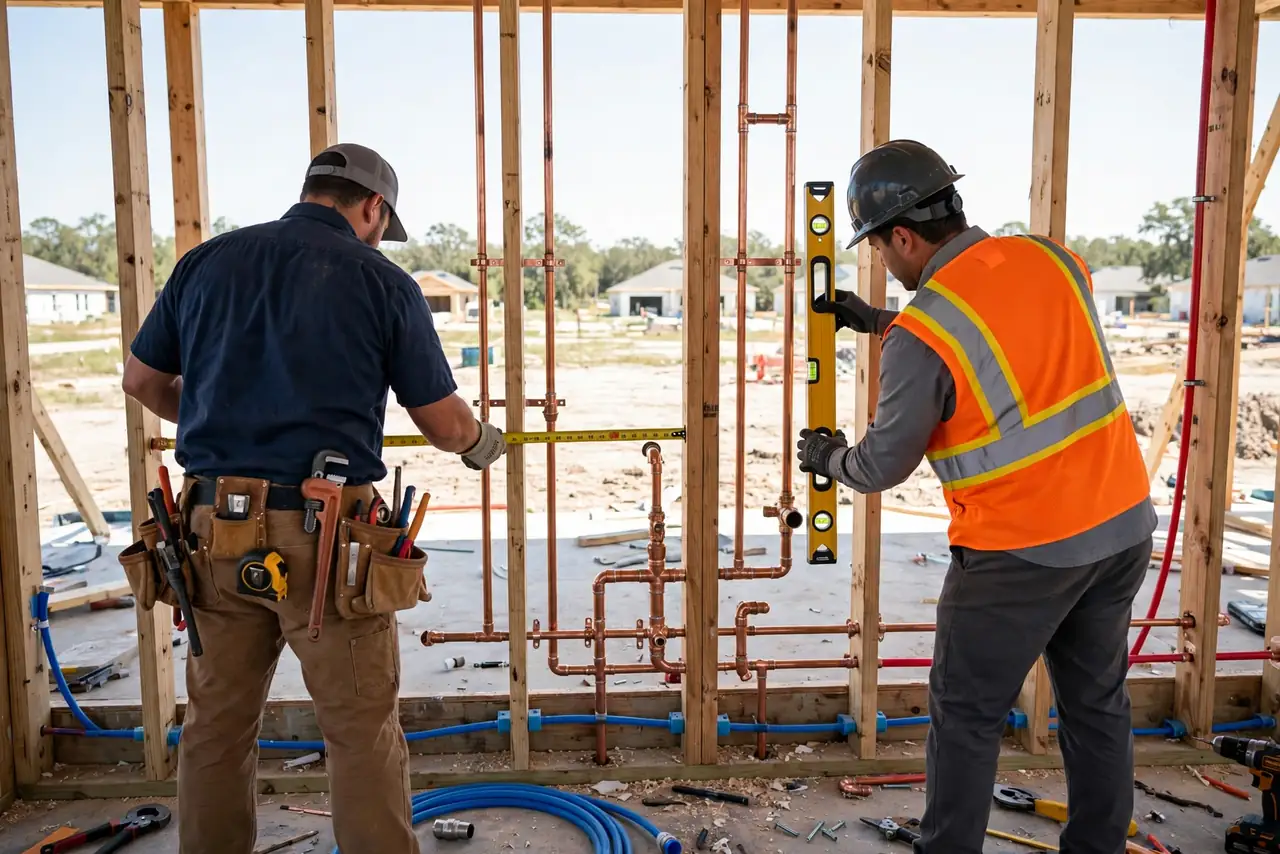
The technician inspects the fixture, line, or water heater, then uses the right tool for the symptom. That might be a leak detection microphone for a slab leak, a sewer camera for a recurring backup, or a plumber's auger for a stubborn trap. Diagnosis takes 20-45 minutes.
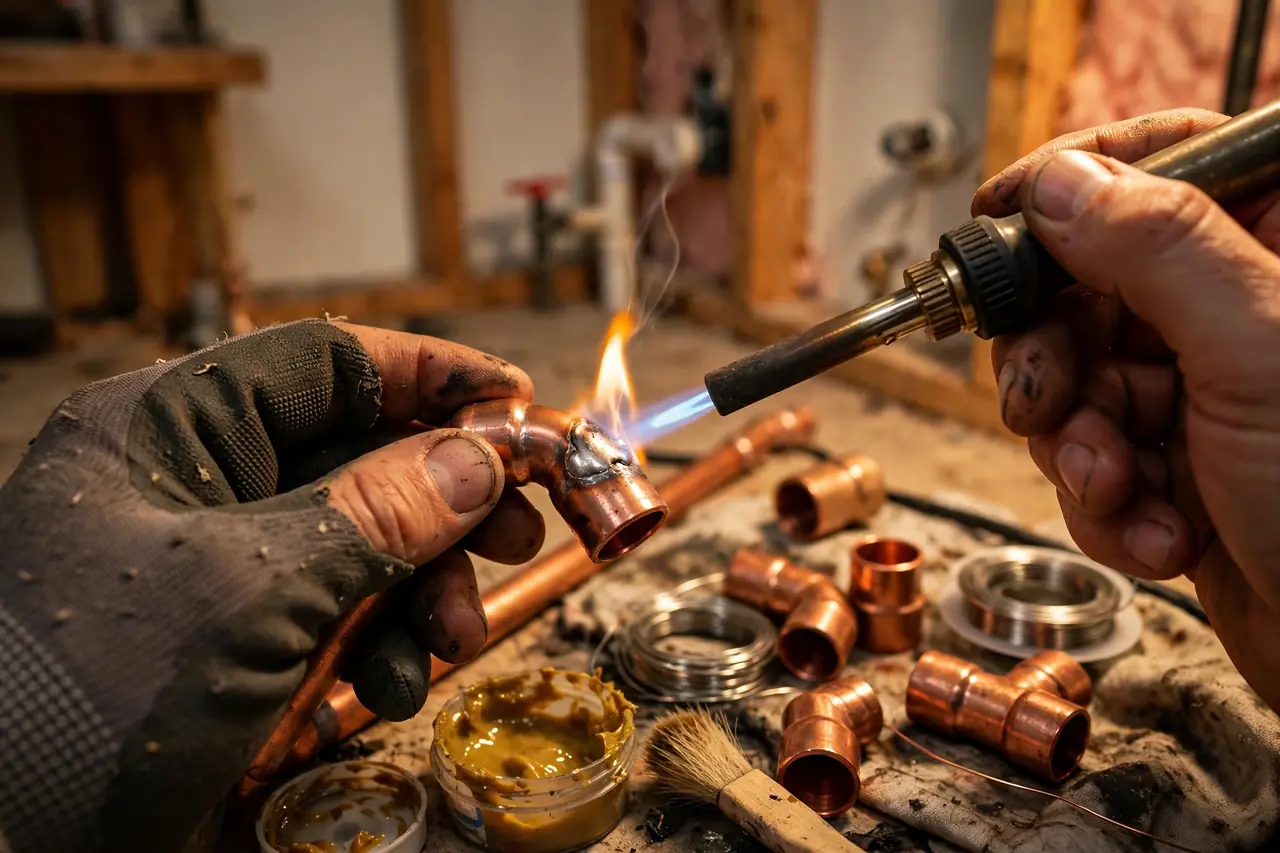
You get a written estimate for the repair with the parts and labor itemized. If the job is bigger than expected, like a corroded galvanized pipe run that needs replacement instead of a patch, we explain why and quote the larger scope before touching anything.

We do the work, then test it under real conditions: run the water, flush the line, check the water heater for sediment and proper venting. A water heater install takes two to four hours; a faucet or toilet swap takes under an hour. We do not leave until it holds.
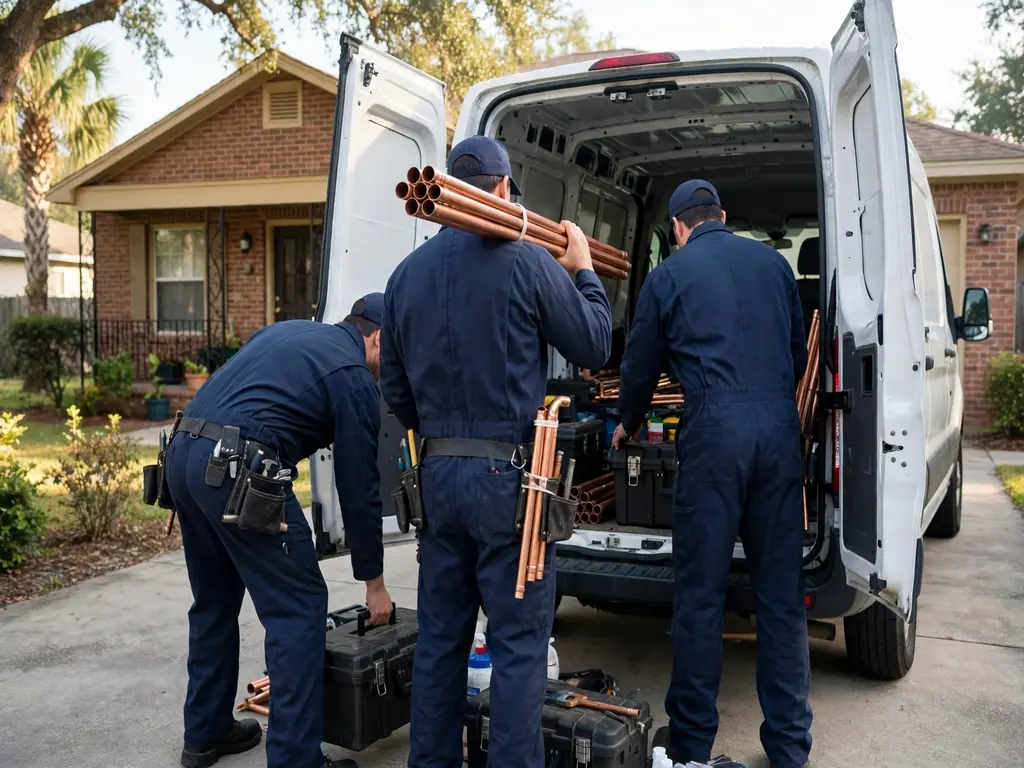
Before we go, we show you what we fixed, point out the shutoff valves, and note anything worth watching, like a slow drain in a second bathroom. We haul off the old parts and leave the area dry and swept.
Listens for the sound of pressurized water escaping a pipe under a slab or behind a wall, so we can pinpoint a leak without demolition.
Inspects the inside of drain and sewer lines to find root intrusion, cracks, bellies, and blockages before we choose a repair method.
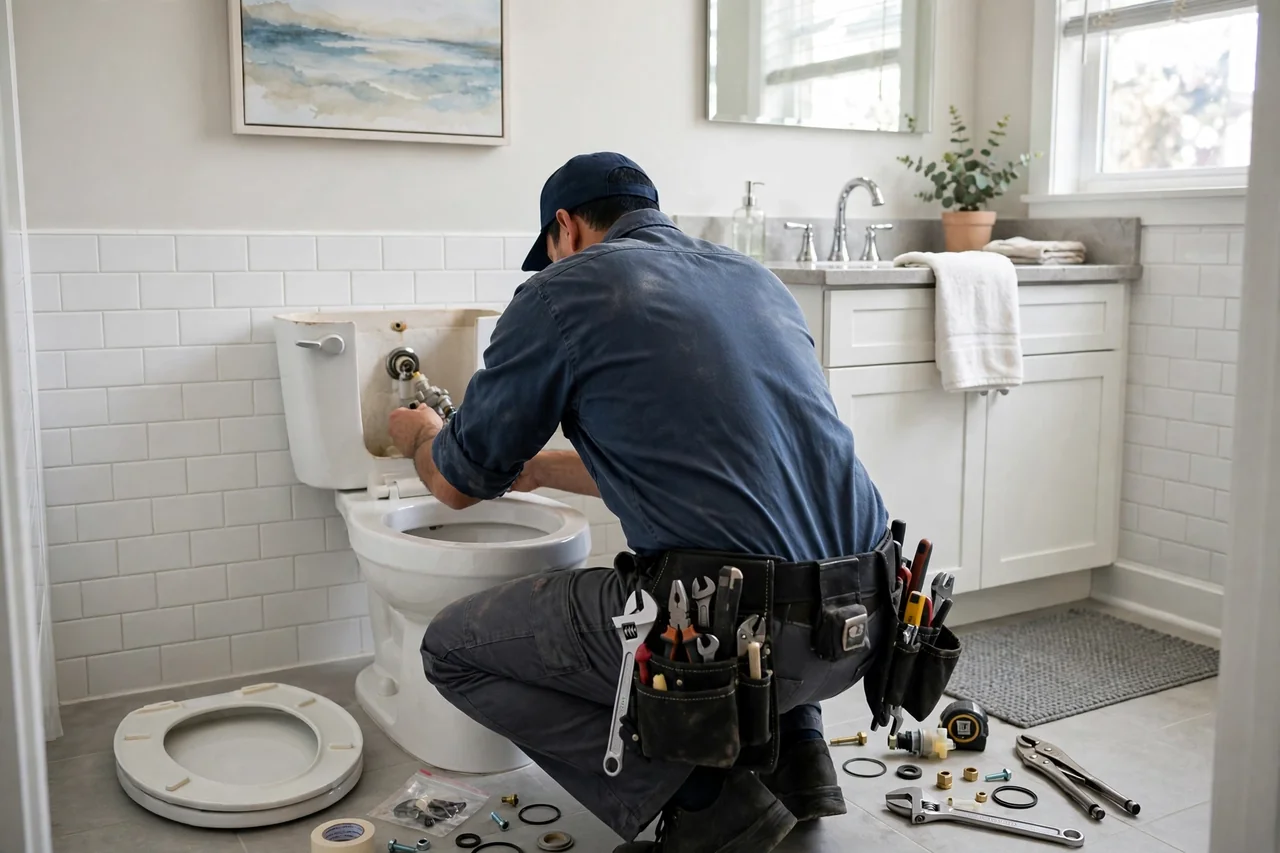
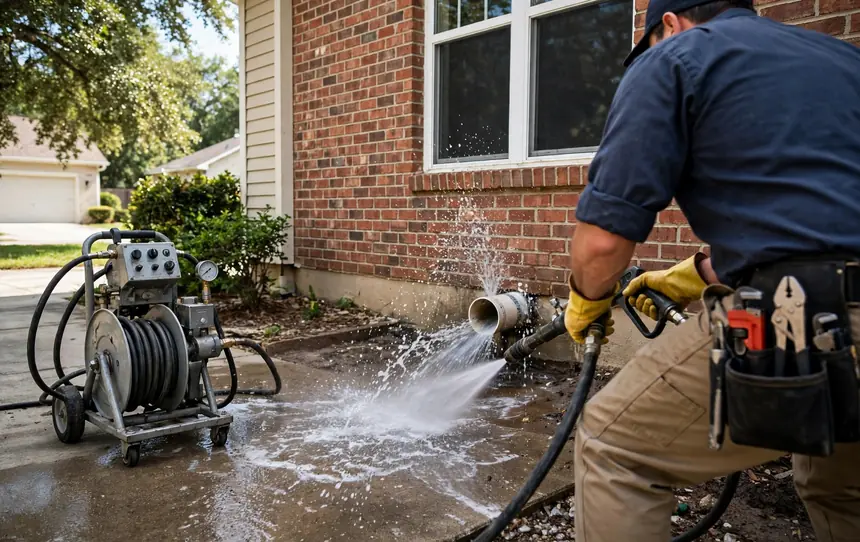
Clears grease, scale, and roots from sewer lines with high-pressure water, leaving the pipe walls cleaner than a snake alone can.
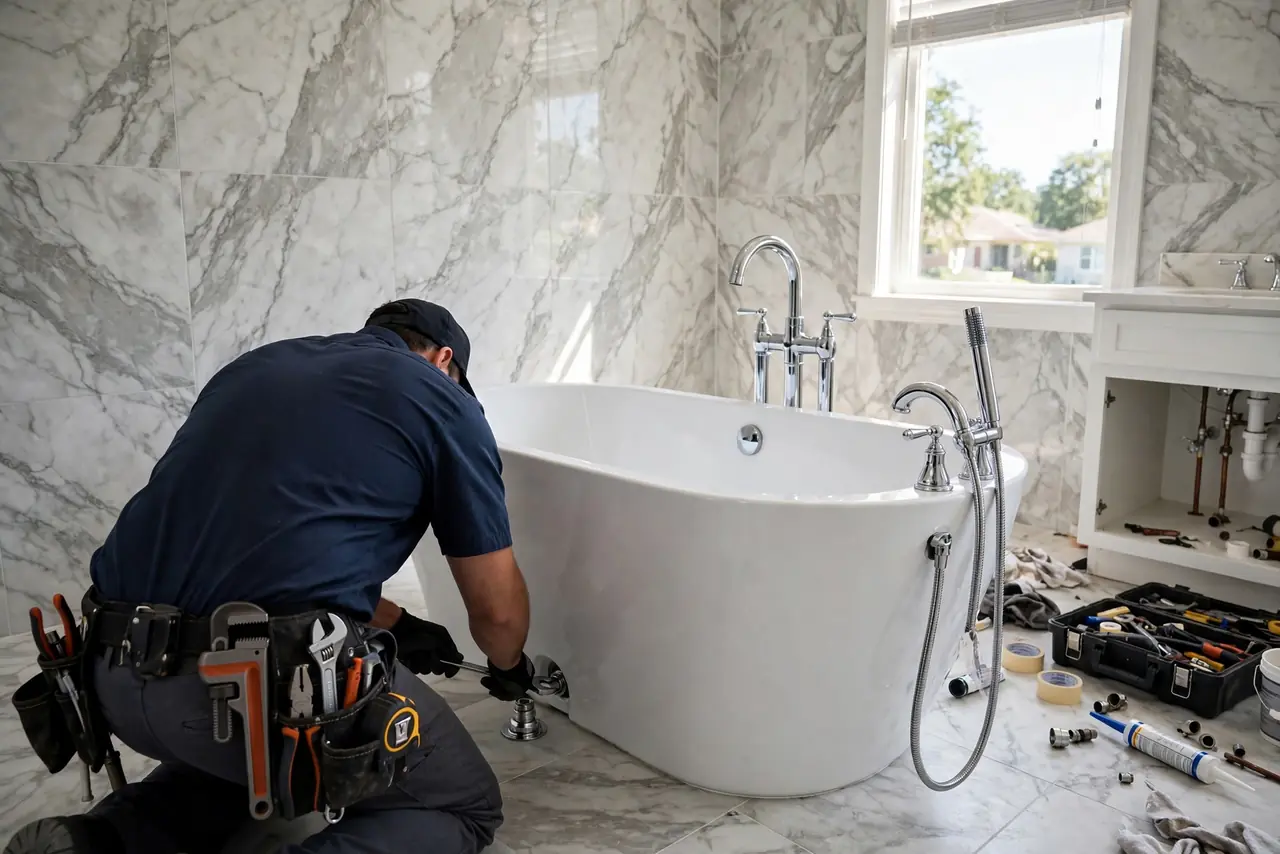
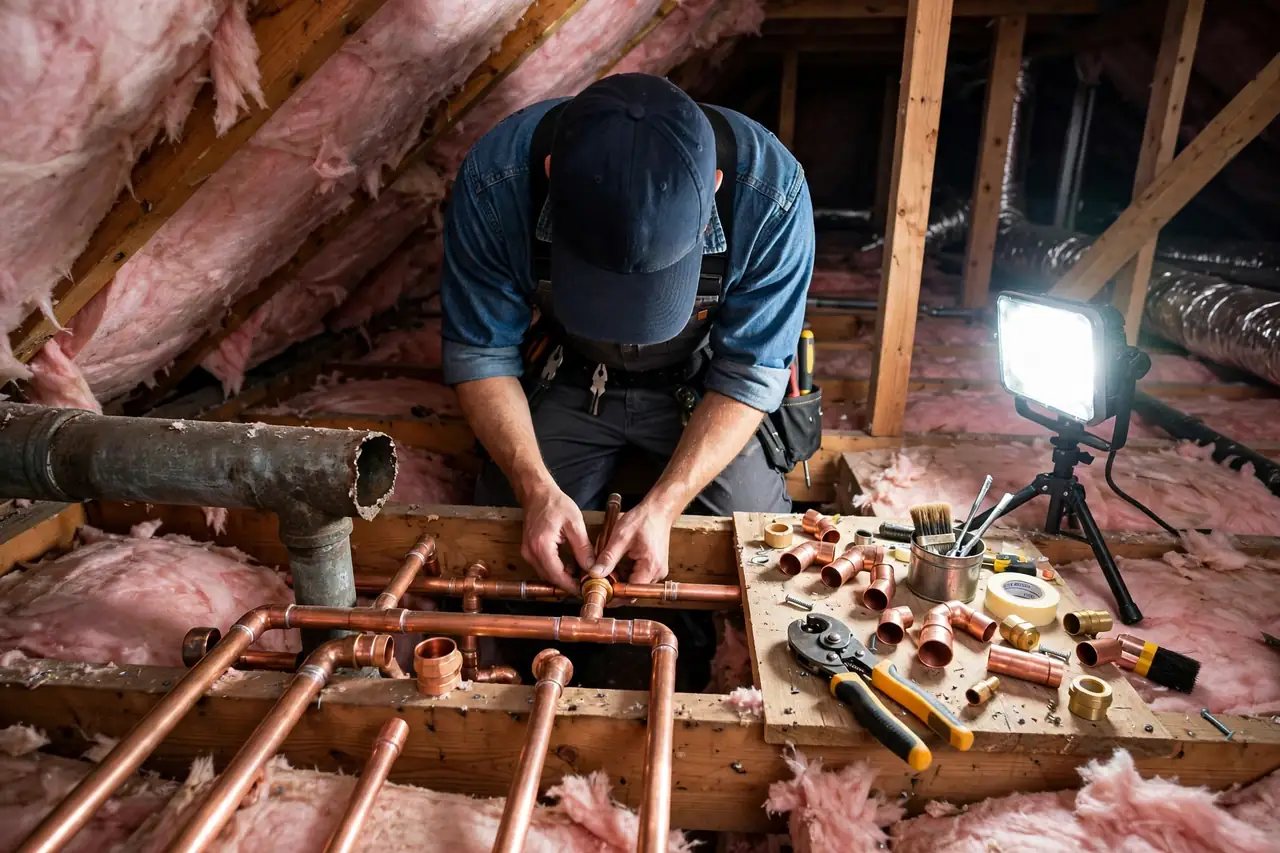
Makes copper and PEX connections without open flame in tight spaces, which is safer in attics and near framing.
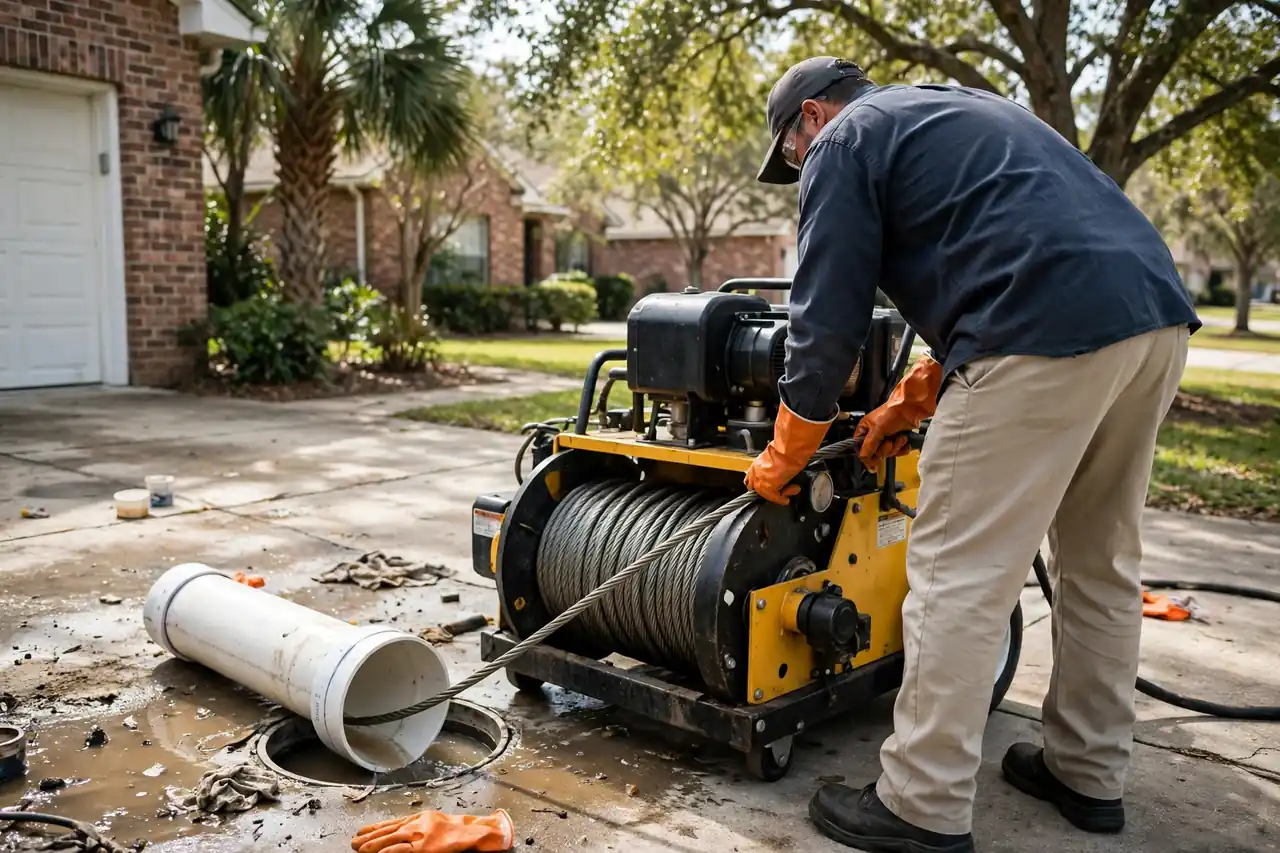
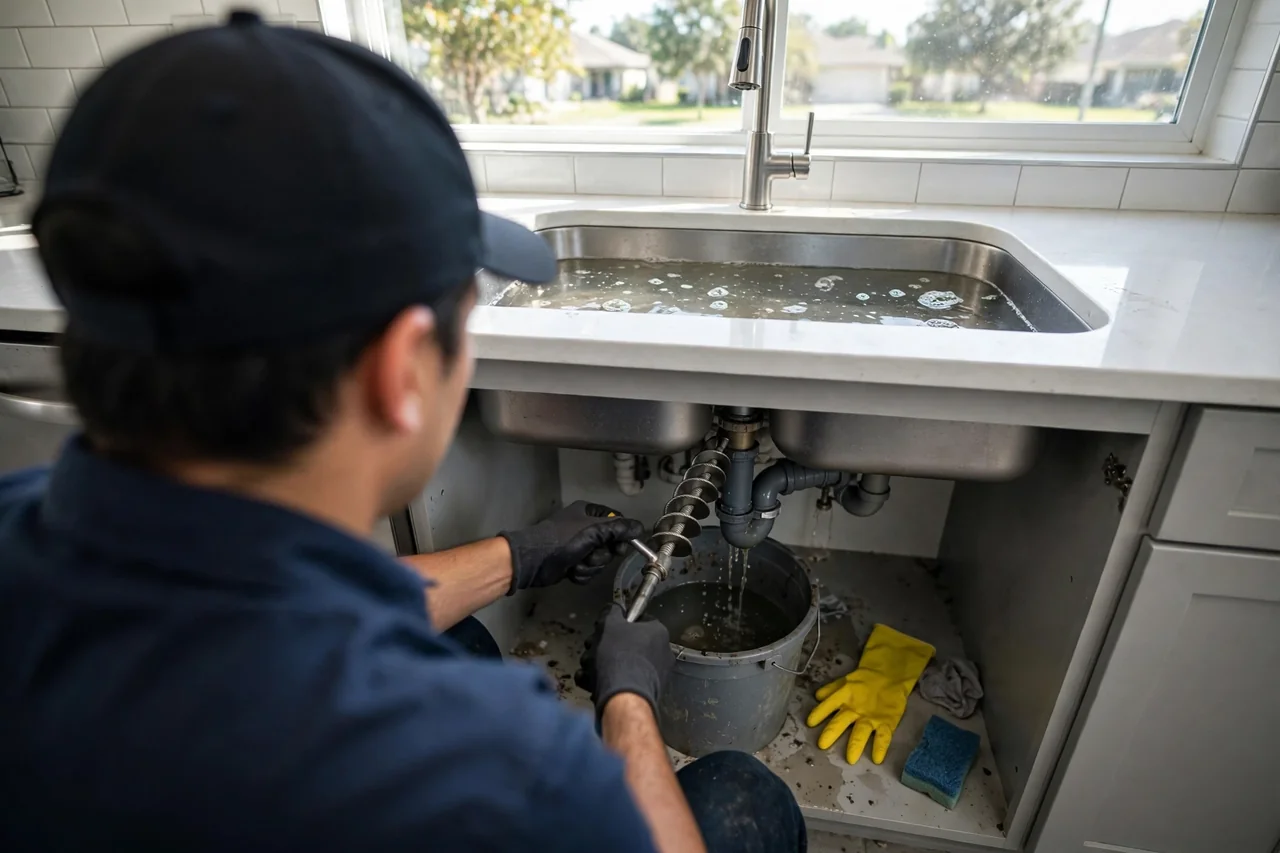
Clears clogs in traps, branch lines, and the main drain when the blockage is within reach of a cable.
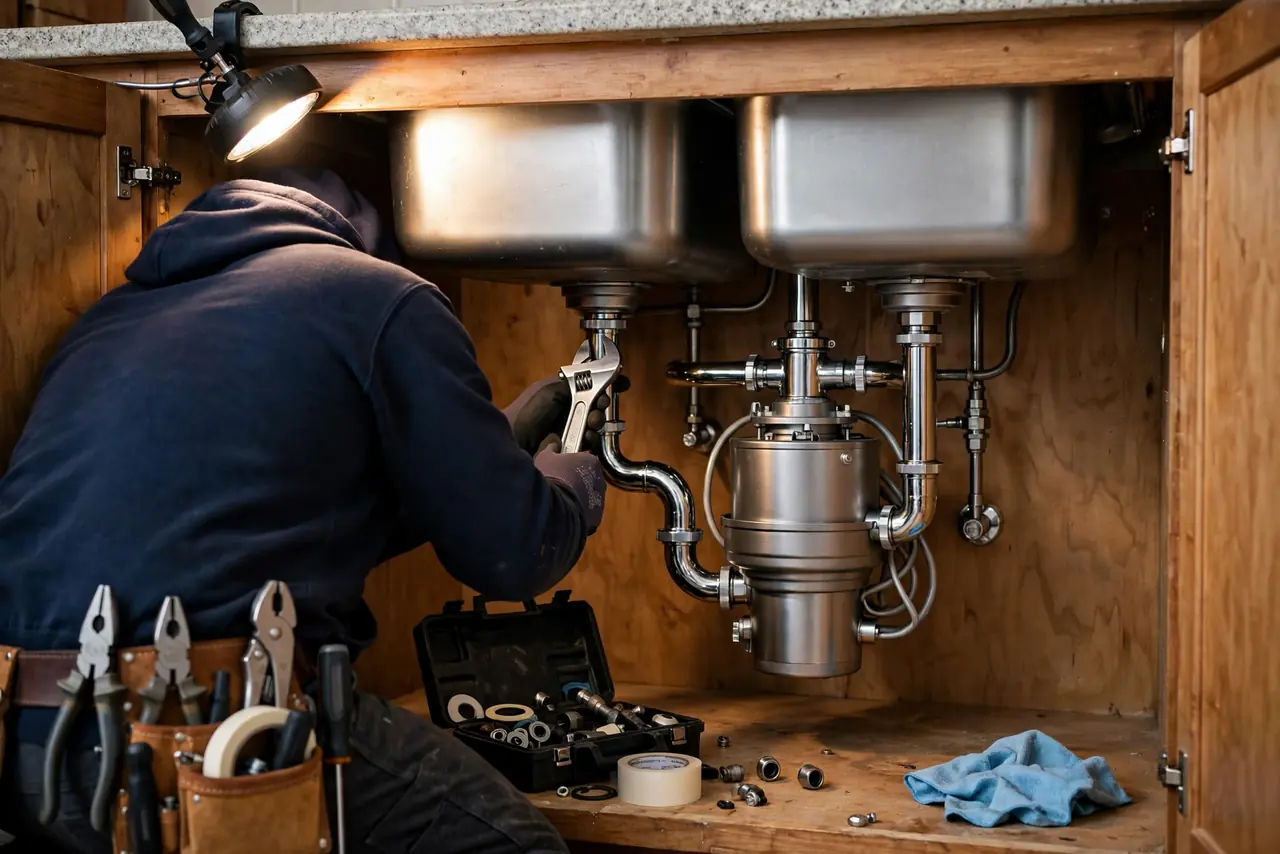
Cuts copper, PEX, and PVC cleanly so fittings seat properly and the joint holds under pressure.
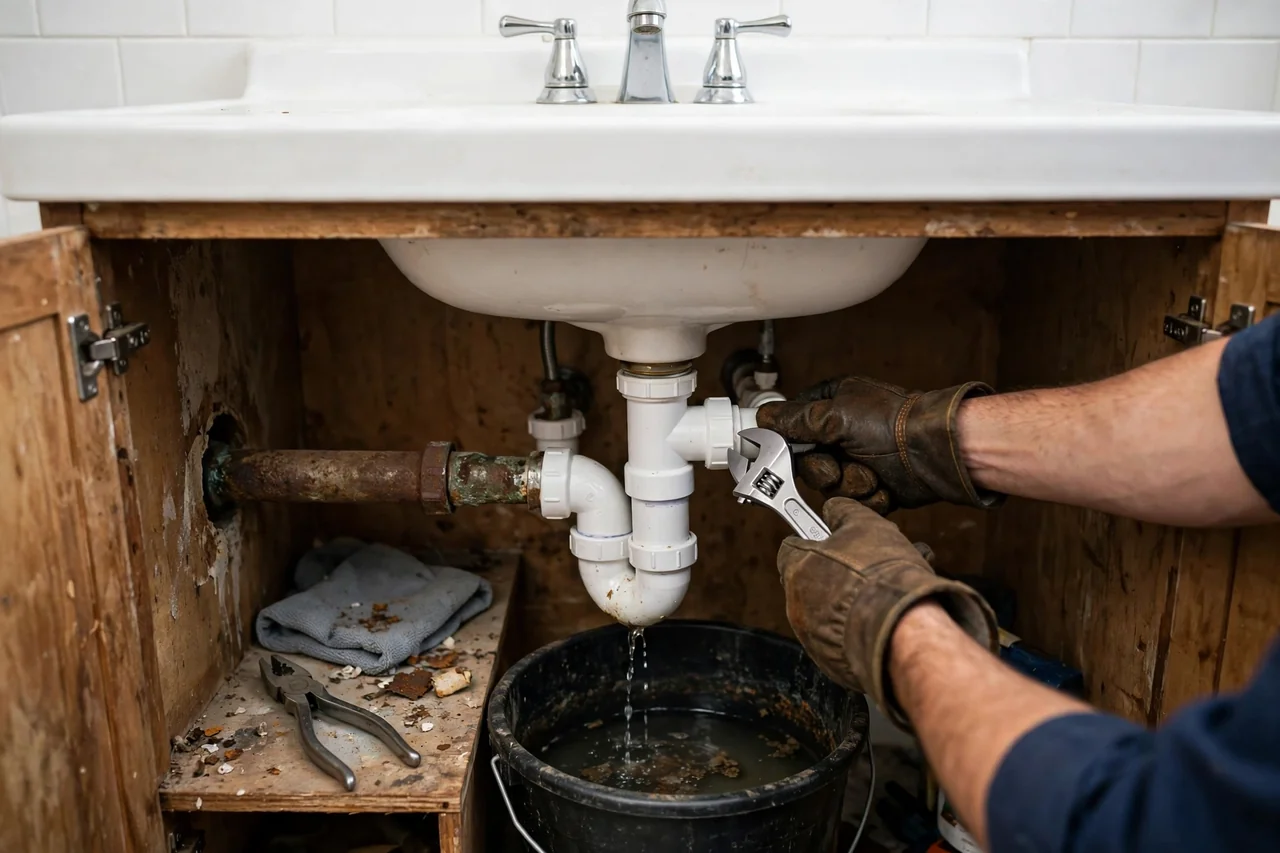
Every repair and install follows the code adopted in Texas, including venting, drain slope, and water heater safety requirements. We pull permits for work that requires inspection.
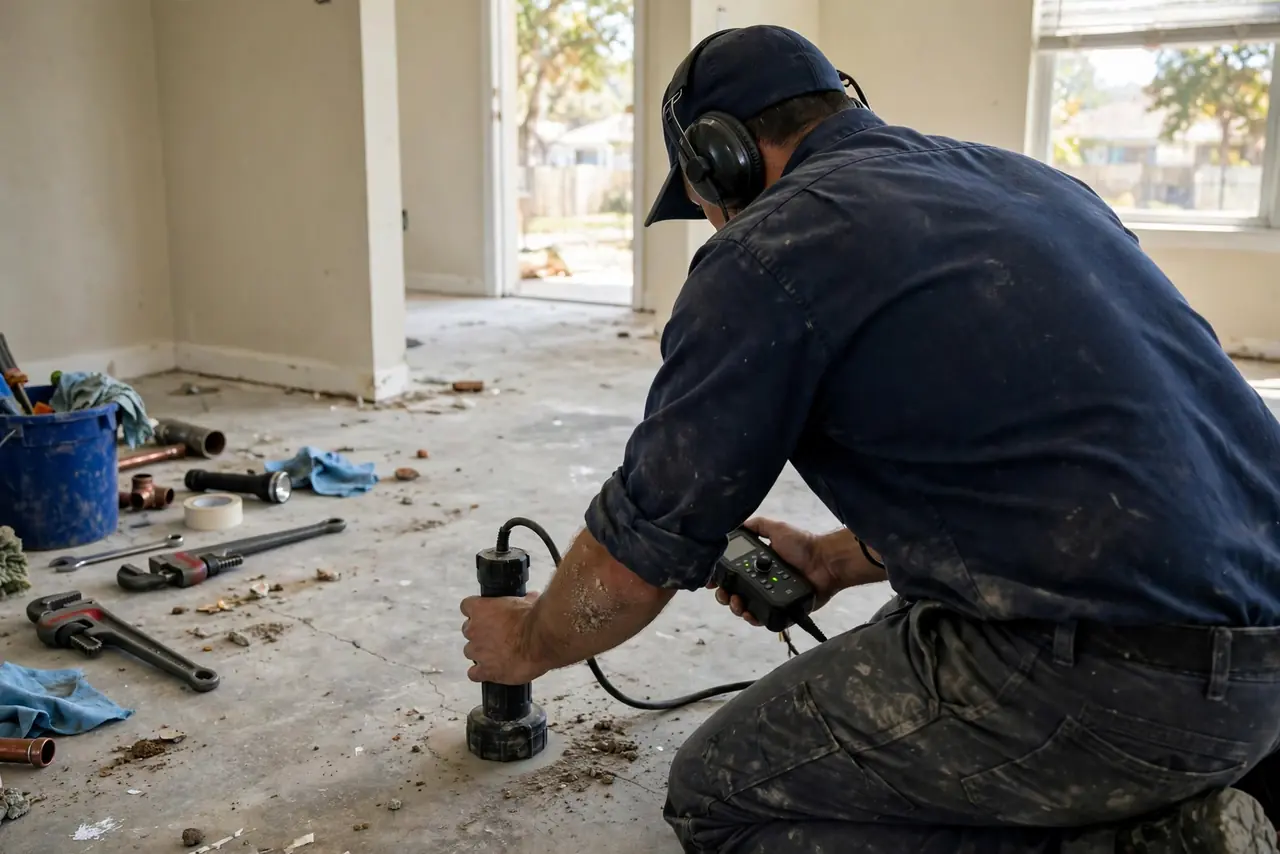
For drain and sewer problems, we camera the line before quoting a repair. That prevents paying for a snake job when the real problem is a collapsed pipe.
We shut off the supply, drain and remove the failed unit, and install a new water heater once the replacement is on site, when the size is in stock. We check the venting, drain pan, and expansion tank before we leave. Hot water restored once the new unit is in, old unit hauled away, and a clean install that passes inspection.
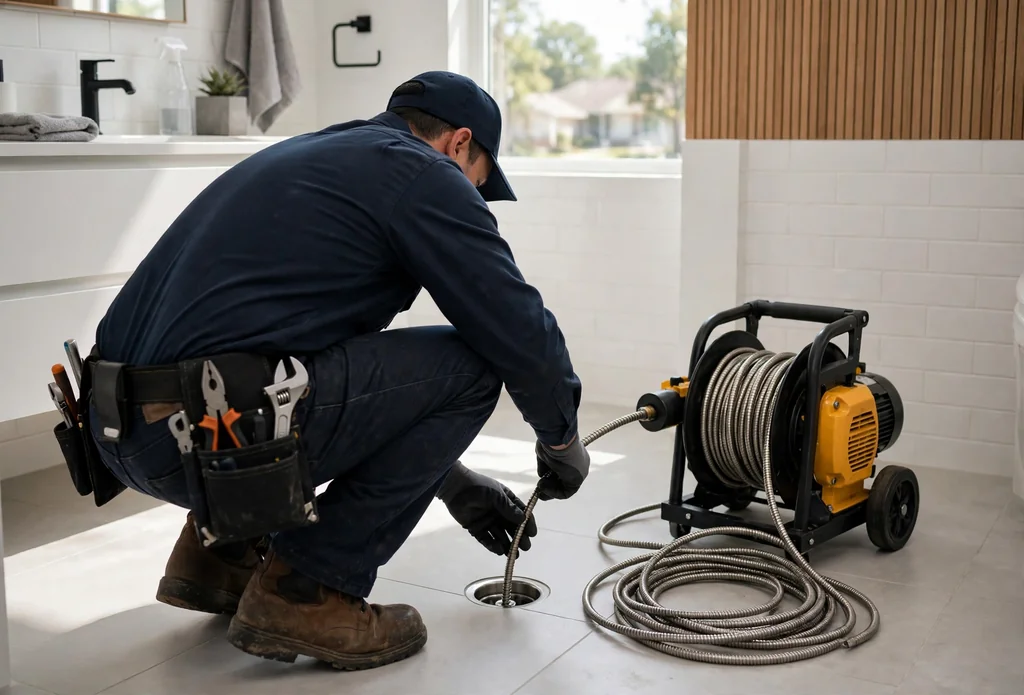
We camera the main line to find the blockage, then clear it with a drain snake or hydro jetting machine. If we find root intrusion or a cracked pipe, we quote the repair before the crew leaves. The backup clears, and you know whether the line needs a repair or just routine maintenance.
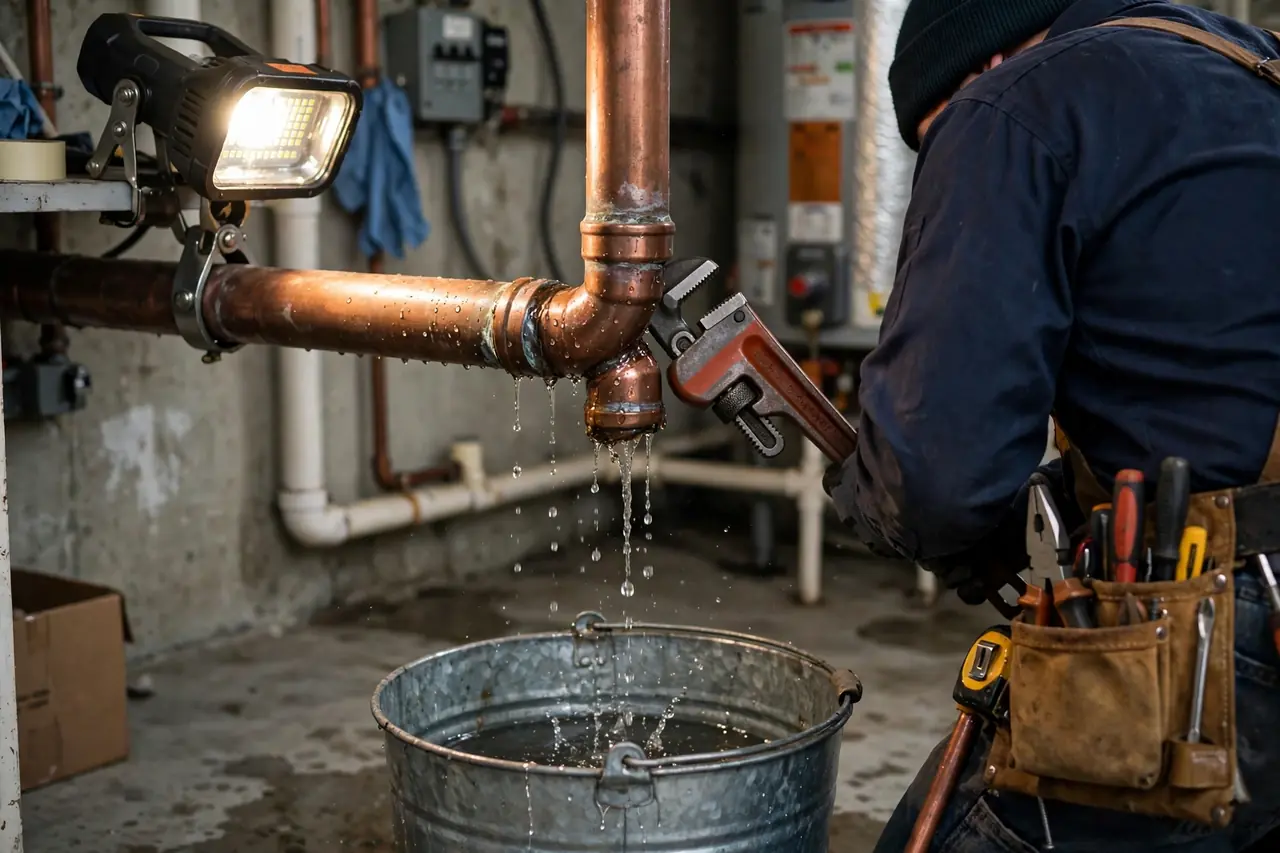
We shut off the main, locate the split section, and repair or replace it with copper or PEX. We also check nearby exposed lines and insulate them before the next freeze. Water is back on, the ceiling damage is contained, and the exposed lines are protected for the next cold snap.
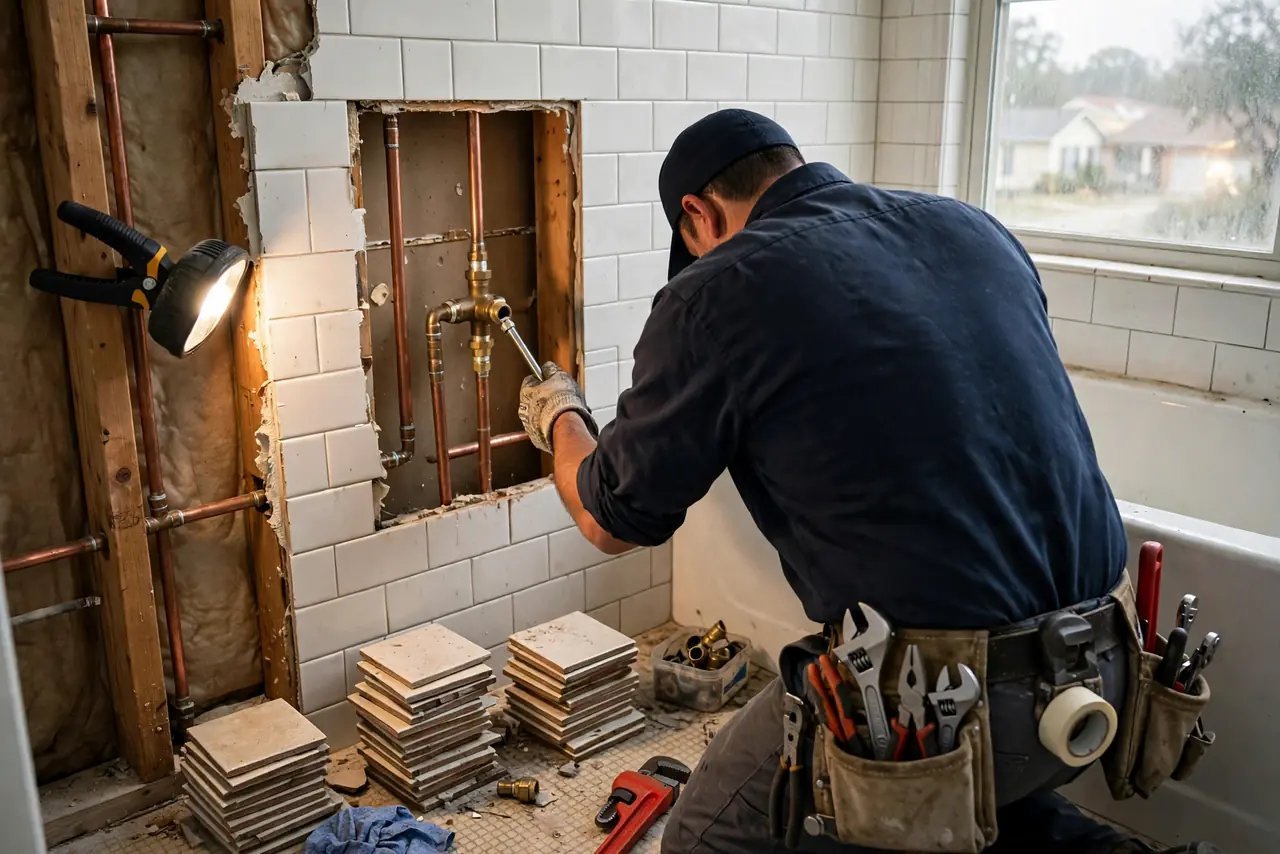
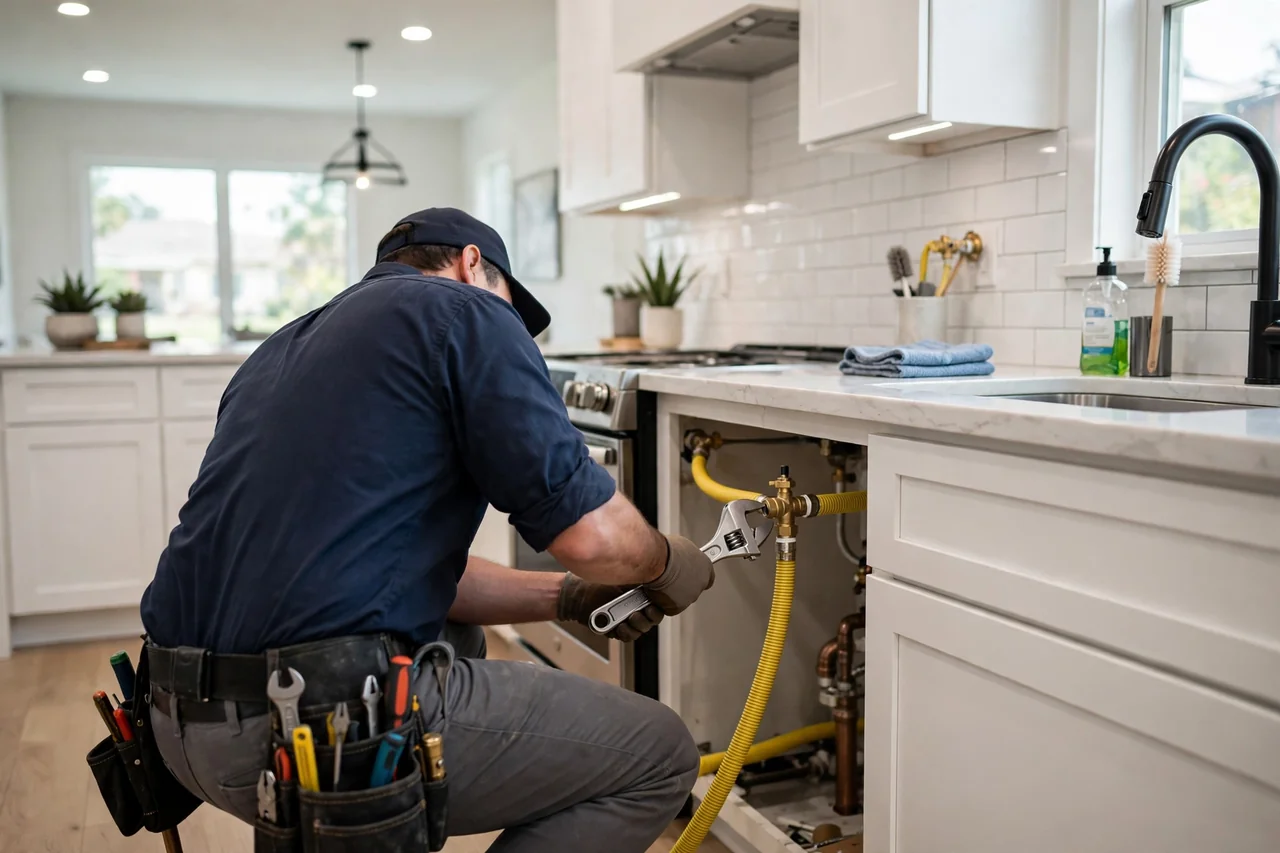
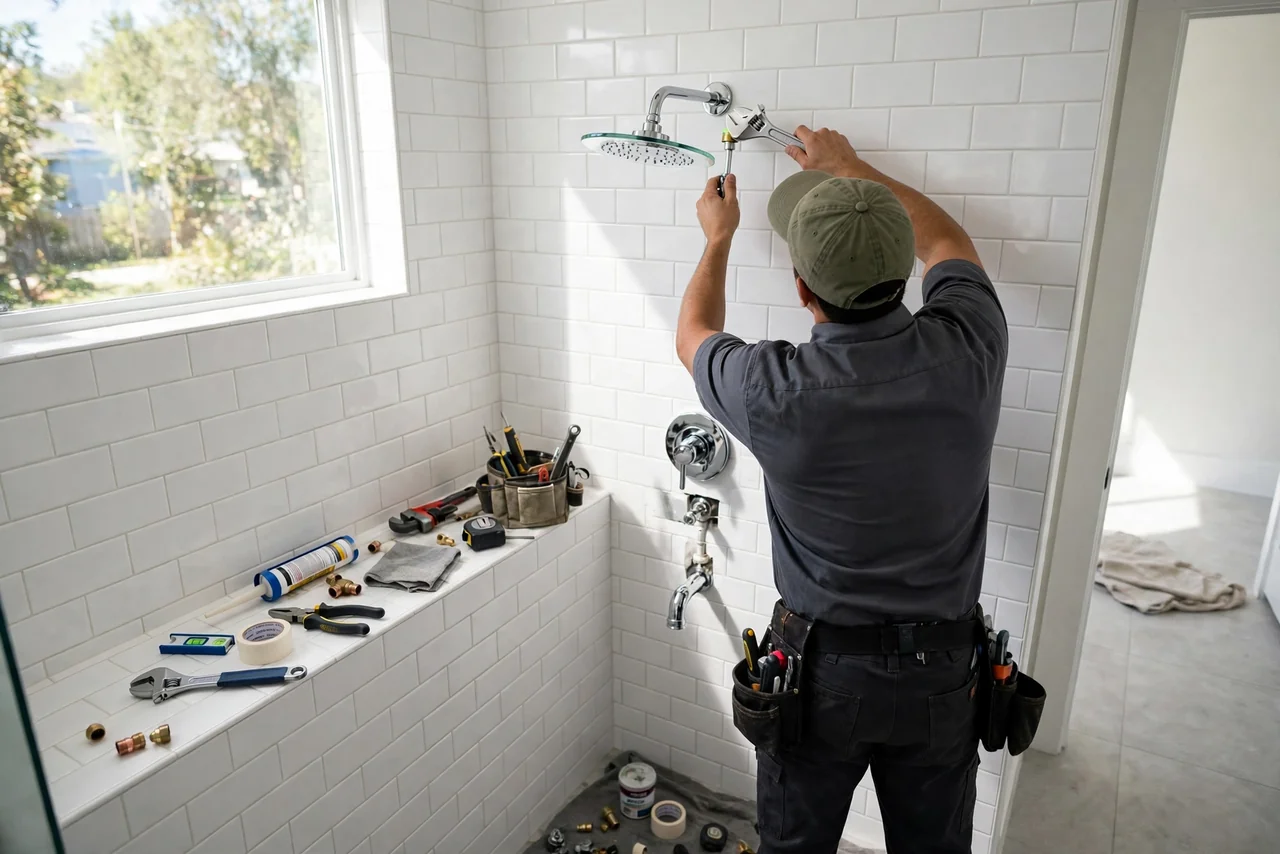
We handle the drain and supply relocation, pull the permit, and coordinate with your tile and drywall schedule. We pressure test before the walls close. The rough-in passes inspection, the layout works, and there are no surprises when the fixtures go in.
The same repair plays out differently by neighbourhood because the housing stock is different. Garden Oaks and Oak Forest still have original cast iron, Sharpstown and Meyerland sit on the slab-leak belt, and newer areas deal with hard water and freeze-exposed attic runs.
A homeowner in Meyerland noticed a hot spot on the hallway floor and a water bill that jumped sharply in one month. Two other companies quoted a full repipe.
We used a leak detection microphone to pinpoint the leak under the hallway, repaired one section of copper, and pressure tested the line. The bill dropped back to normal the next cycle.
We noted the age of the remaining copper and recommended a pressure check in 12 months to catch any other thin spots early.
A Clear Lake home had a main drain backing up every few weeks. A drain snake cleared it temporarily, but the backup returned within a month.
A sewer camera found root intrusion and a cracked section of cast iron. We hydro jetted the line, replaced the damaged section, and camera-verified the repair. No backups in the following year.
We recommended an annual camera inspection and avoided flushing grease and wipes, which had contributed to the buildup.
A family in the Heights had a 12-year-old water heater leaking from the tank on a Saturday morning, with no hot water and a wet garage floor.
We shut off the supply, drained and removed the old unit, and installed a new 50-gallon water heater with a new drain pan and expansion tank. Hot water was back by mid-afternoon.
We set a reminder to flush the tank annually and check the anode rod at year three, which extends the life of the new unit.
Most calls fall into a handful of categories. Here are the ones we see most in Houston, what happens if you ignore them, and how we handle each.
We use a leak detection microphone and thermal checks to pinpoint the leak without breaking concrete everywhere. Then we repair the line at the failure point and pressure test it, restoring water service with minimal floor disruption. A slab leak can undermine the foundation, spike your water bill, and cause mold in carpet and drywall. Waiting can turn a small repair into a foundation job.
We camera the line to see the intrusion, hydro jet the roots out, and repair or replace the damaged section. If the line is too far gone, we quote a sewer line replacement with a permit. Roots find the smallest crack in cast iron or clay pipe and grow into the line. Backups return every few months, and eventually the pipe collapses.
We flush the tank, check the anode rod, and repair or replace elements and valves. If the tank is too far gone, we install a new unit sized to your household. Houston's hard water leaves sediment in the tank, which causes popping sounds, shortens the unit's life, and raises energy bills. Ignored, it leads to a leak or a tank failure.
We test pressure at multiple points, check the regulator, and inspect the supply lines. Depending on the cause, we replace the regulator, repair the line, or quote a partial repipe with copper or PEX. Low pressure makes showers miserable and can signal a failing pressure regulator, corroded galvanized pipe, or a supply line leak.
Call (346) 776-8560 during our hours — Monday through Sunday, 7:00 AM to 10:00 PM — and we will talk through the next step. True emergencies get priority. We keep common parts on the truck, including push-fit fittings, wax rings, and supply lines, so a toilet repair or faucet swap often finishes in one visit instead of two.
You get the price before we start, not after. A dripping faucet repair runs a written estimate and a standard 40-gallon water heater swap runs a written estimate installed. No surprise line items, no charge for the estimate, and no pressure to approve work you did not ask for.
Every repair follows the 2021 Uniform Plumbing Code with Houston Amendments, and we pull permits when the job requires one. That matters at resale, when an inspector finds unpermitted work and the buyer wants it fixed on your dime.
We lay floor protection, wear shoe covers, and haul away the old fixture or water heater. Your kitchen goes back to a kitchen, not a job site. We test every connection before we leave and show you the shutoff valve so you know where to go next time.
Clear records you can keep and share.
what we found and what we will fix
parts and labor in one number
pressure and flow checked before we leave
The decision usually comes down to age, material, and how often the same system has failed. A single leak in copper is a repair; repeated leaks in galvanized pipe point to replacement.
Galvanized steel past 40 years and cast iron past 50 are near the end of service life. Patching them repeatedly costs more than a planned replacement.
One leak is a repair. Three leaks in two years in the same system means the pipe is failing from the inside, and a repipe is the better call.
Rusty water and low pressure throughout the house point to internal corrosion. A camera or pressure test confirms whether replacement is needed.
Outside these areas? Call and ask if we can reach you. (346) 776-8560
Everything inside a home's water and drain systems: fixing leaks, clearing drains, repairing and installing faucets, toilets, showers and sinks, replacing water heaters, finding slab leaks, and repiping a whole house when the old lines are done.
Recurring pinhole leaks in copper, rust-coloured water or low pressure from galvanised steel, and polybutylene pipe from the late 1970s to mid-1990s are the signs. A camera and pressure check tells you whether a spot repair or a whole-house repipe is the honest answer.
Most bigger jobs do. Water heater replacement, whole-house repiping, sewer replacement and gas work need a City permit and inspection. Small repairs such as a faucet cartridge or a flapper do not. We confirm the permit position for your job before we start.
Yes. Estimates are free, and you approve the written scope before work starts. We are open Monday to Sunday, 7:00 AM to 10:00 PM.
From a dripping faucet to a whole-house repipe, call (346) 776-8560 for a free estimate. We are open Monday to Sunday, 7:00 AM to 10:00 PM, and we explain the work before we start it.
Call us at (346) 776-8560 to schedule residential plumbing or ask a question. We are open Monday to Sunday, 7:00 AM to 10:00 PM, and estimates are free.
The fastest way to book is a phone call. Tell us what is happening and we will give you a free estimate and a time that works, Monday to Sunday, 7:00 AM to 10:00 PM.
Open Mon–Sun, 7:00 AM–10:00 PM. Free estimates.