Repair TipsLocal Guides
Why is my water heater making popping noises
That popping sound from your water heater is usually sediment boiling under the burner. Here's why it happens in Houston, how to stop it, and when to call a pro.
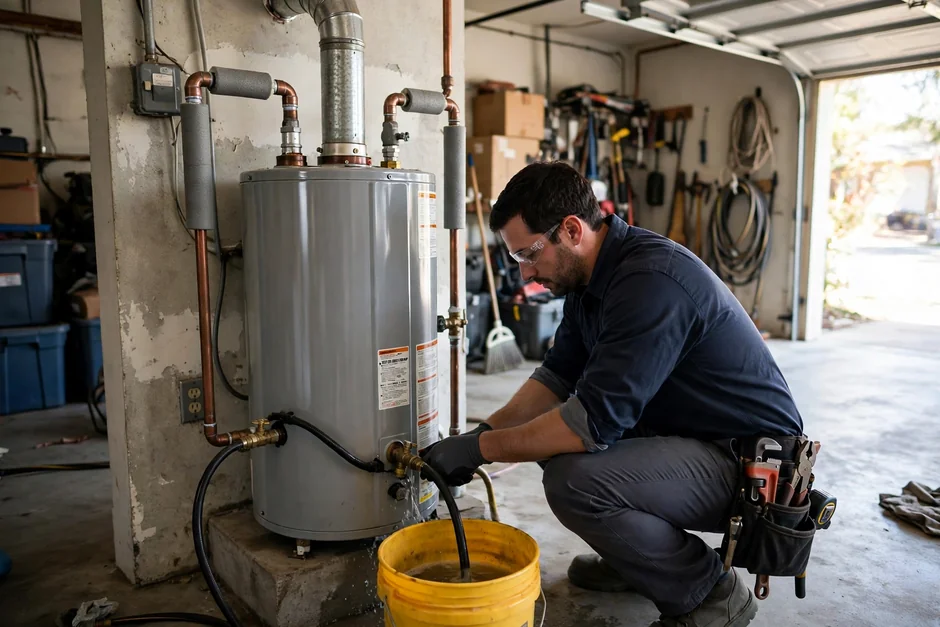
A popping water heater in Houston almost always means sediment has built up on the tank's bottom and is trapping water underneath it. That trapped water boils, bursts through the mineral crust, and makes the crackling, popping, or rumbling sound you're hearing. The noise itself won't hurt you, but the sediment behind it wastes gas, shortens tank life, and can lead to leaks if you ignore it. Below we cover why Houston water causes this so fast, how to tell whether it's serious, and how to stop it, and when to call a pro.
The short answer: sediment is boiling under the burner
A water heater popping noise Houston homeowners describe as "rice crispies in the tank" is the sound of hard-water minerals insulating the bottom of the tank. Houston's municipal water carries dissolved calcium and magnesium. When the tank heats, those minerals fall out of solution and settle on the bottom as scale. Over 12 to 36 months, that layer thickens into a crust. Water gets trapped beneath it, the gas burner or heating element keeps firing, and the trapped water superheats until it pops through the crust. That's the noise.
Sediment buildup water heater Houston tanks accumulate faster than in most U.S. cities because our water averages about 8 grains per gallon of hardness. That is why a tank can start popping much sooner here than in a soft-water city.
Two other noises get confused with popping:
- Rumbling - the same sediment problem, just a deeper, lower sound. Usually means a thicker layer.
- Banging or hammering - water hammer in the pipes, not the tank. Different fix.
- Hissing or sizzling - a leaking element or a failing pressure relief valve. Shut the unit down and call us.
If you're hearing any of these and want a pro to sort it out, our water heater repair Houston TX team handles diagnostics and repairs in Houston.
Why Houston water is hard on water heaters
Houston's water supply comes from a mix of surface water and groundwater wells, and the mineral content varies block by block. Homes on well water in areas like Cypress and Tomball often see harder water still. The result is a water heater that scales up faster than the manufacturer's test conditions assume.
Three Houston-specific factors make it worse:
- Warm incoming water. Our ground water sits around 70°F year-round. A tank doesn't have to work as hard to heat it, but the warm baseline also accelerates mineral precipitation.
- Older housing stock. A large share of Houston homes were built before 1990, and many still run the original 40- or 50-gallon tank. A 20-year-old tank in a hard-water area is almost certainly full of scale.
- Attic and garage installs. Most Houston water heaters live in the attic or garage, where summer temperatures push 130°F+. Heat stress plus sediment equals premature failure.
If you're in one of the older neighborhoods where we do a lot of residential plumbing services Houston TX, the tank is often the first thing we check on a service call - the popping is a reliable early warning.
Is a popping water heater dangerous in Houston TX?
A popping water heater is not immediately dangerous, but it is a warning sign that the tank is degrading from the inside. The noise itself won't cause an explosion. The real risks are indirect:
- Tank leaks. Sediment traps moisture against the steel floor of the tank, which rusts through. A failed tank in a Houston attic can dump 40-50 gallons into your ceiling before you notice.
- Higher gas bills. A scaled tank runs less efficient because the burner heats sediment instead of water, and that shows up on your gas bill.
- Scalding risk. Sediment can interfere with the thermostat and cause temperature swings.
- Shortened life. A tank generally lasts a shorter time in Houston's hard water than it would in soft water.
If you also see rusty hot water, a puddle at the base of the tank, or the pressure relief valve weeping, stop using the unit and call for emergency plumbing services Houston TX. Those are signs the tank is already failing, not just noisy.
How do I stop water heater popping in Houston Texas?
You stop water heater popping by removing the sediment - either by flushing the tank or, if the scale is too thick, by replacing the unit. Here's the order we work in:
1. Flush the tank (if it's been maintained)
If your tank is under 6 years old and has been flushed at least once, a standard flush usually kills the noise. We shut off the gas or power, connect a hose to the drain valve, and run 40-60 gallons through until the water comes out clear.
2. Vinegar or descaler soak (for moderate scale)
For tanks with a visible crust but no leaks, we pull the anode rod and elements (on electric units) and introduce a food-grade descaler. This dissolves the mineral layer without scraping the tank lining.
3. Replace the tank (when scale is too far gone)
Once the sediment layer is thick enough that flushing doesn't clear it, or the tank is past 8 years old, replacement is the honest answer. A new 40- or 50-gallon gas tank is the usual replacement. If you're weighing that against repair, our water heater installation Houston TX page lays out tank vs. tankless options and what fits a Houston attic or garage.
4. Prevent the next round
Two things actually work in Houston's water: an annual flush (cheap insurance) and a whole-home water softener if your hardness is over 10 grains. A softener removes the calcium before it ever reaches the tank. We install them - see water softener installation Houston TX for sizing and cost.
What to watch out for: common mistakes
The most common mistake we see is homeowners ignoring the popping until the tank leaks. By then you're paying for emergency replacement plus water damage. A few others:
- Flushing a tank that's never been flushed. On a 10-year-old tank with a thick scale layer, opening the drain valve can dislodge a chunk that jams the valve or reveals a rust-through. We inspect first.
- Turning up the temperature to "fix" it. Higher heat makes sediment pop harder and accelerates tank failure. Don't.
- Using chemical drain cleaner in the tank. Never. It attacks the tank lining and the anode rod.
- Skipping the anode rod. The anode is what protects the tank from rust. If it's been consumed (usually 3-5 years in Houston), the tank is unprotected no matter how often you flush.
- Hiring the cheapest quote. A flush that doesn't include pulling the anode or checking the relief valve isn't a real service. Ask what's included.
If you're also hearing gurgling from drains or noticing slow drainage, the water heater may not be the only issue - our drain cleaning Houston TX team can check the whole system while we're there.
When to call a professional
Call a professional when the popping is accompanied by any of the following: rusty or metallic-tasting hot water, a puddle or moisture at the base of the tank, the pressure relief valve discharging, or a tank older than 8 years. Those are signs the tank is failing, not just noisy.
Also call us if you've flushed the tank yourself and the noise came back within a few months - that usually means the scale layer is too thick for a simple flush, or the anode rod is gone. At El Primo Lalo Plumbing, we diagnose the tank, tell you plainly whether a flush, a repair, or a replacement is the right call, and give you the price before we start. No surprises.
Frequently Asked Questions
Why is my water heater making popping noises in Houston?
Sediment - calcium and magnesium from Houston's hard water - has built up on the tank bottom. Water trapped under that crust boils and pops through. It's the most common water heater noise we see in Houston and usually starts between 18 and 36 months after install.
Is a popping water heater dangerous in Houston TX?
Not immediately. The popping itself won't cause an explosion. But it signals sediment that rusts the tank from the inside, raises gas bills, and can lead to a leak. If you also see rusty water or a puddle, shut it down and call.
How do I stop water heater popping in Houston Texas?
Flush the tank to remove sediment. If the tank is under 6 years old, a flush usually fixes it. If it's older or the scale is thick, a descaler soak or replacement is the real fix. Call (346) 776-8560 for a free estimate.
Who repairs noisy water heaters in Houston?
Call El Primo Lalo Plumbing at (346) 776-8560. We diagnose the noise, flush or repair the tank, and if replacement is the honest answer we install it. We serve Houston.
Should I flush my water heater in Houston?
Yes - once a year if you're on Houston municipal water, and more often if you're on a well. Annual flushing is the single cheapest way to prevent popping and extend tank life.
Get help with Plumbing in Houston
If your water heater is popping, rumbling, or just not keeping up, we can take a look. El Primo Lalo Plumbing handles water heater repair, flushing, and replacement across Houston - and we'll tell you straight whether you need a flush or a new tank.
Call (346) 776-8560 to schedule.
We take calls Monday through Sunday, 7:00 AM to 10:00 PM.