Leak location report
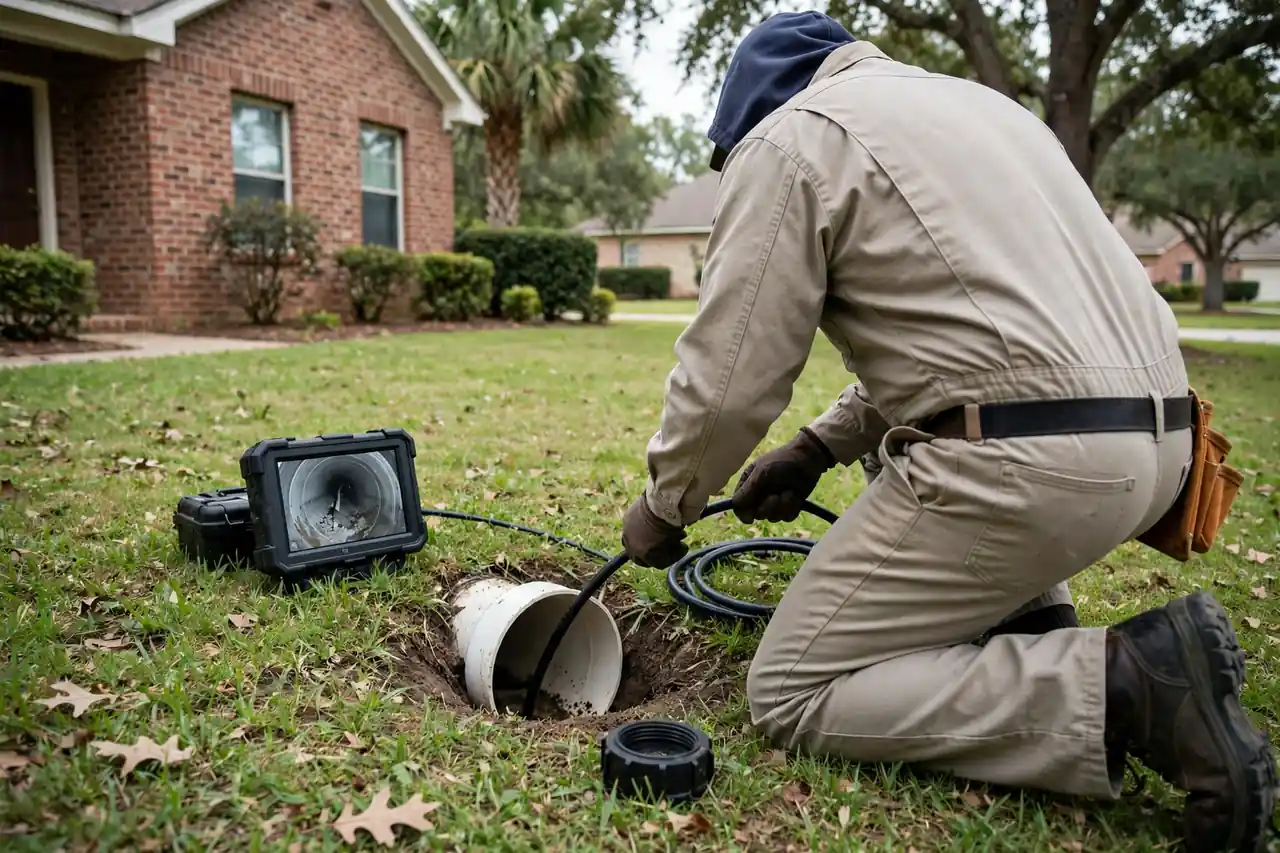
Where the break is and how we found it
Leak repair is the work of fixing the leak at its source, not drying the wet spot and leaving the cause alone. A leak that keeps coming back was never really fixed; the wet spot was dried and the source was left alone. El Primo Lalo Plumbing repairs leaks at the source in Houston, from a failed fitting to a pinhole in copper, and tests before leaving.

Every leak call includes the diagnosis, the repair, and the test. Here is what is standard on the job and what we handle as an add-on when the situation calls for it.

Homes lose water at supply lines, drain joints, and fixtures, and the leak often shows up far from the source. We trace it, repair it, and test it so the floor and walls stay dry.
Commercial buildings run constant pressure and hide leaks above ceilings and in shared walls. We work around your hours and document the repair for property records.
Leaks split into two kinds. Supply leaks are pressurised and show fast: a pinhole in copper, a failed fitting, a split line after a freeze. Drain leaks seep and can run for months: a bad trap, a cracked drain section, a failed wax ring. The repair is different for each, and so is the test that proves it is fixed.
Houston's clay and housing stock shape the repair list. Copper under slab-on-grade thins where it rubs concrete, and expansive clay flexes slabs and shears buried lines. A slab leak has three honest options, spot repair, reroute overhead, or tunneling, and a spot repair on a systemically tired pipe is not a permanent fix. We explain the options with a written estimate before we start.
Dry the floor and the leak is still there. Fix the source and it is gone.
Five steps, from the first phone call to a dry floor. No mystery, no waiting around all day for a window.
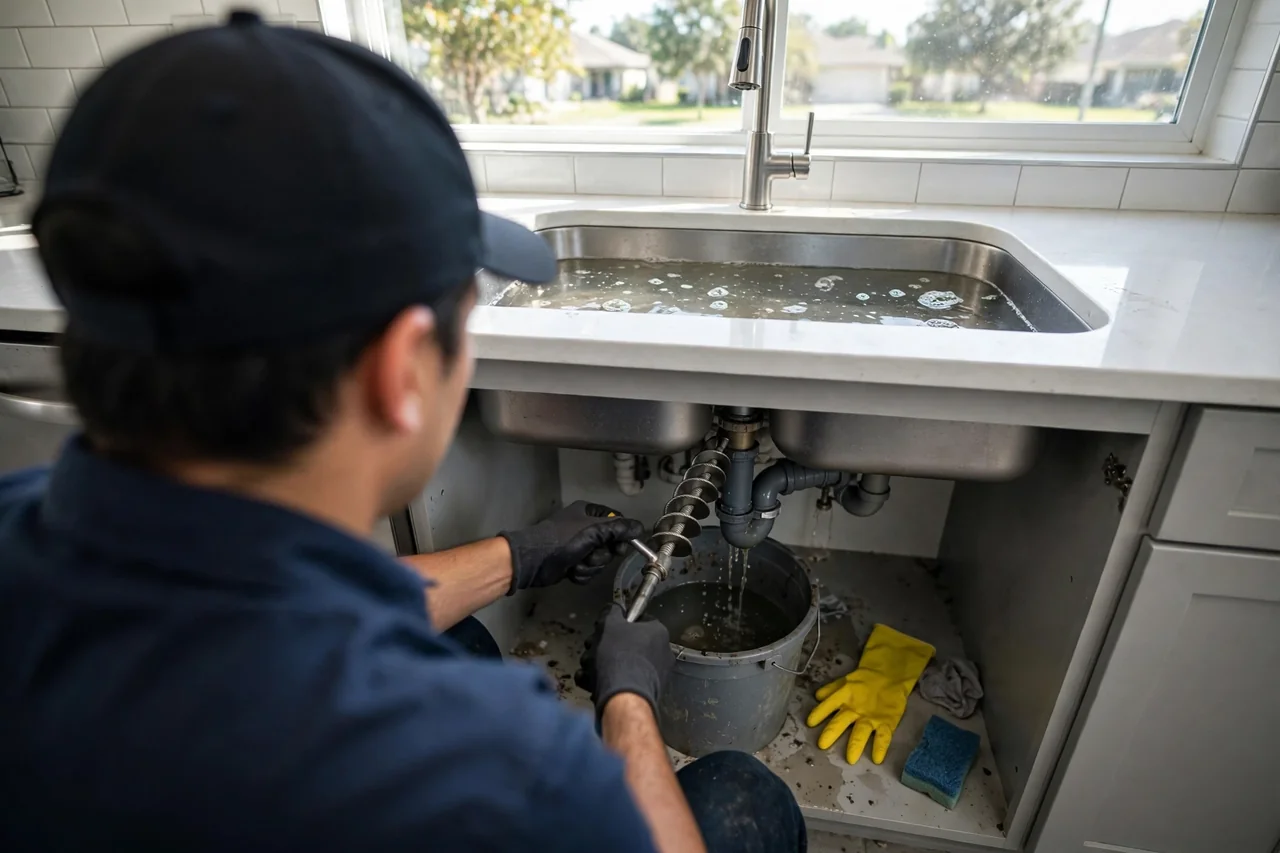
You call and describe what you see: where the water is, how fast it is coming, and whether the meter is spinning with everything off. We tell you how to shut the main valve and whether to kill power to a water heater. Most calls get a prompt window, and active leaks get moved to the front.
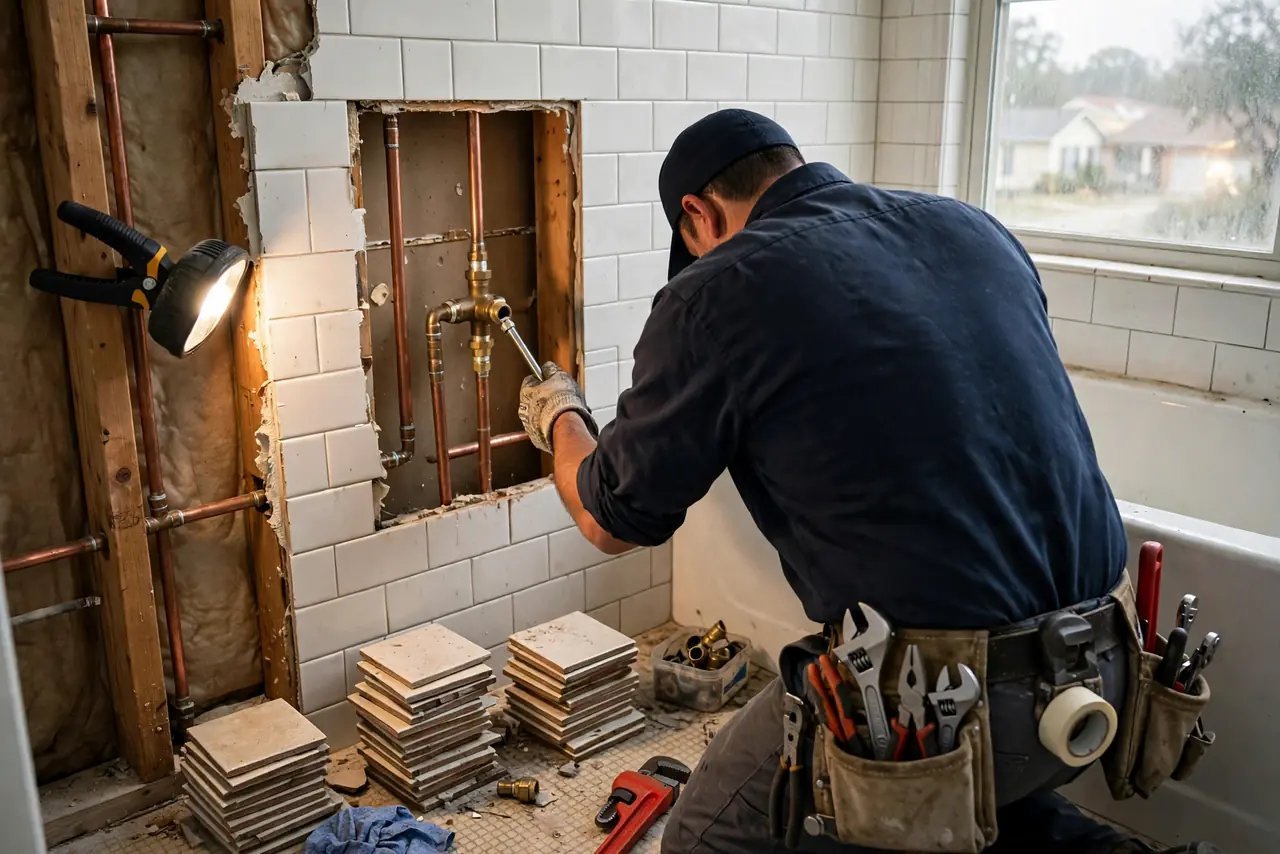
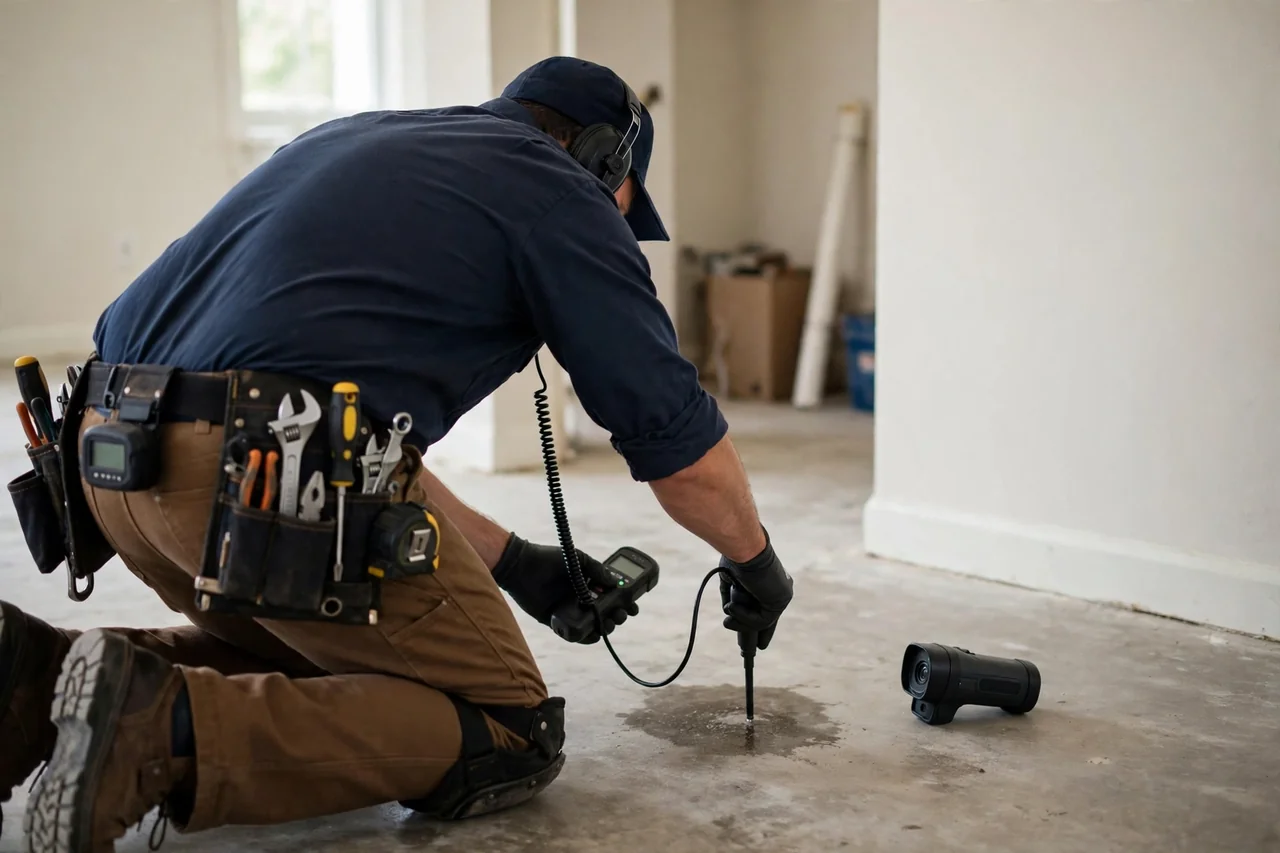
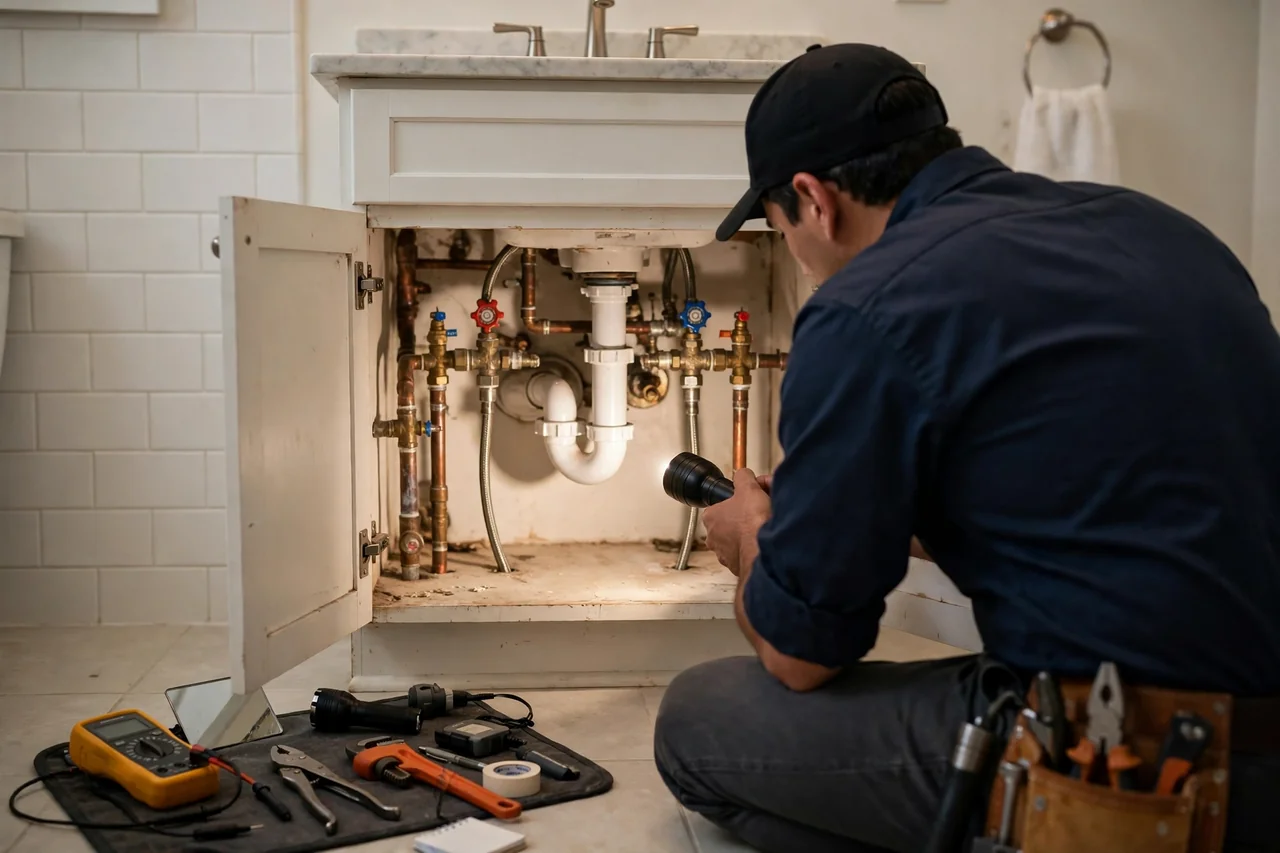
On site, we isolate the system and confirm the loss with the meter. Then we sweep with a leak detection microphone, check moisture at baseboards and cabinets, and run a sewer camera if the leak looks like a drain issue. This step usually takes 30 to 60 minutes and tells us exactly where to open.
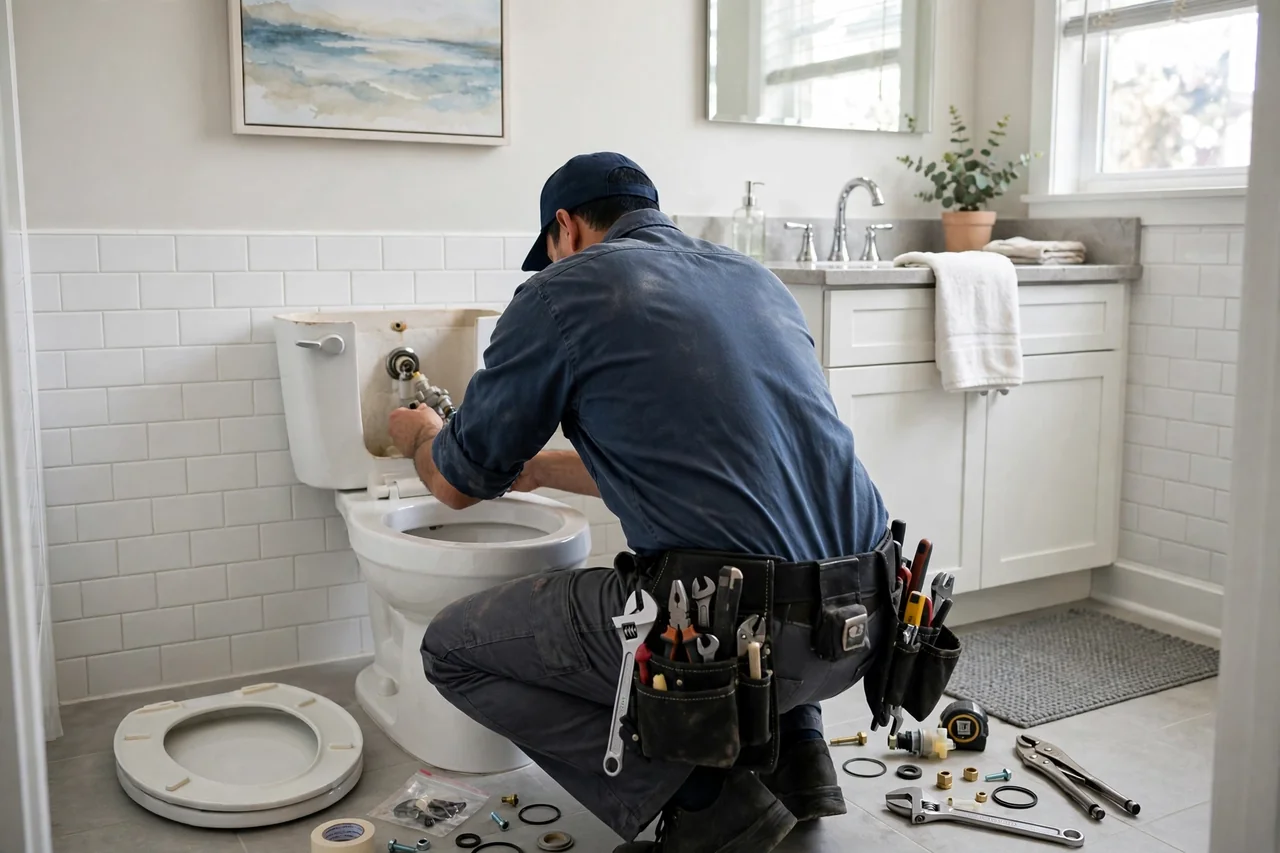
We give you the repair price before we start, including any access cut. You approve it, and we get to work. If the diagnosis changes once we are inside, we stop and re-quote rather than running up a bill. No work happens without your yes.
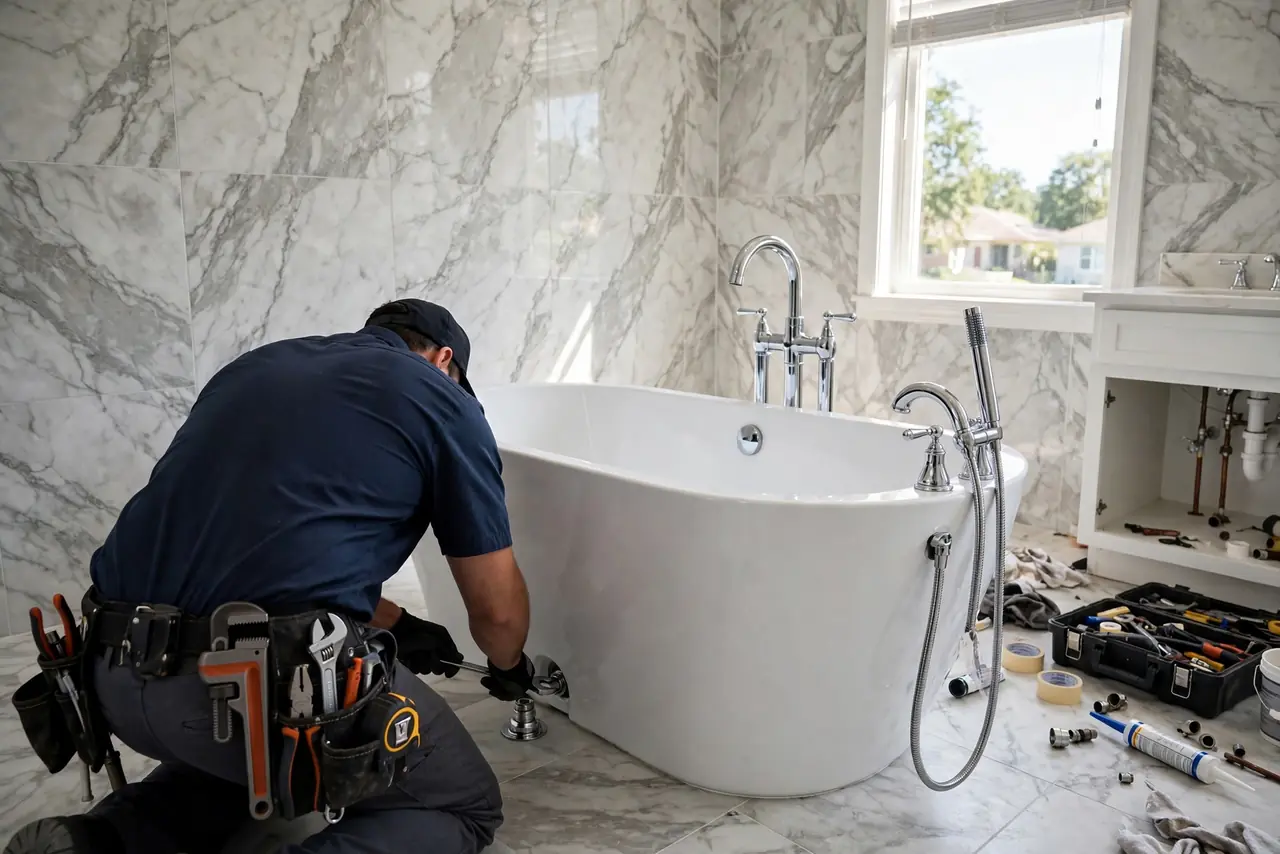
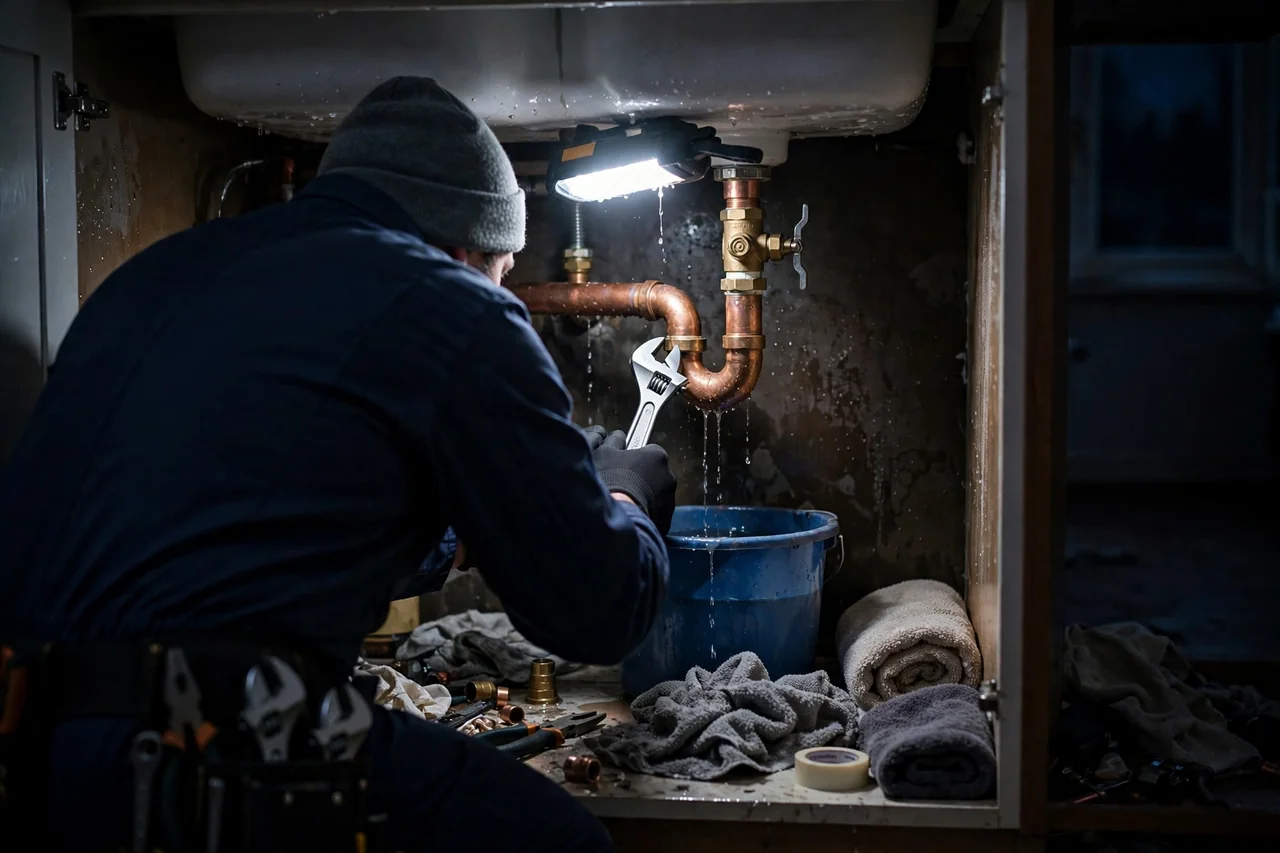
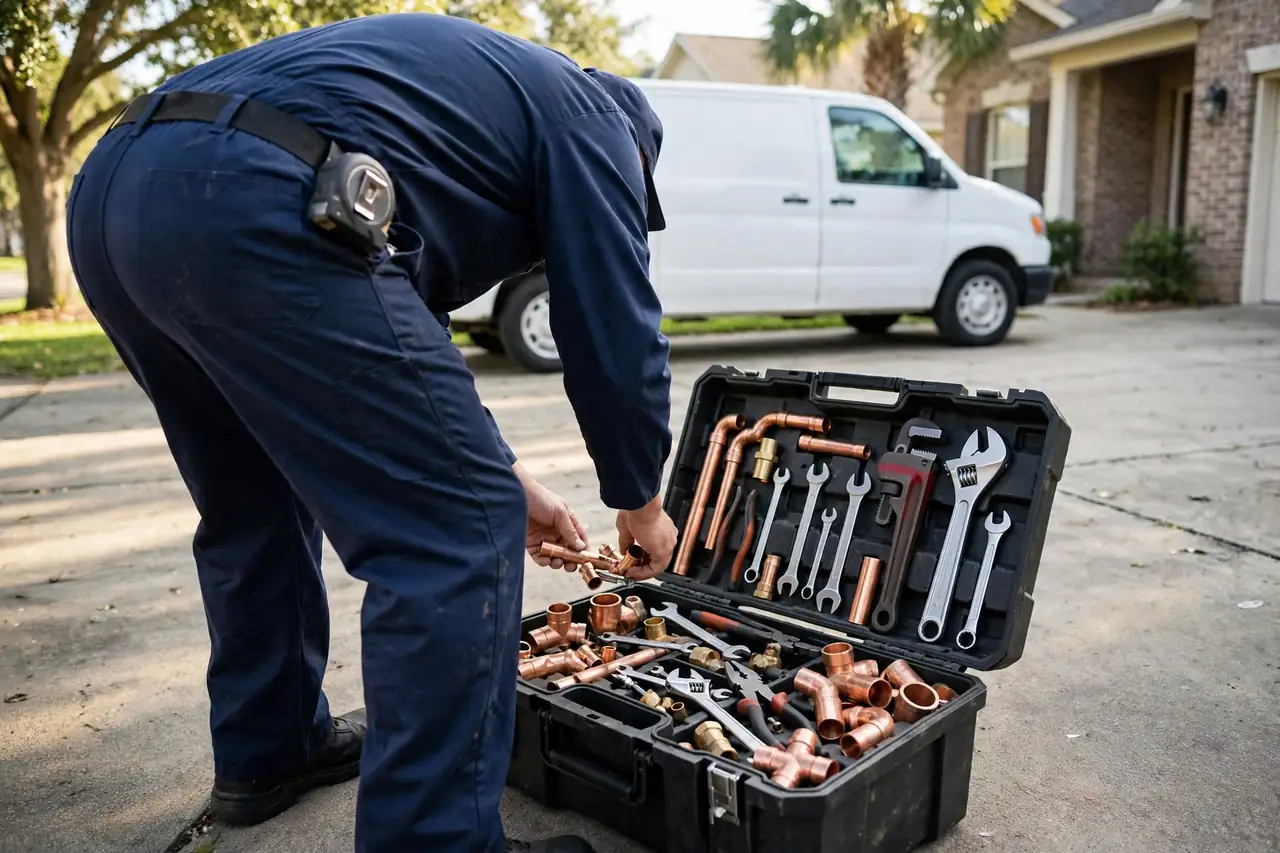
We cut out the failed section and rebuild it. Copper gets soldered or pressed with a press fitting tool, PEX gets crimped or expanded, and drains get reconnected with the right fittings and Teflon tape on the threads. Then we pressure-test the line and watch the gauge before we close anything up.
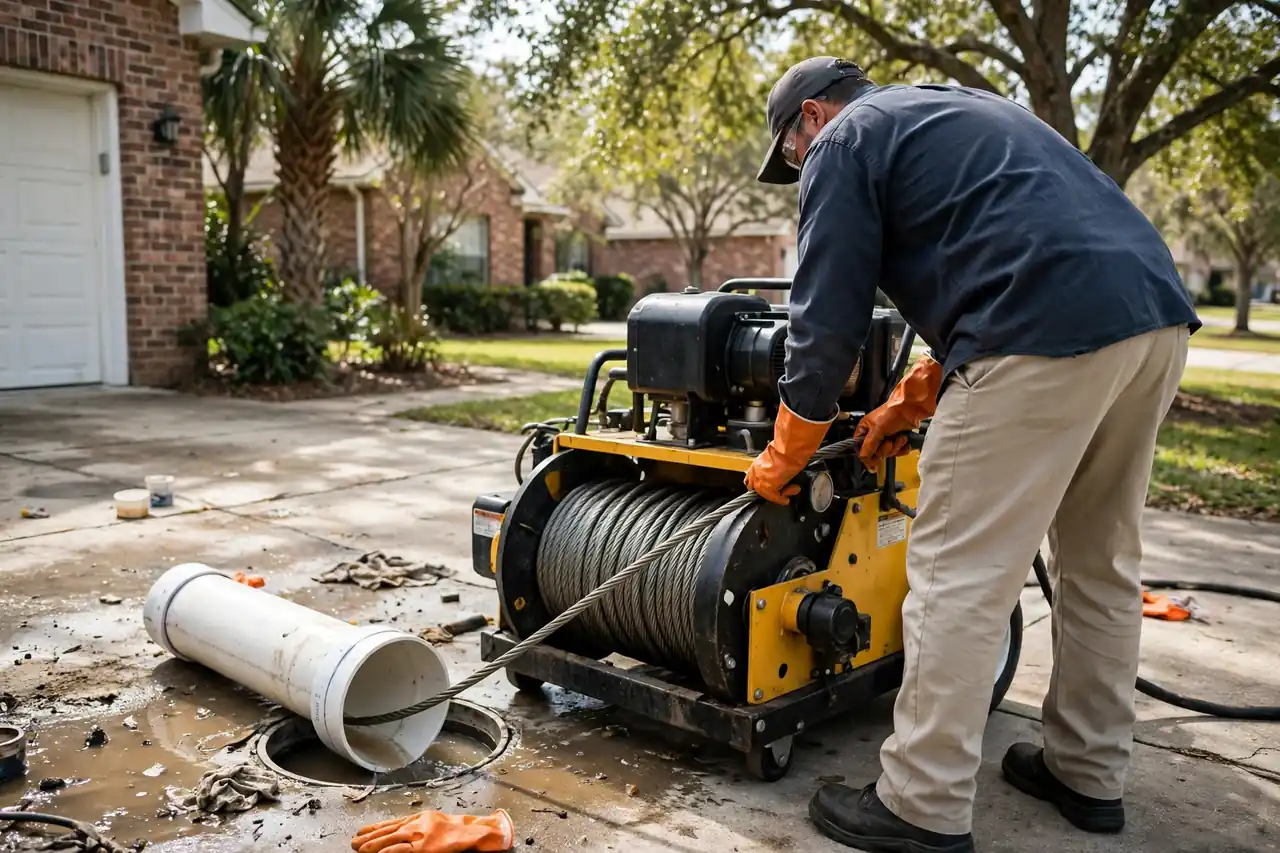
We haul out the old pipe, vacuum the drywall dust, and walk you through what we did. You get the test reading, a photo of the repair before it was covered, and a plain answer on what to watch for. If a follow-up visit is needed for drywall, we schedule it before we leave.
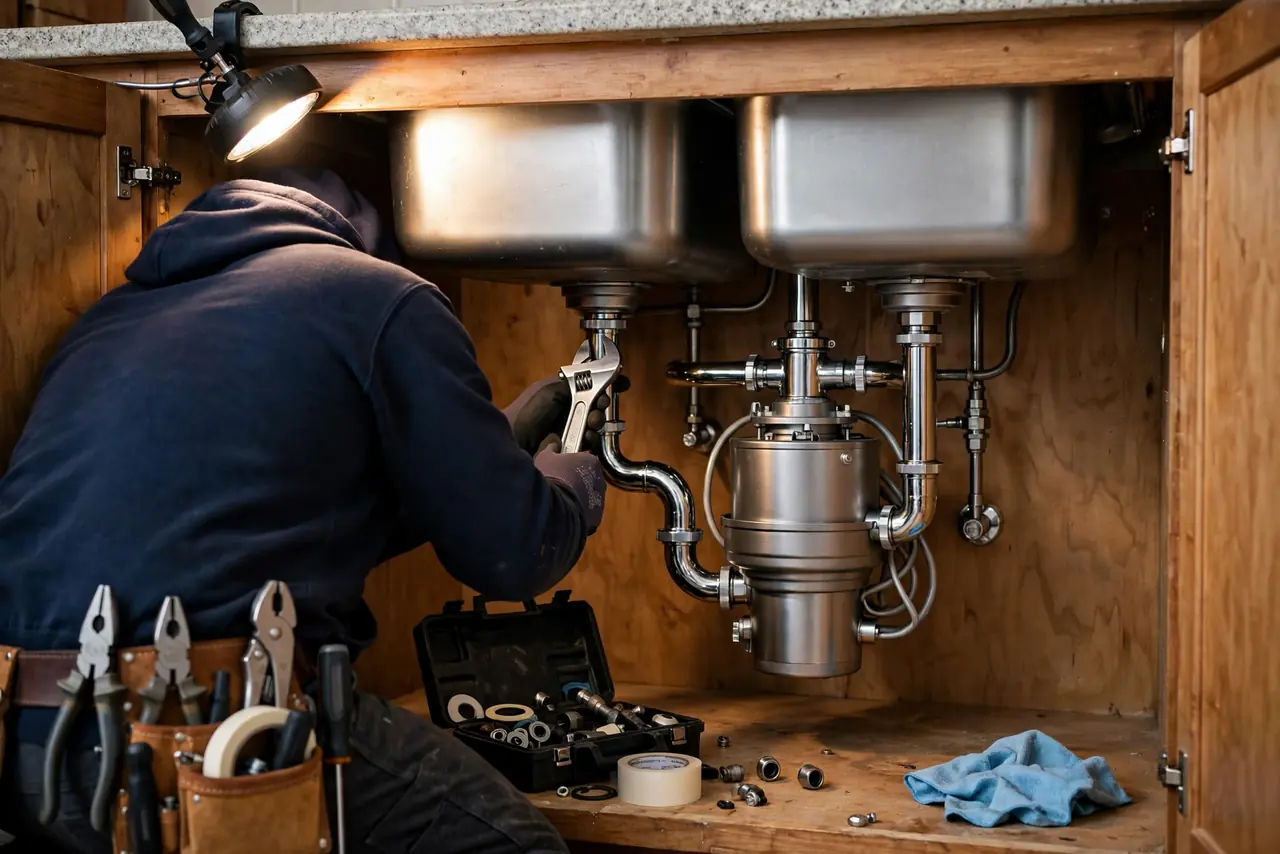
Listens for the sound of pressurized water escaping a pipe. We use it on walls, floors, and slabs to pinpoint the break before we open anything.
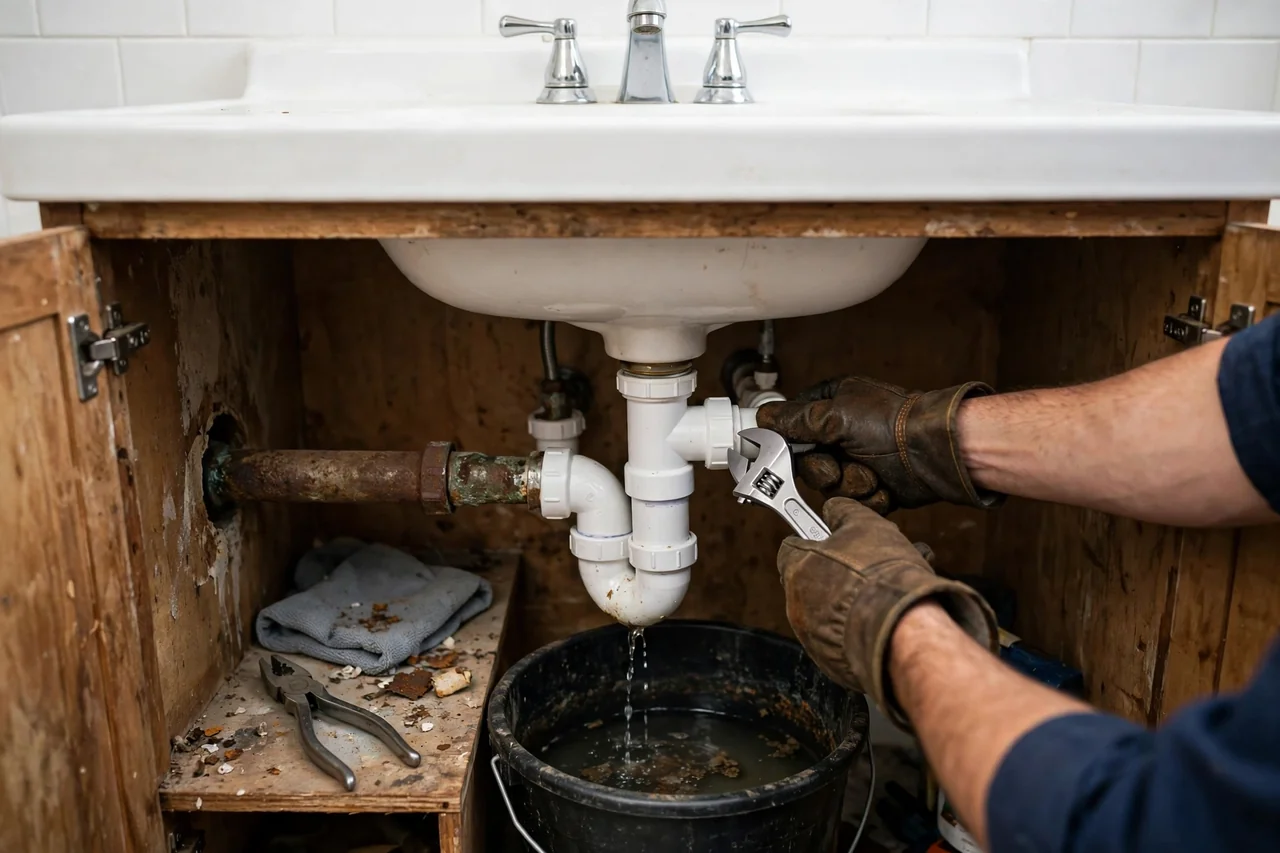
A camera on a reel that goes down a drain line. We use it to see cracks, root intrusion in sewer line, and offset joints that are letting water escape under the slab.
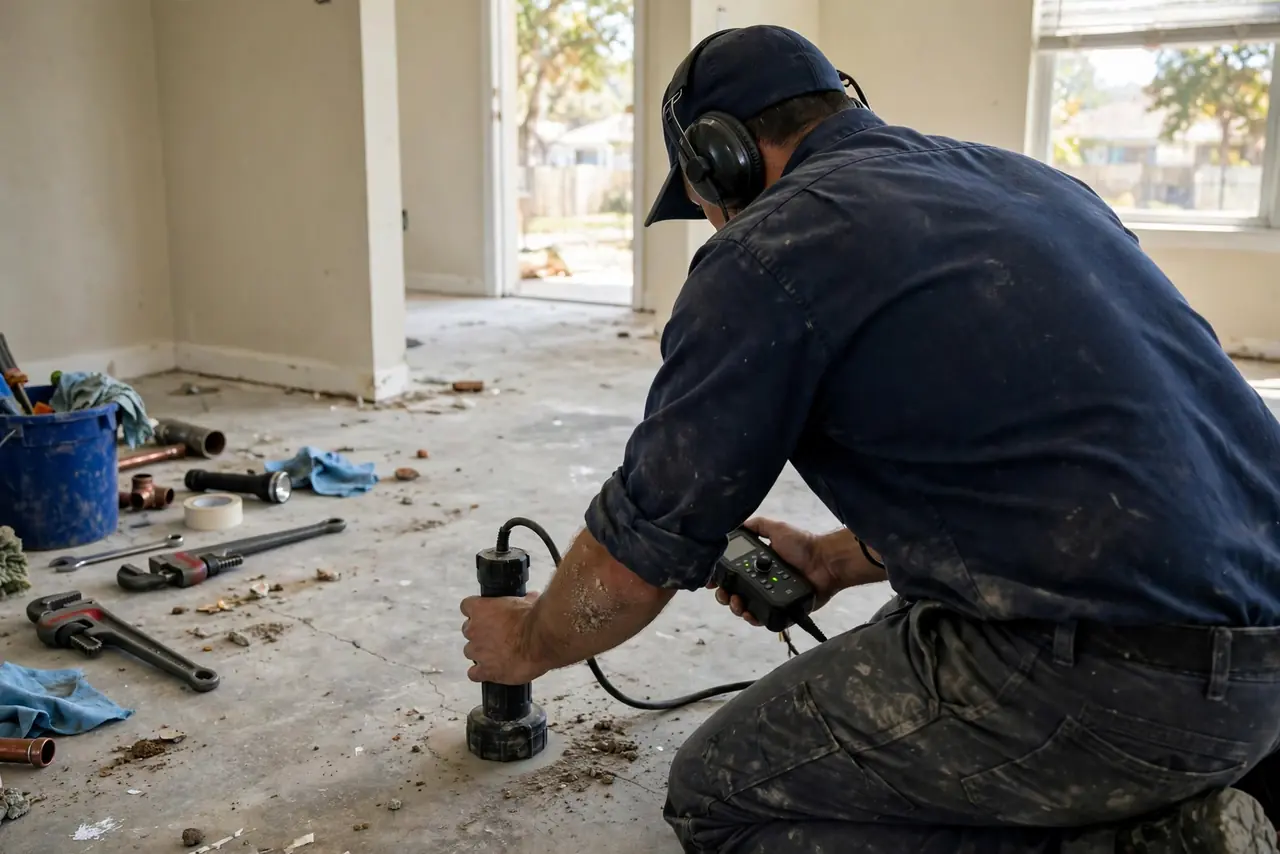
Crimps a copper or PEX fitting onto pipe without soldering. It makes a clean, fast joint in tight spaces where a torch would be a fire risk.
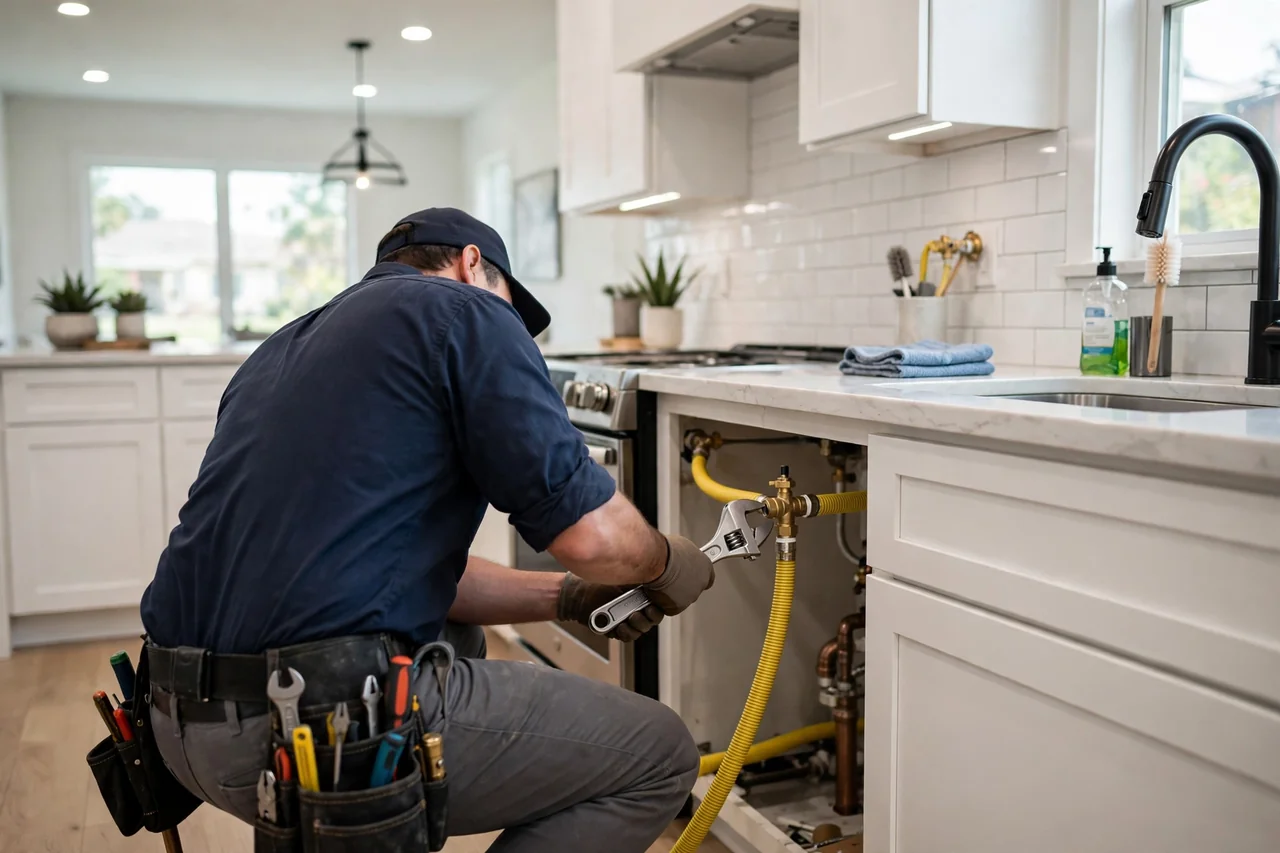
Cuts copper and PEX square so the new fitting seats properly. A square cut is the difference between a joint that holds and one that weeps.
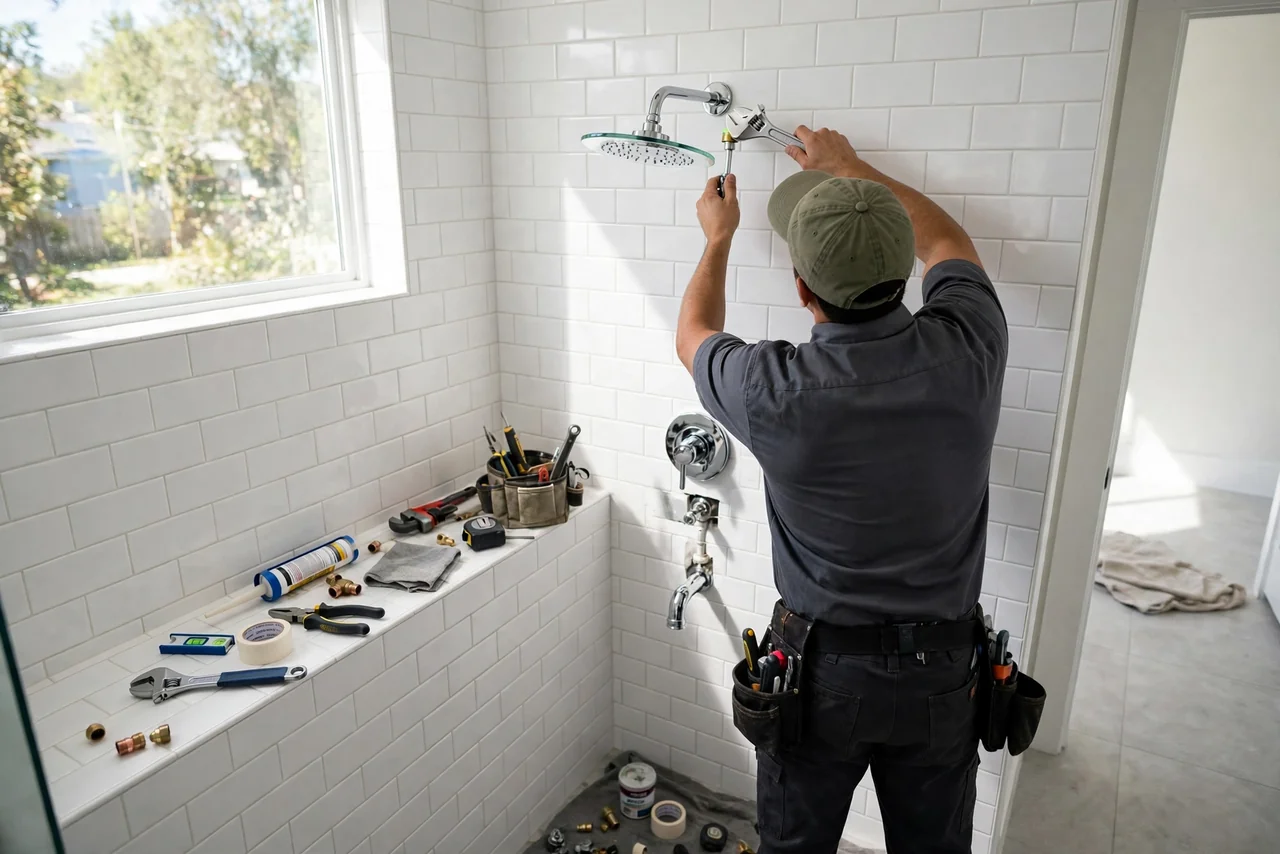
For soldered copper joints where code and access allow. We sweat the joint, clean it, and test it under pressure before closing the wall.
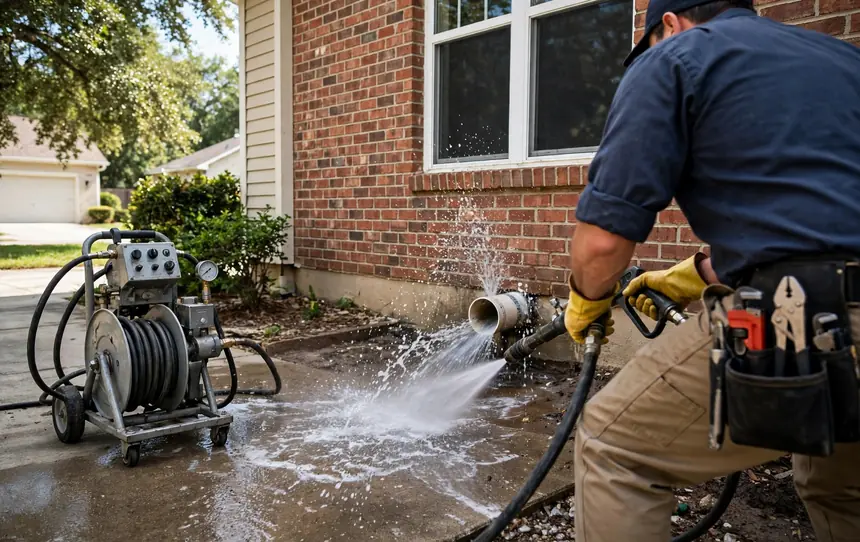
Clears blockages that put pressure on drain joints. A backed-up drain is a common cause of leaks at fittings that were fine before the clog.
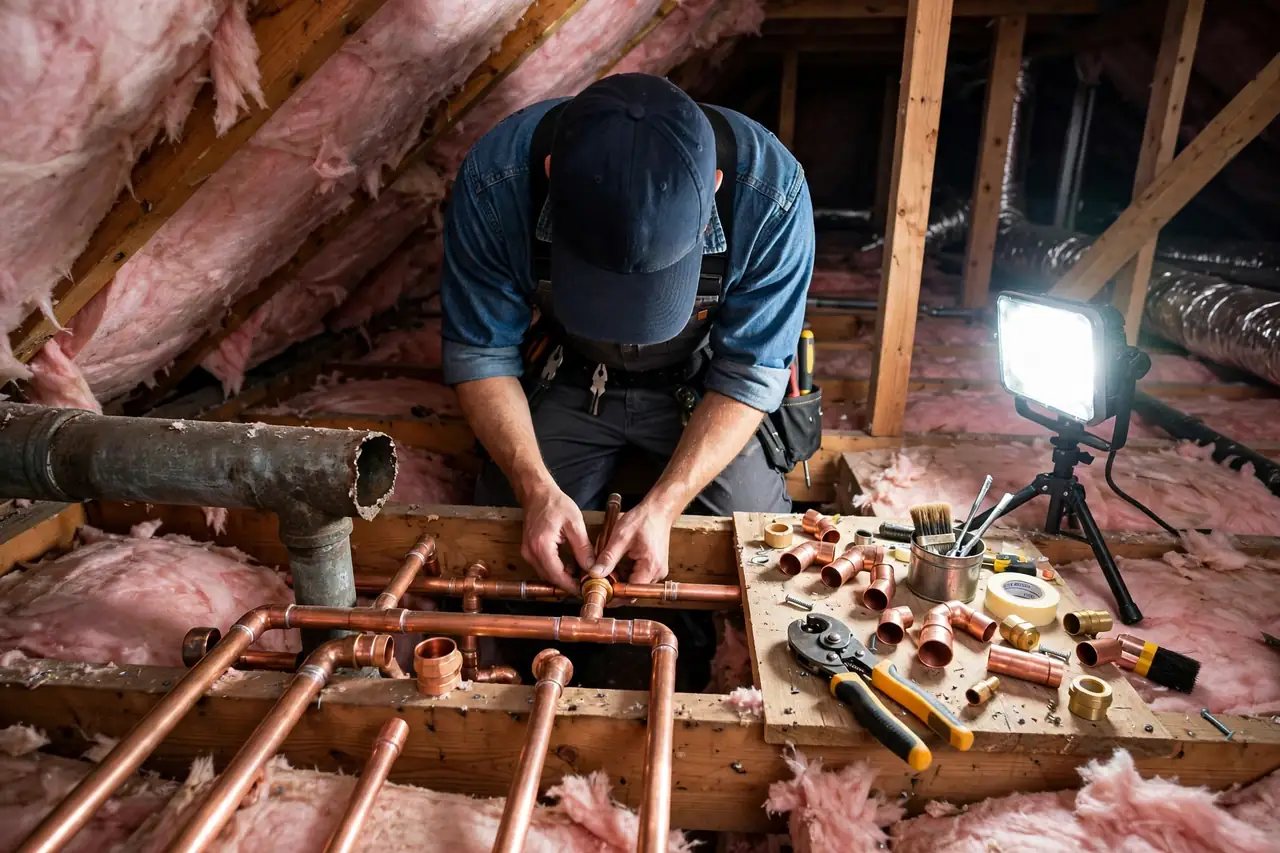
Reads moisture in drywall, wood, and concrete. It tells us how far the water has traveled and whether a wall or floor needs to be opened.
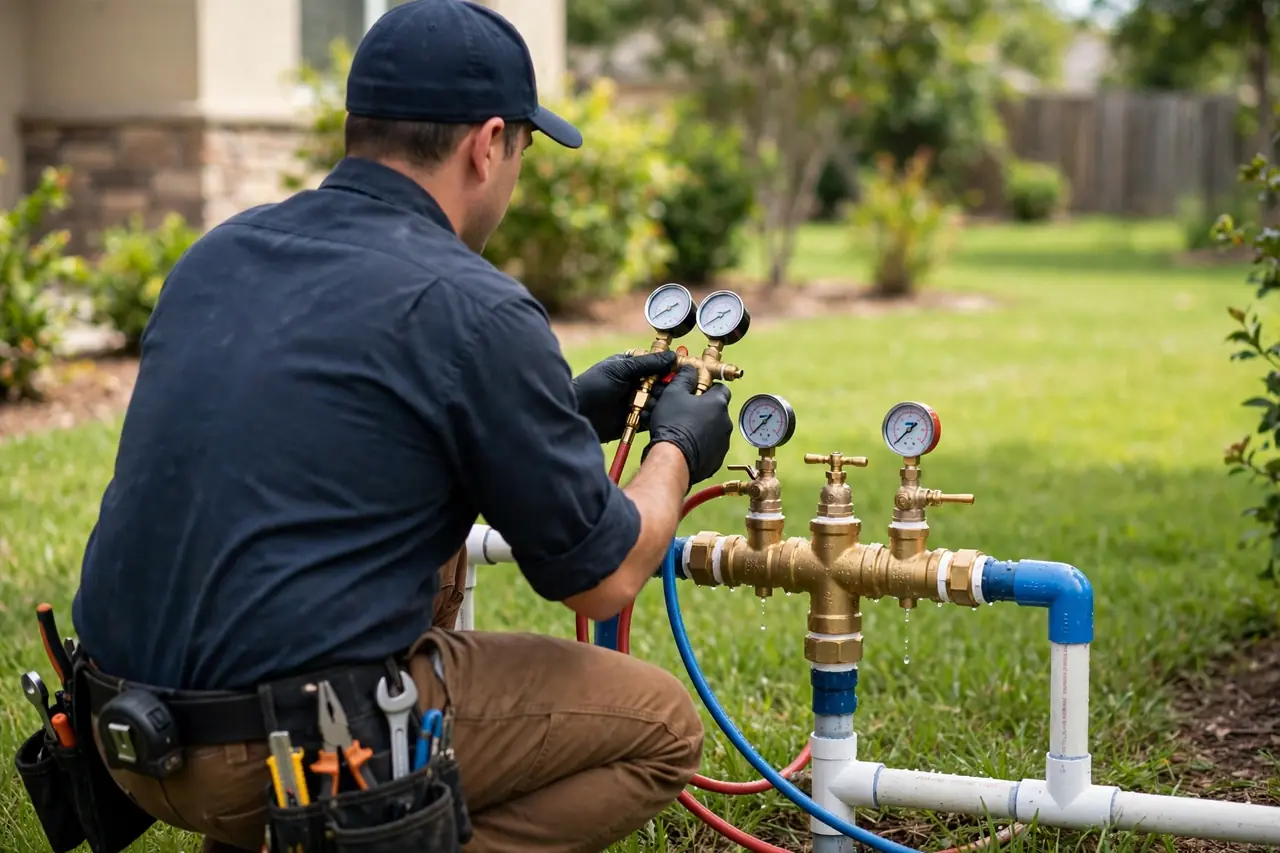
We shut every fixture and watch the water meter. If it moves, the loss is on the supply side. If it stops, the leak is on a drain or fixture. This one test cuts the search area in half before we pick up a tool.
We isolate the system and use the leak detection microphone to find the exact spot in the wall. Then we open a small access panel and repair the failed pipe or fitting, usually in a single visit. The sound stops, the meter stops spinning, and you have a patchable hole instead of a torn-up wall.
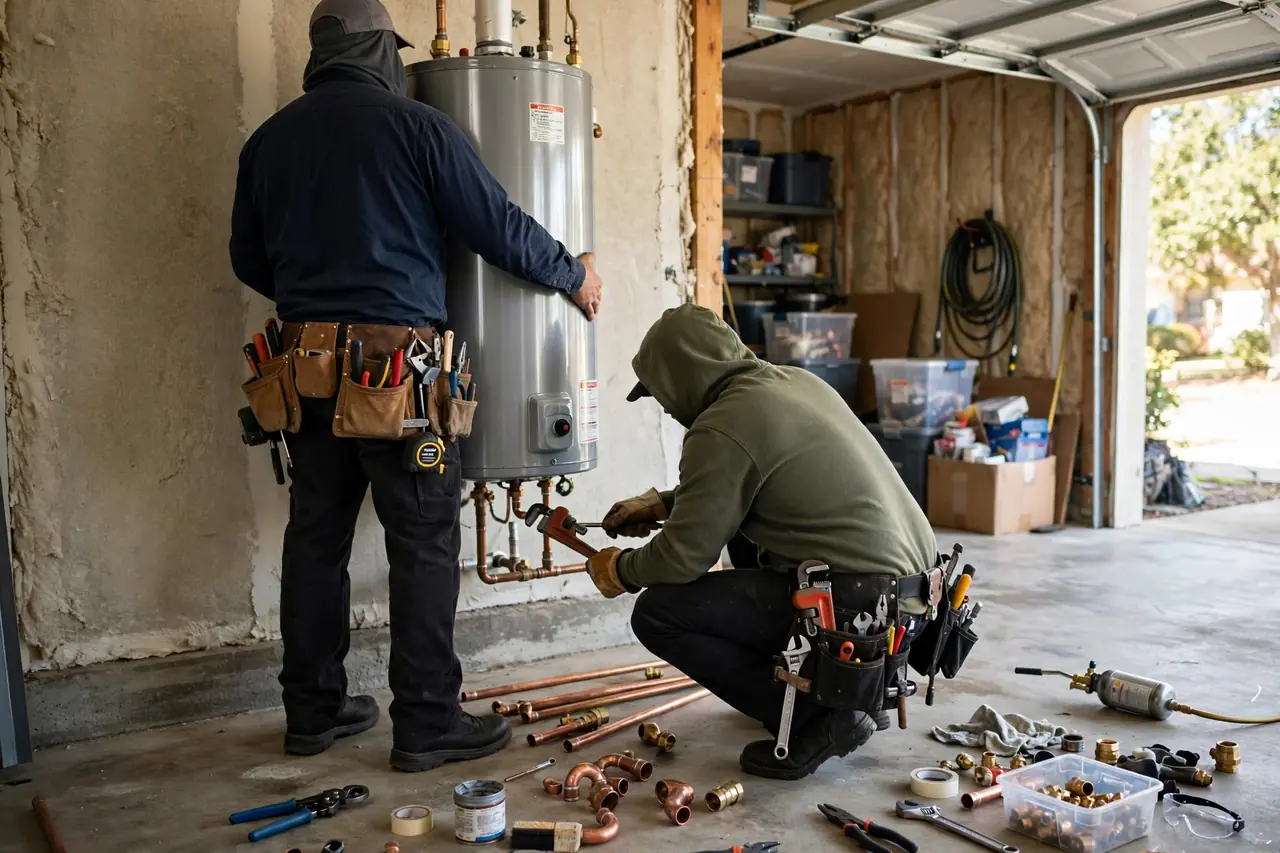
We shut the unit down, confirm whether the leak is the tank or a fitting, and repair the fitting if it can be saved. If the tank is gone, we quote a replacement with a new unit sized for the house. Hot water back once the repair is done in most cases, with the old unit hauled off and the connections tested.
That is usually a service line leak between the meter and the house. We isolate the line, locate the break, and repair or replace the failed section depending on the pipe condition. The bill drops back to normal and the soggy spot dries out within a few days.
We pull the toilet, check the flange and the wax ring, and repair the seal. If the flange is broken or the subfloor is soft, we tell you what needs to happen before the toilet goes back down. A dry floor and a toilet that seals properly, with no sewage smell and no soft spot spreading.
Slab-era copper in Sharpstown, Meyerland and Memorial is the leak-repair belt, while pier-and-beam homes in the Heights and Montrose hide leaks under the floor. Freeze damage hits attic runs first, and the leak appears on the thaw.
A homeowner heard water running at night and found a warm strip on the hallway floor. The water bill had climbed sharply over two months, and one plumber had quoted a full slab break-out.
We located the break with a microphone in about 45 minutes and rerouted the line through the attic with PEX. The repair took one day, the bill dropped back to normal the next cycle, and the floor stayed intact.
We checked the pressure-reducing valve and recommended setting it under 80 psi to take stress off the new line. A yearly meter check catches new leaks early.
Water was seeping from the wall behind the guest bath. The galvanized supply pipe had a pinhole, and the same run had been patched twice in three years. The homeowner was tired of repeat repairs.
We repaired the pinhole to stop the water, then quoted a partial repipe of the affected run with copper. The repipe took two days, passed inspection, and ended the cycle of repeat leaks on that line.
We mapped the remaining galvanized runs and marked them for future replacement. Checking under sinks and at the main once a season catches drips before they spread.
A downstairs ceiling stain kept growing after every shower. The drain connection above had failed, and water was running along a joist. The homeowner had already patched the ceiling once.
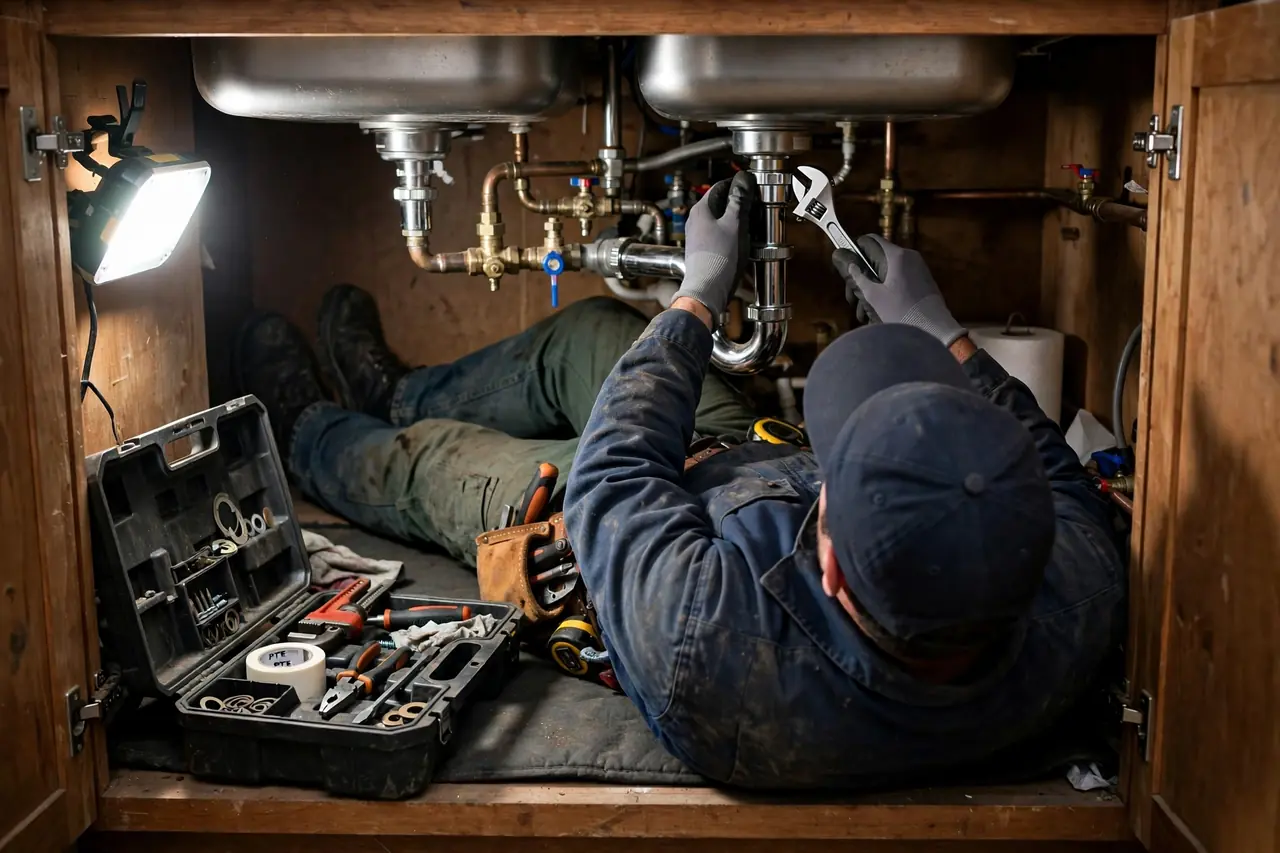
We opened a small access panel, replaced the drain gasket and the failed connection, and tested the shower for 30 minutes. The stain stopped spreading, and the ceiling was patched once and stayed dry.
We told the homeowner to check the drain for movement once a year and to call if the ceiling ever felt soft. A slow drain is the early warning sign.
Most leaks we see started small and were ignored. Here are the ones that cost Houston homeowners the most when they wait.
We isolate the system, watch the meter, and sweep with a leak detection microphone to find the loss. Once located, we repair the failed section and pressure-test it so the bill goes back to normal. A hidden supply leak can waste hundreds of gallons a day and hundreds of dollars a month. Left alone, it saturates soil under the slab and can shift the foundation.
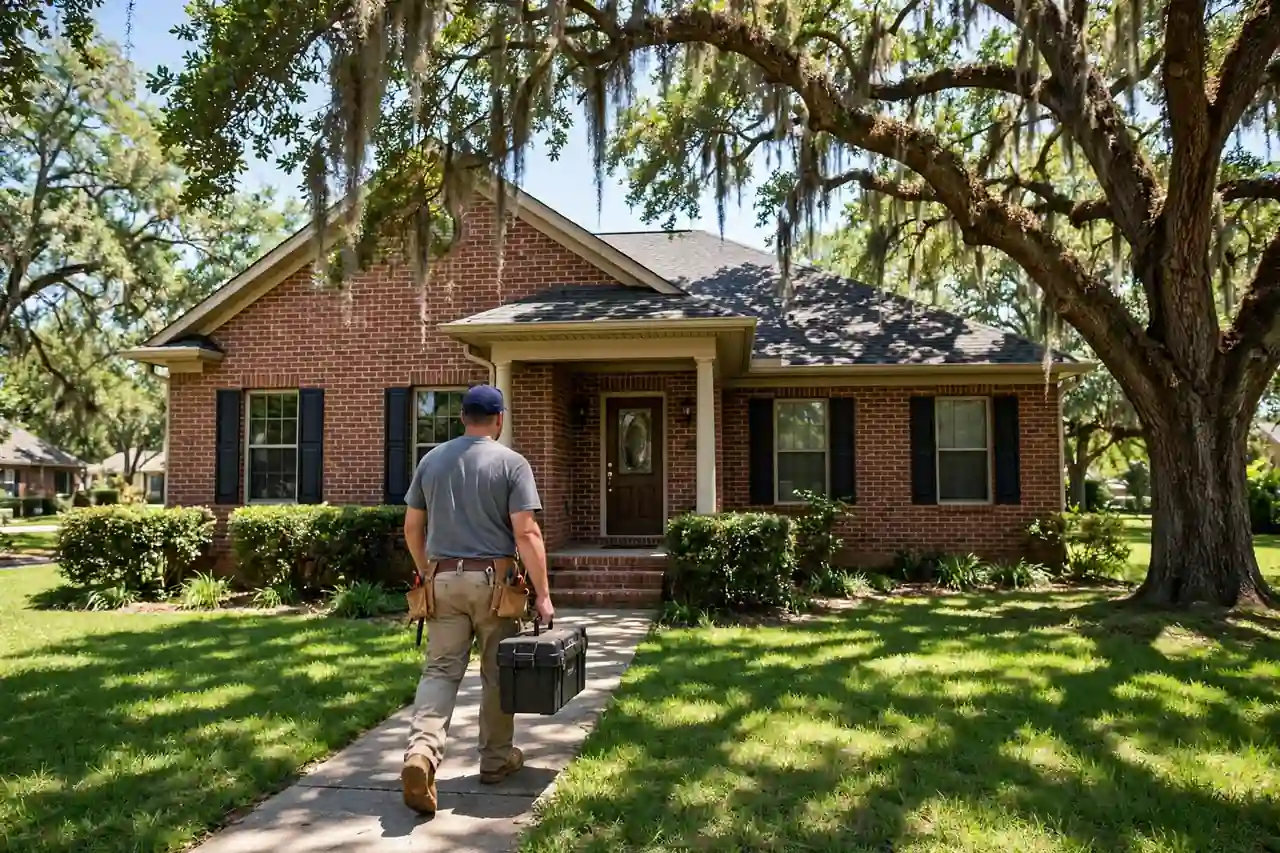
We trace the source above the stain, which is often a shower drain or a supply line in the attic. We repair the leak, then you can patch the ceiling once it dries. No guesswork, no repeat visits. A ceiling stain means water is traveling along a joist or a pipe. The longer it runs, the more drywall, insulation, and framing it ruins, and the higher the repair bill climbs.
We confirm the slab leak with meter isolation and acoustic readings, then quote both options: tunnel to the break or reroute the line overhead. You choose based on cost and disruption, and we do the work. That is a classic slab leak signature. Water under the slab erodes soil, and the erosion can lead to foundation movement and cracked tile if it runs for months.
We repair the immediate leak and give you a straight assessment of the rest of the run. If the pipe is at the end of its life, we quote repiping with copper or PEX so you stop chasing pinholes. Galvanized steel rusts from the inside. Once one joint leaks, the next is usually close behind, and you end up paying for repair after repair on the same run.
We use a leak detection microphone and moisture meters to pinpoint the break before we open anything. On a typical slab leak repair Houston Texas job, that means one small access point instead of a torn-up hallway. You see the readings, we explain what they mean, and you approve the cut before the saw goes in.
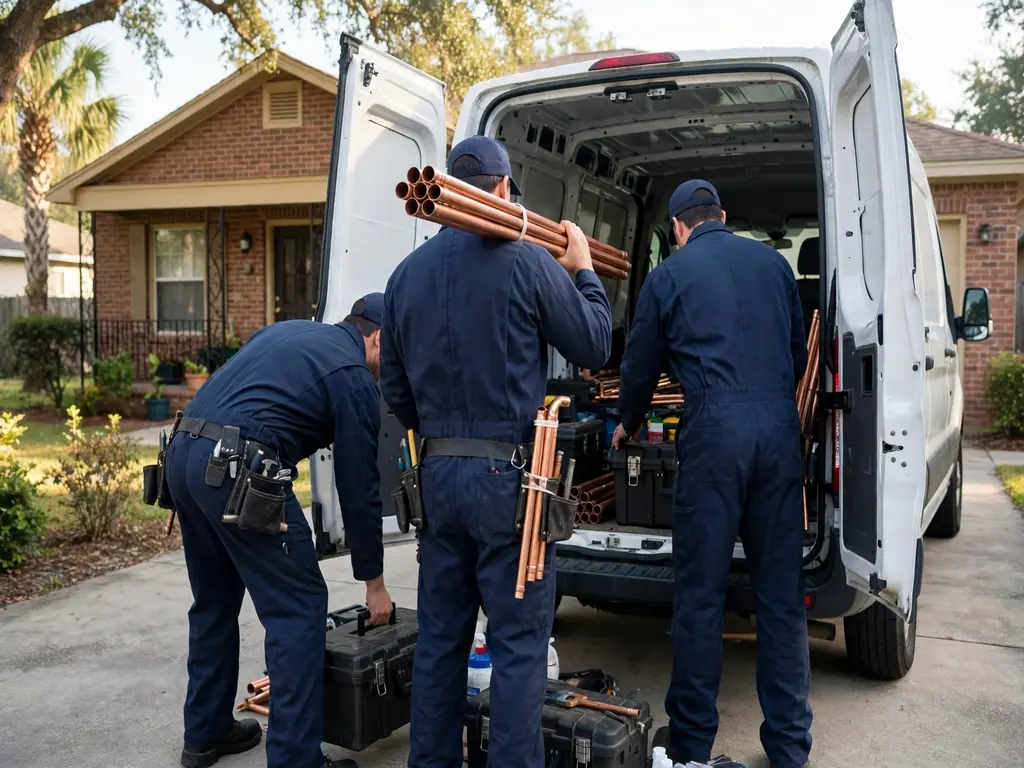
An active supply leak gets priority. Most fixture and exposed pipe leaks are repaired in two to four hours, including the test. If we need a part like a push-fit fitting or a new shutoff valve, we carry common sizes on the truck so the water stays off for hours, not days.
Every repair is built to the 2021 Uniform Plumbing Code with Houston Amendments. We pressure-test the line and document the reading. If a permit is required for the work, we pull it and meet the inspector, so the repair holds up when you sell the house.
You get a price before we pick up a tool. water leak repair Houston Texas does not mean cheap parts, it means no surprise line items at the end. We quote the diagnosis, the repair, and any drywall access as separate numbers so you can see exactly what you are paying for.
Clear records you can keep and share.
Where the break is and how we found it
Taken before the wall or floor is closed
The gauge number that proves the repair holds
A leak is a symptom, and the pipe is the cause. Knowing which one you are paying to fix keeps the decision simple.
A repair fixes the failed section. A reroute abandons the line and runs a new one. On a failing slab line, the reroute is often the cheaper choice over ten years.
A price quoted before the leak is located is a guess. The meter test and the acoustic sweep are what make a firm price possible.
A repair that is not pressure-tested is not finished. The gauge reading is the proof that the joint holds before the wall goes back.
Outside these areas? Call and ask if we can reach you. (346) 776-8560
We do not publish prices, because the cost depends on the leak's location, access and material. A fitting is one job; a leak under a slab is another. Every job starts with a free estimate and a written scope you approve before we start.
It depends on the pipe. A spot repair on a sound line lasts. A spot repair on a systemically tired copper line can leak again nearby, which is why we explain spot repair versus reroute versus tunneling honestly before you choose.
A leak under a slab can wash soil and change how the slab is supported, and slab movement can also cause leaks, so the two are linked. We find and fix the leak; foundation questions belong to a foundation engineer, and we say so plainly.
Yes. Estimates are free, and you approve the written scope before work starts. We are open Monday to Sunday, 7:00 AM to 10:00 PM.
Call (346) 776-8560 for a free estimate. We find the source, repair it properly, and test before we leave, Monday to Sunday, 7:00 AM to 10:00 PM.
Call us at (346) 776-8560 to book leak repair or ask a question. We are open Monday to Sunday, 7:00 AM to 10:00 PM, and estimates are free.
The fastest way to book is a phone call. Tell us what is happening and we will give you a free estimate and a time that works, Monday to Sunday, 7:00 AM to 10:00 PM.
Open Mon–Sun, 7:00 AM–10:00 PM. Free estimates.