Written scope
Pipe, fixtures, and drywall patch spelled out
Some pipe is too far gone to repair: galvanised rusted through, copper pitted along a run, cast iron cracked end to end. El Primo Lalo Plumbing replaces failed pipe sections in Houston, in copper or PEX as the job requires, with a permit where the City requires one.

Every repipe includes the parts that matter: the new pipe, the fittings, the test, and the cleanup. Here is what you get when we open the wall, and what we price separately if the job needs it.
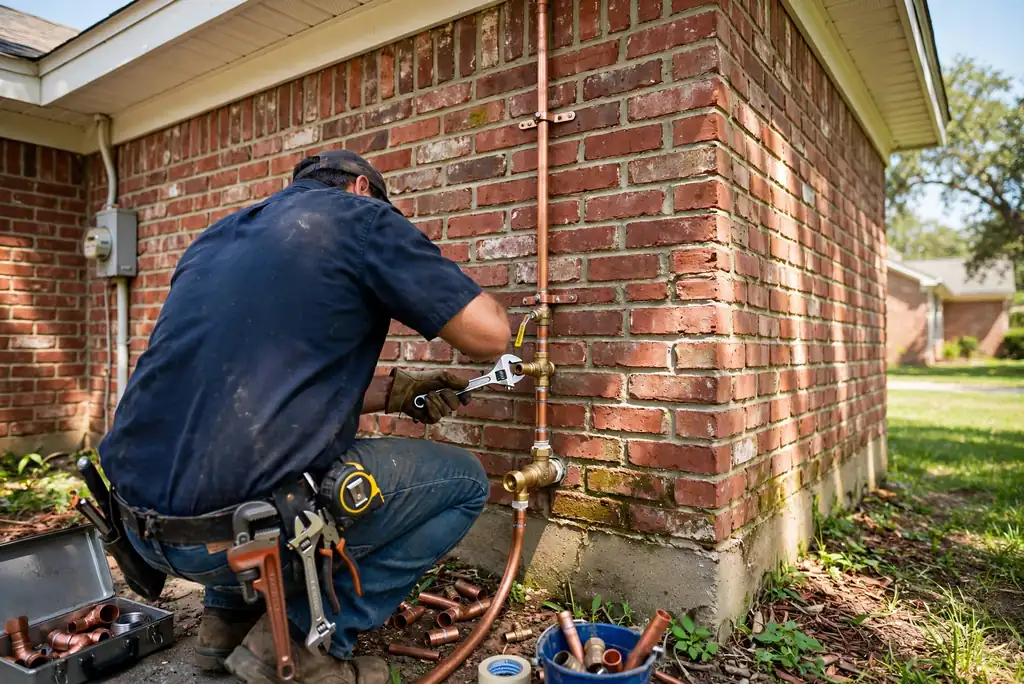
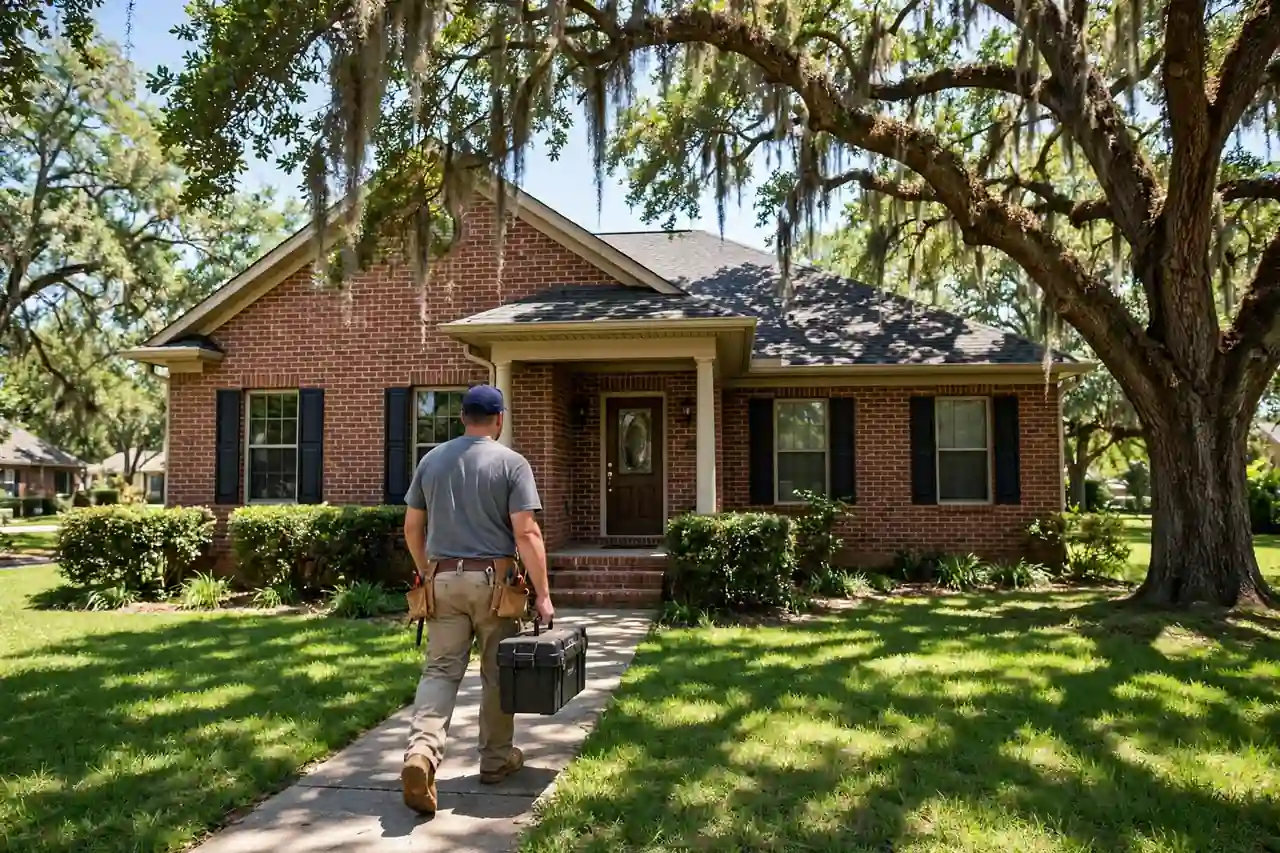
Homes in Houston take a beating from hard water and hot attics, and old steel lines fail first. We replace the failing run, test it, and patch the wall before we leave.
A failed supply line can shut down a kitchen or a restroom bank. We schedule commercial repipes around your hours and test the line before we hand it back.
Replacement is the answer when a pipe has failed along a section, not at a single point. Galvanised steel rusts from the inside out and narrows until pressure drops. Copper develops recurring pinholes. Cast iron scales, cracks and bellies. Polybutylene from the late 1970s to the mid-1990s is notorious for sudden failures. When the camera or the pressure test shows a tired run, replacing the section beats repairing it spot by spot.
Material choice matters. PEX is the common replacement for whole-house work because it routes overhead through walls and the attic, abandoning the under-slab line entirely. Copper remains the choice where the job calls for it. Bigger jobs such as whole-house repiping and sewer replacement need a City permit and inspection under the 2021 Uniform Plumbing Code with Houston Amendments.
Repair the point. Replace the run. Knowing which is which saves you the second call.
No mystery, no surprise drywall damage. Here is exactly what happens from the first call to the final pressure test.
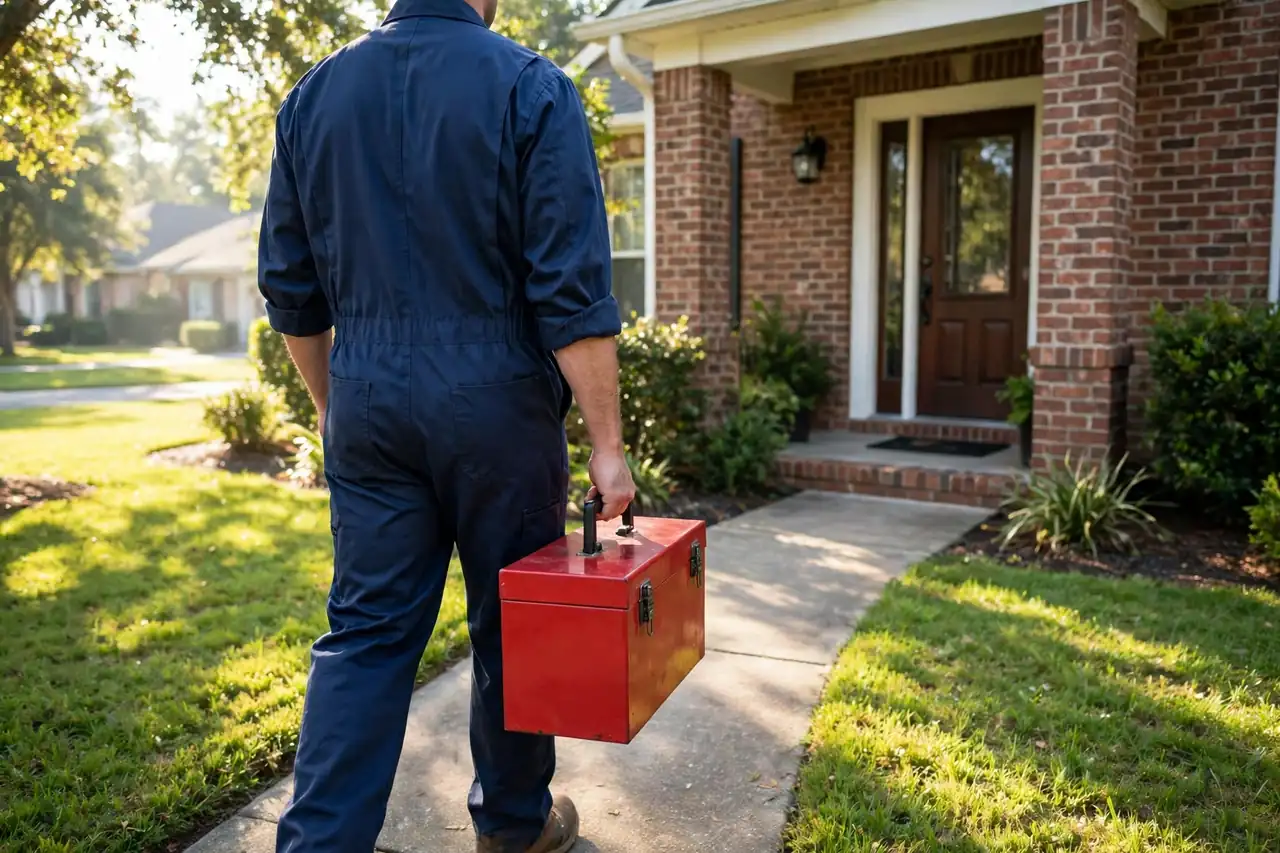
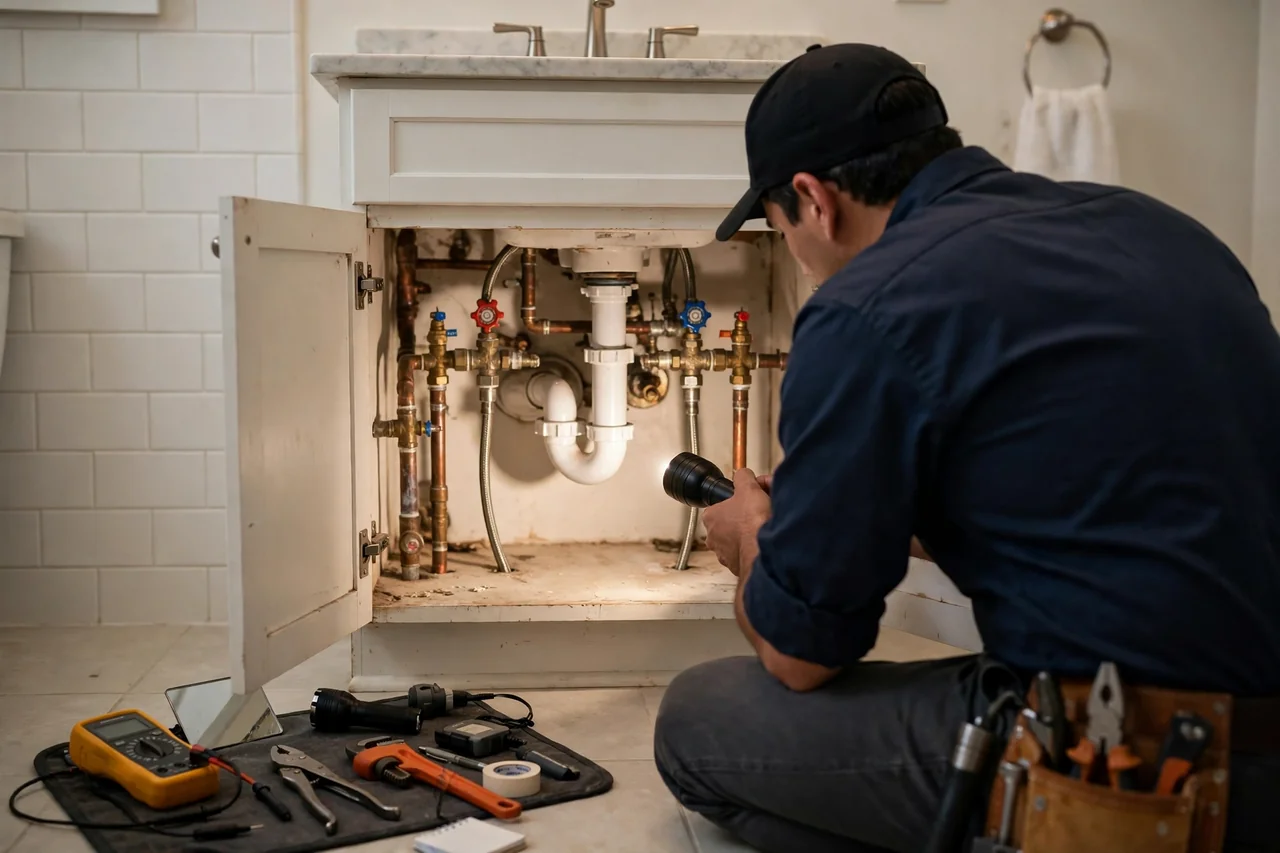
You call (346) 776-8560 and describe what you are seeing: low pressure, rusty water, a wet spot on the slab. We ask a few questions, then schedule a visit, usually prompt for active leaks. The visit includes a walkthrough and a leak detection check with a microphone or sewer camera if the line is underground.
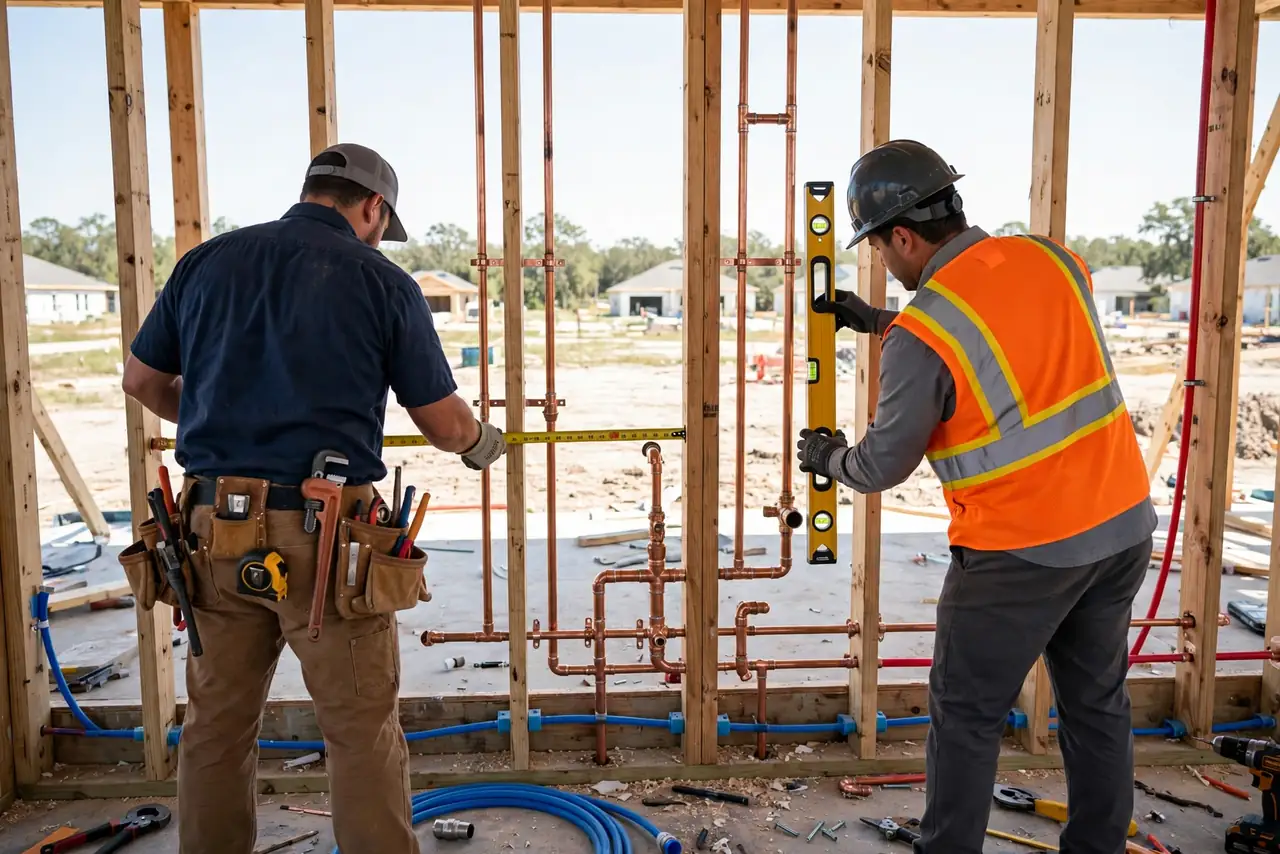
We map the run, count the fixtures, and price the job by the foot and by the fixture. You get a written number before any pipe is cut, including the cost to open and close the wall. If the scope changes mid-job, we stop and talk to you first.
We shut off the water at the shutoff valves, drain the lines, and lay drop cloths over the floors. Furniture gets moved, cabinets get protected, and we cut only the drywall we need to cut. Most interior repipes take one to three days of demo and install.

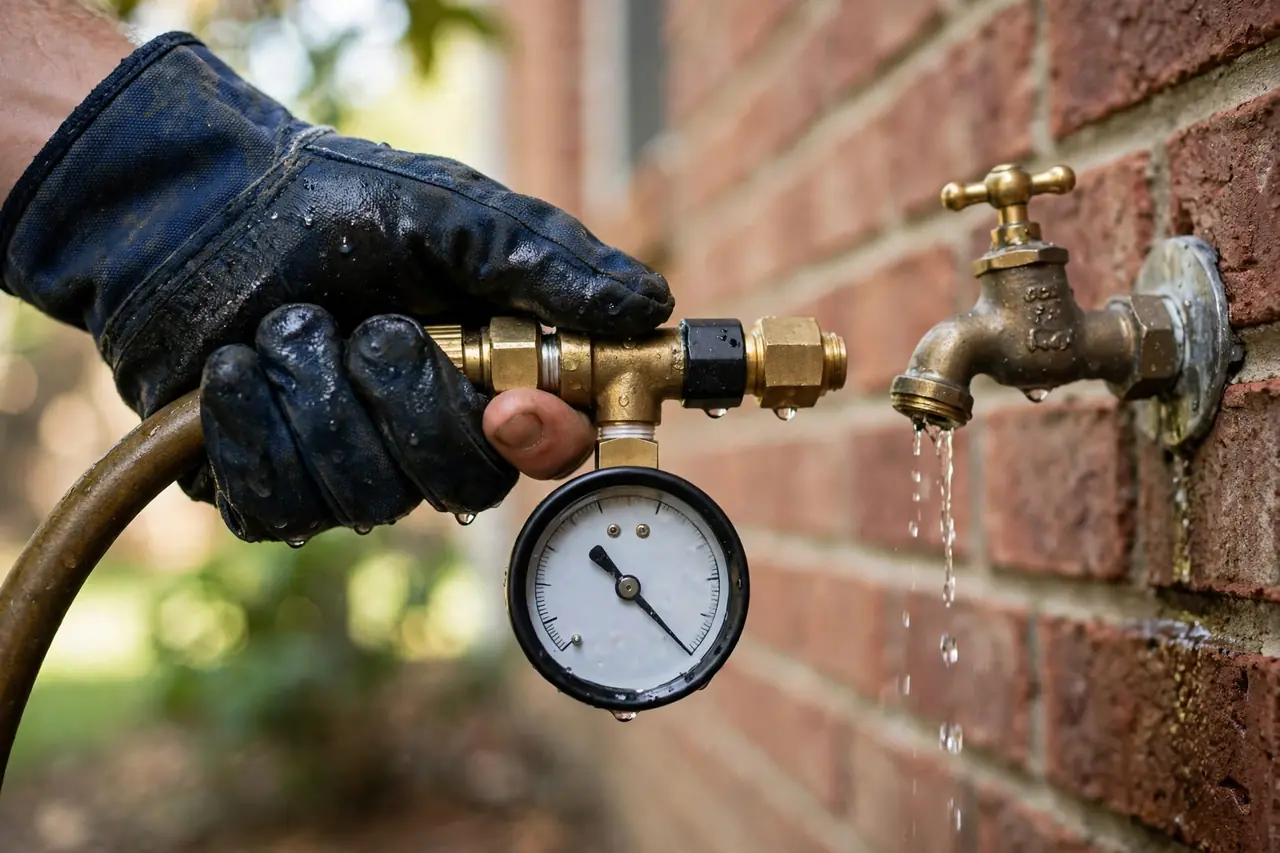
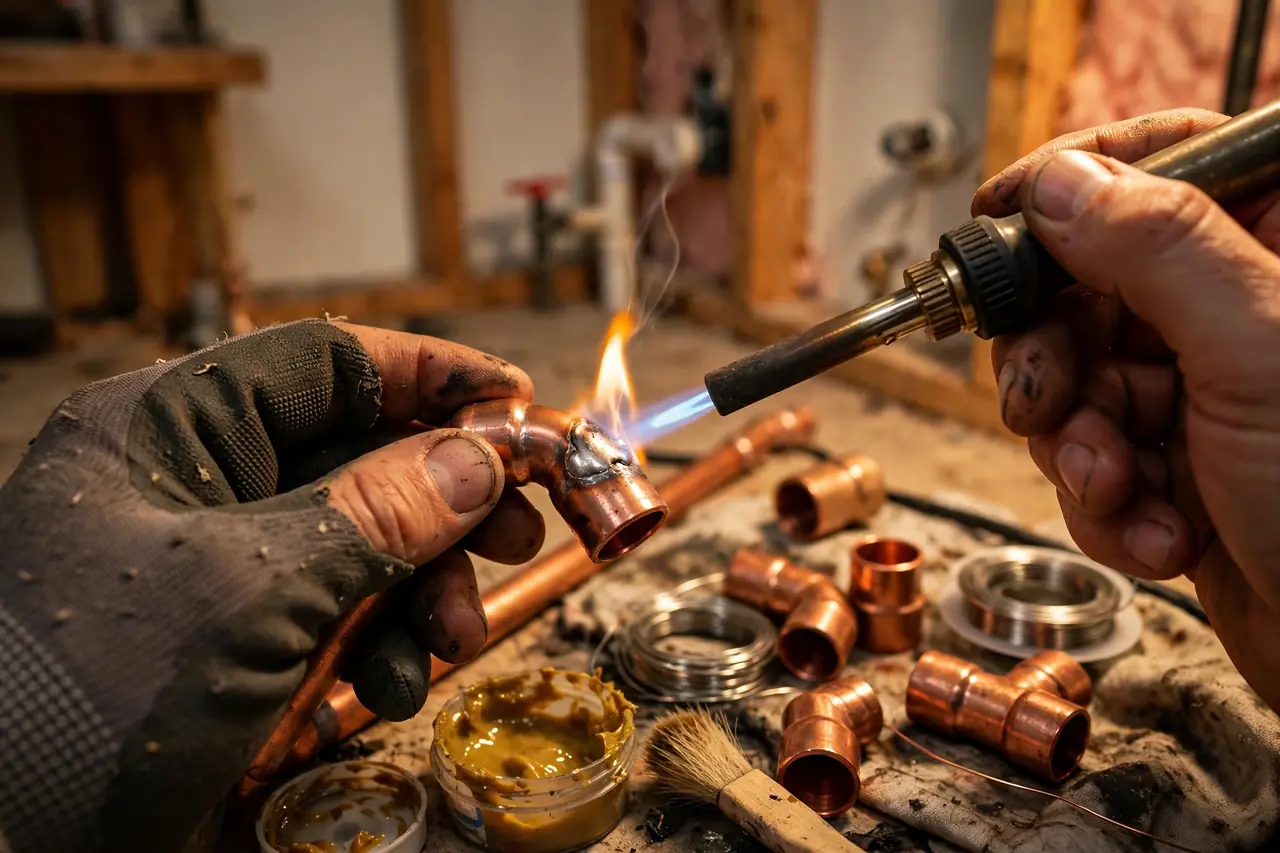
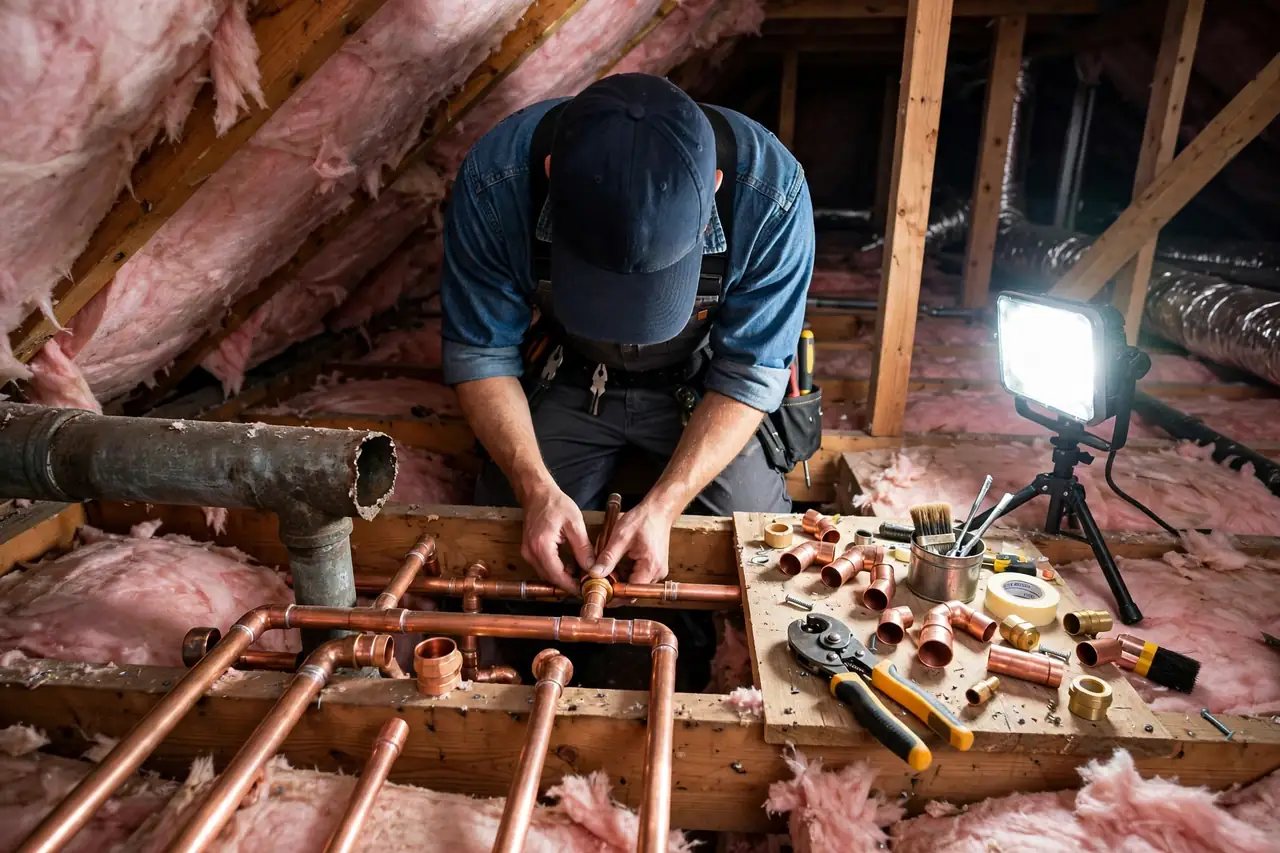
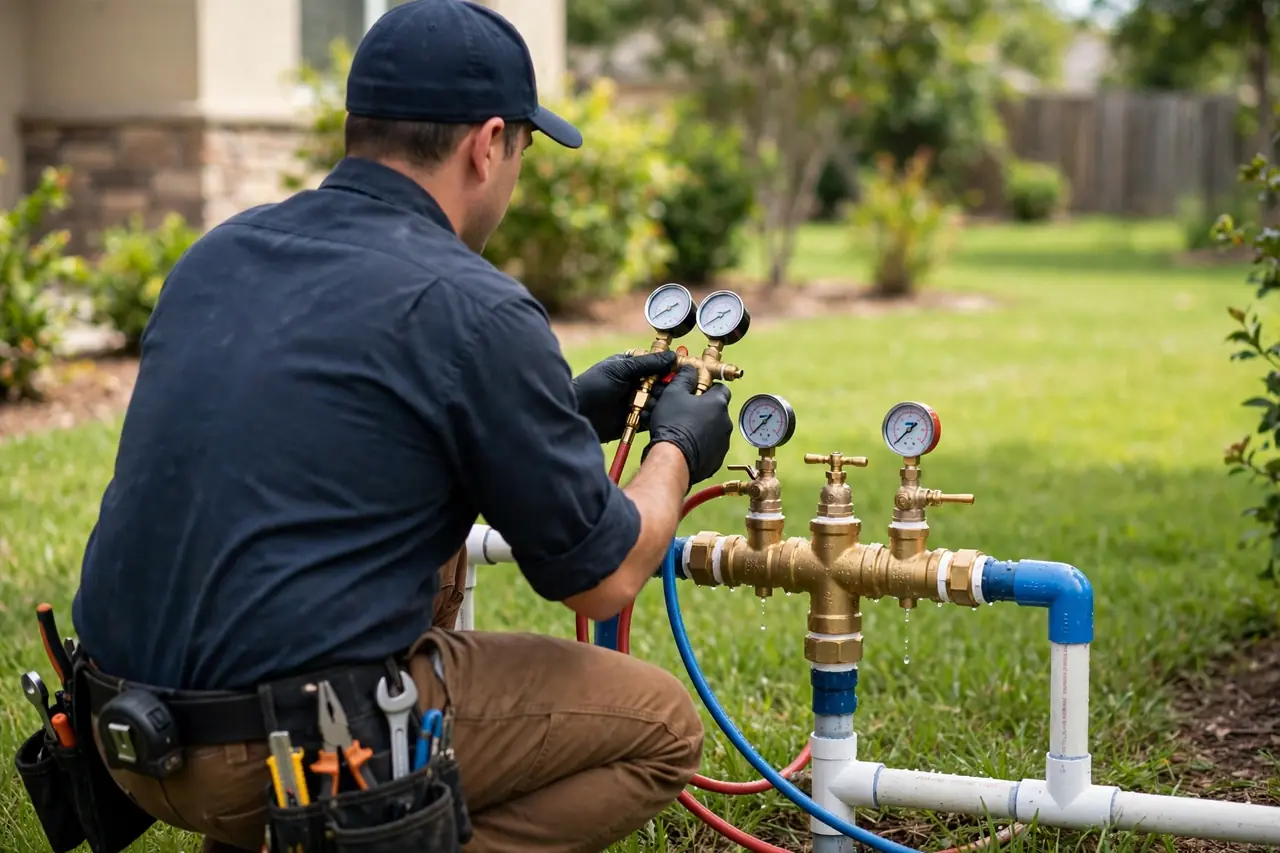
New copper pipe or PEX tubing goes in with brass fittings and press-fit or soldered joints. We insulate exterior runs, strap the pipe to code, and pressure-test the whole system at 100 psi for at least an hour. Any joint that weeps gets redone before we move on.
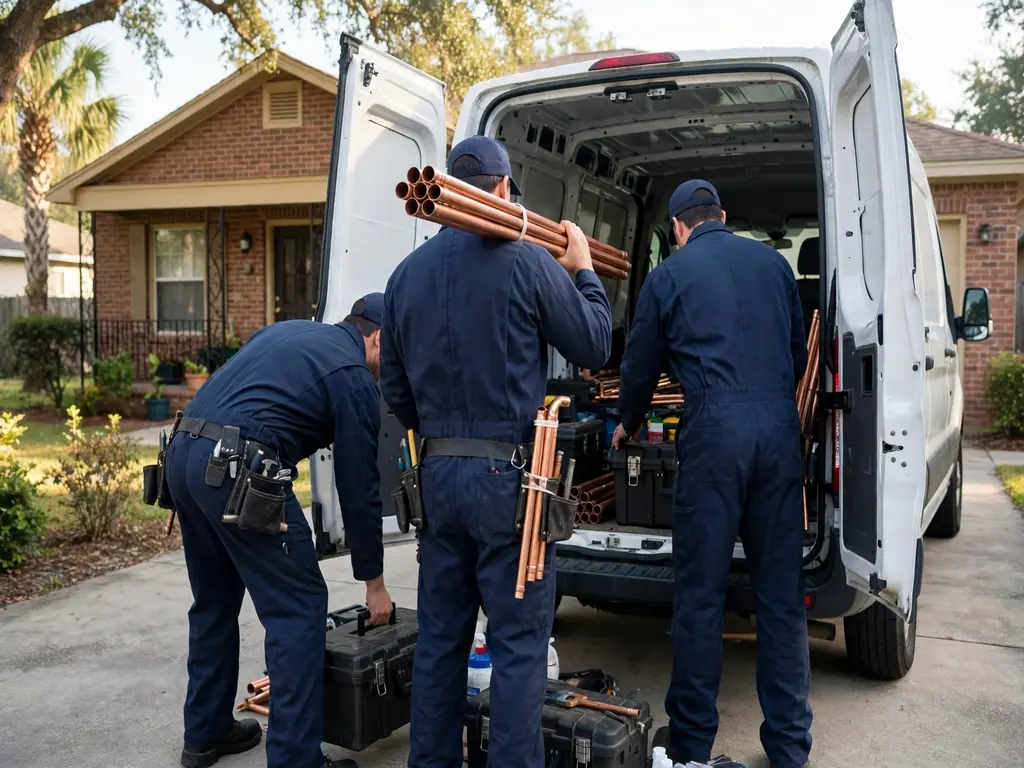
We haul the old pipe out, patch the drywall openings, and flush every fixture. Then we walk the job with you, show you the new shutoff valves, and hand over the paperwork. You get a dry floor and a system that holds pressure.
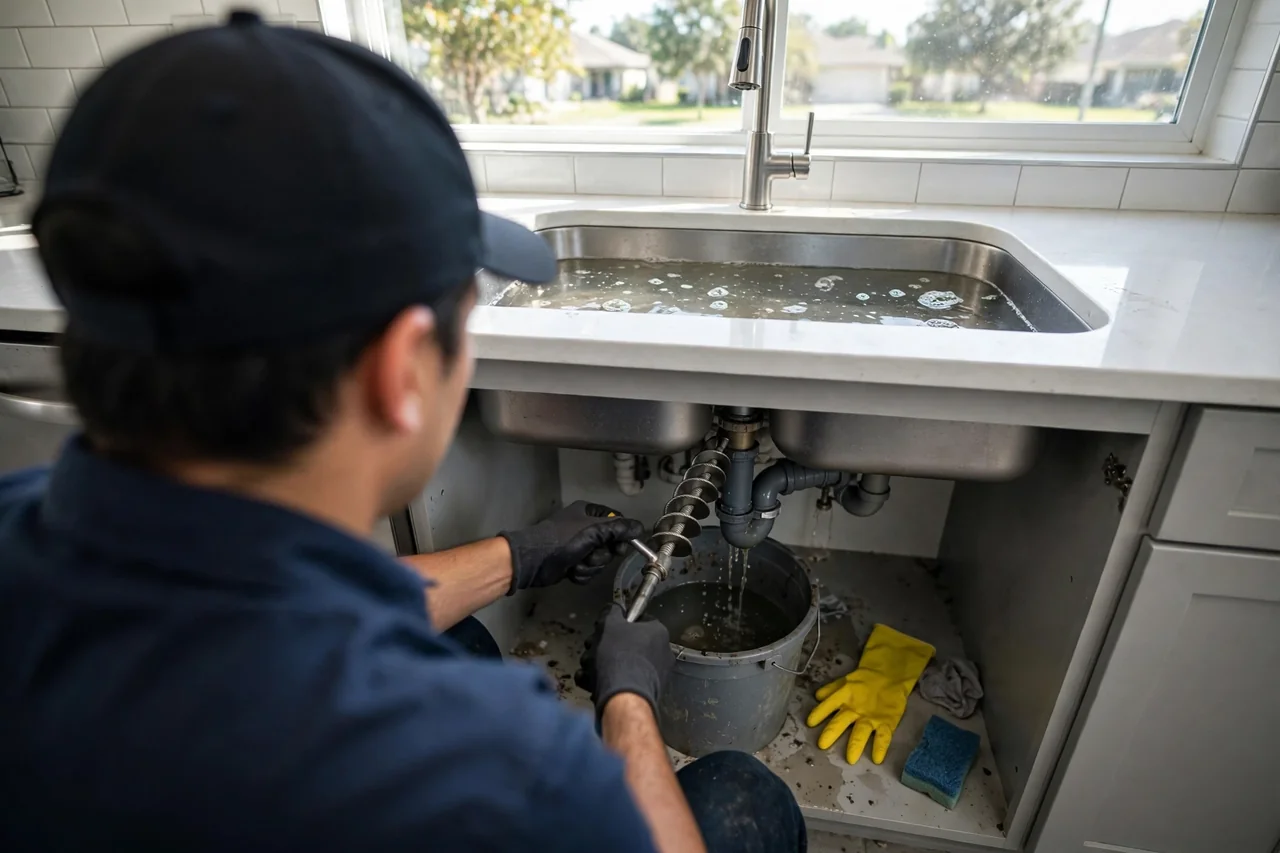
Clean cuts and press-fit joints on copper and PEX. Press fittings go on in seconds and hold full pressure without a flame.
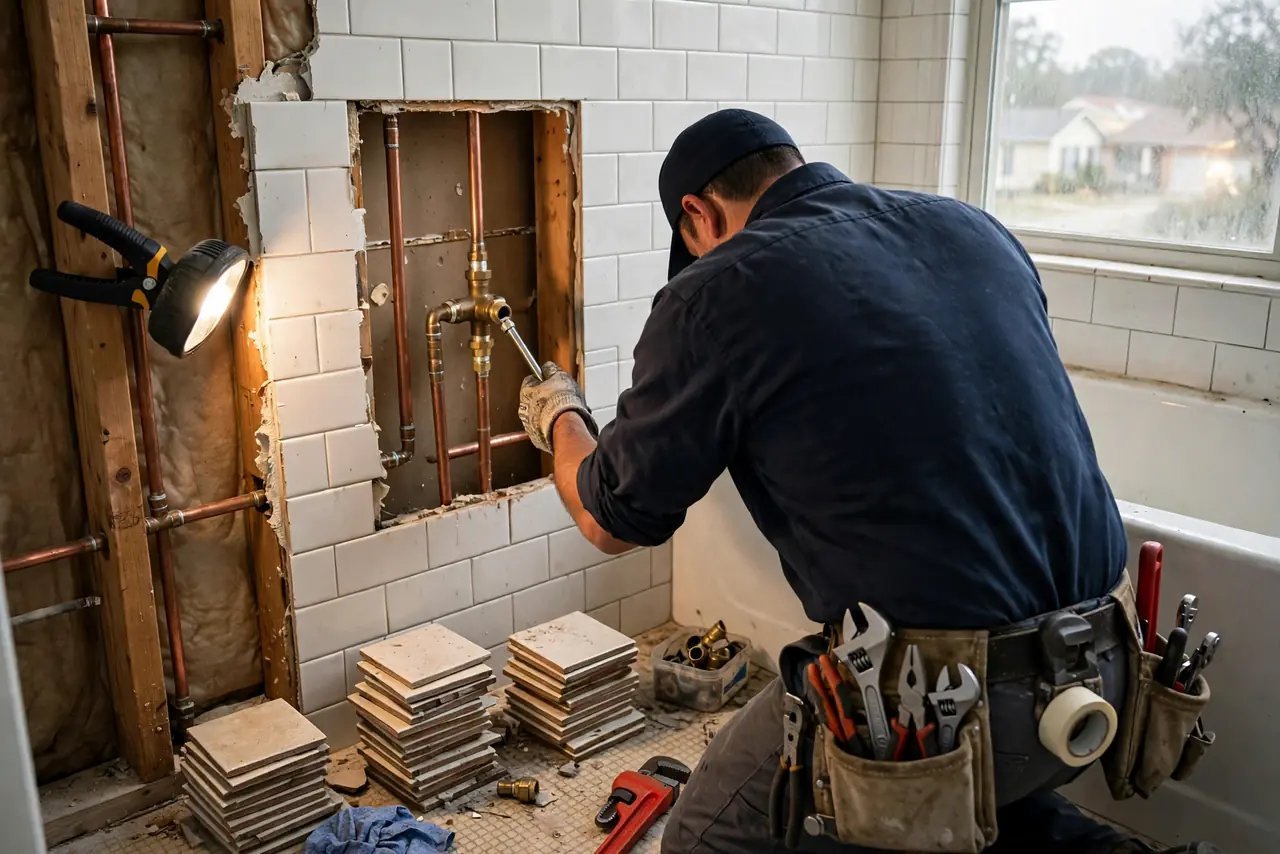
Finds hidden leaks under slabs and behind walls before we open anything. Accurate location keeps the repair small.
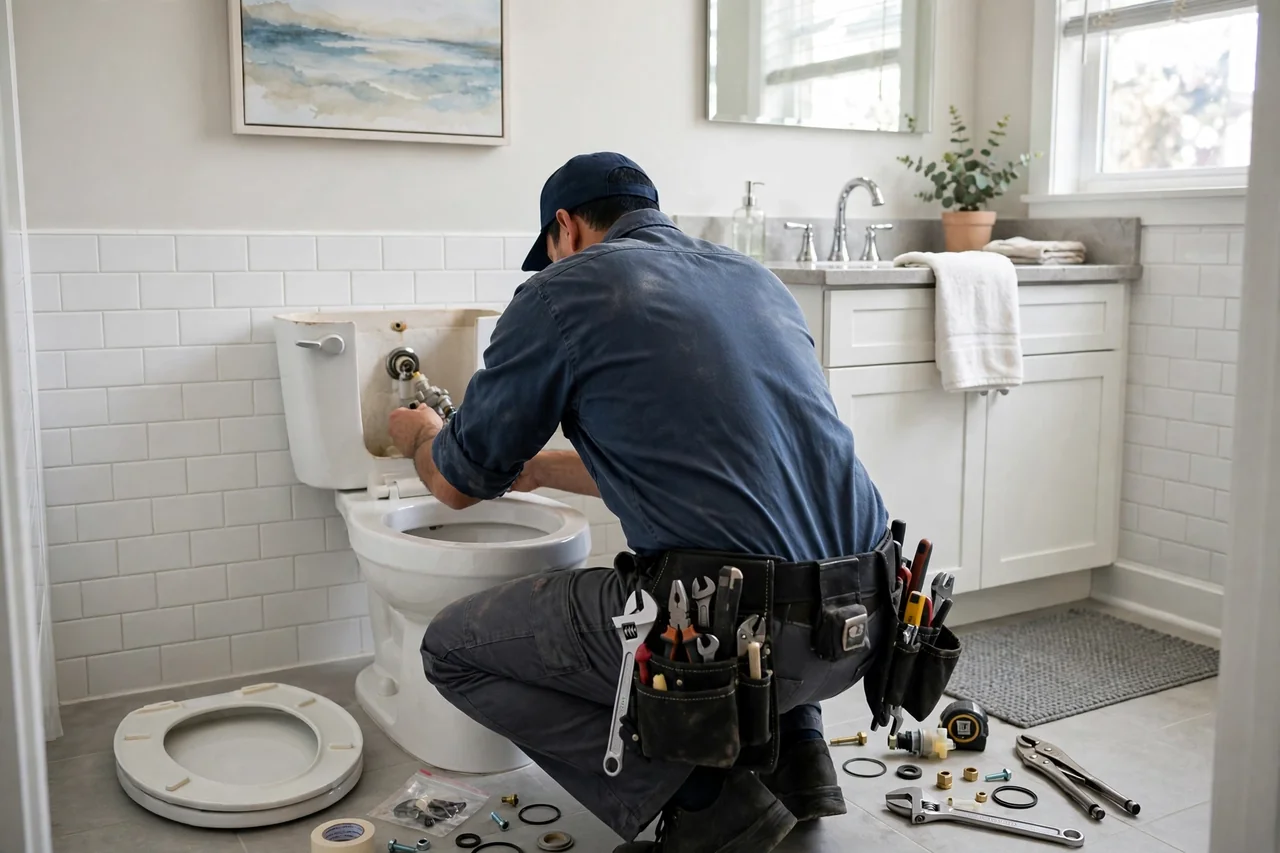
Cameras the line to check for root intrusion in sewer line, offsets, and corrosion. We show you the footage before quoting.
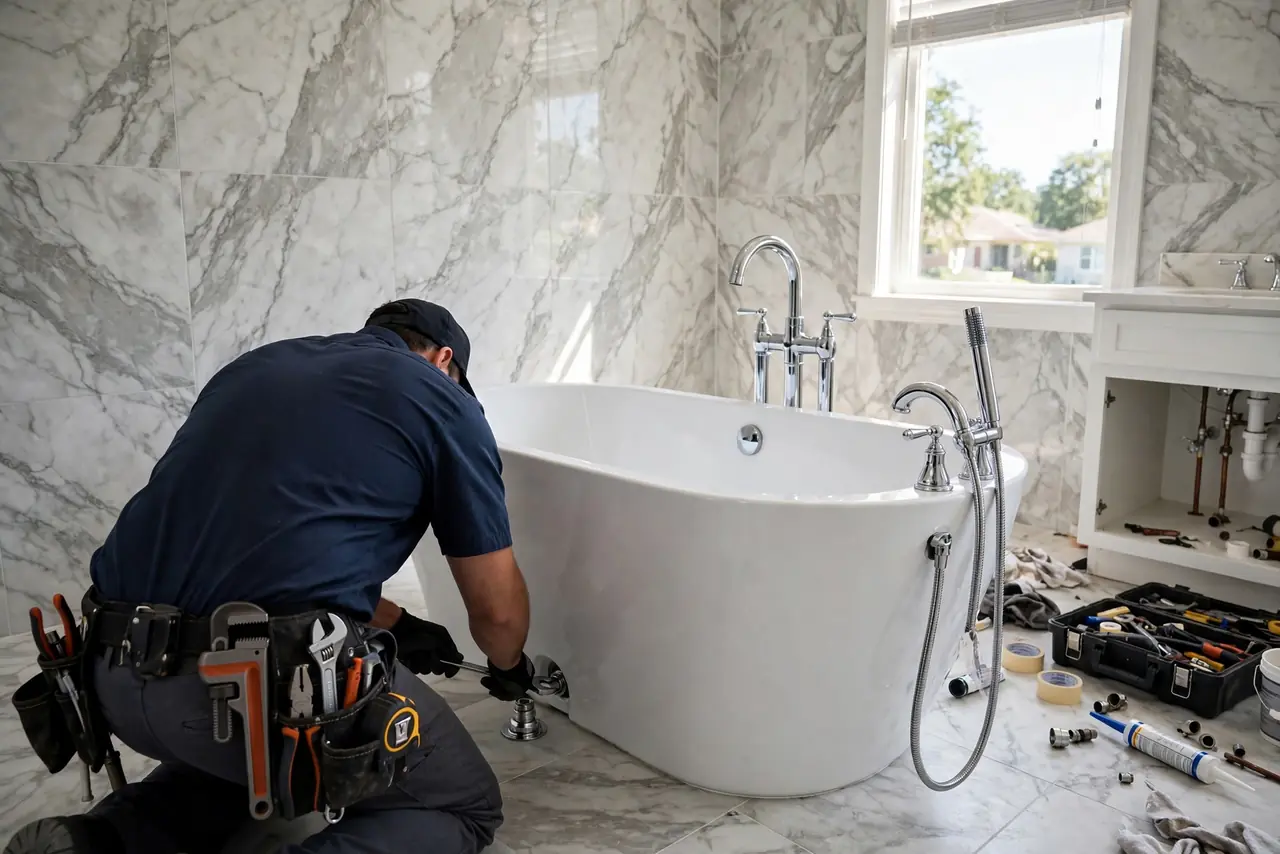
Soldered copper joints where the spec calls for them. We use lead-free solder and test every joint at full pressure.
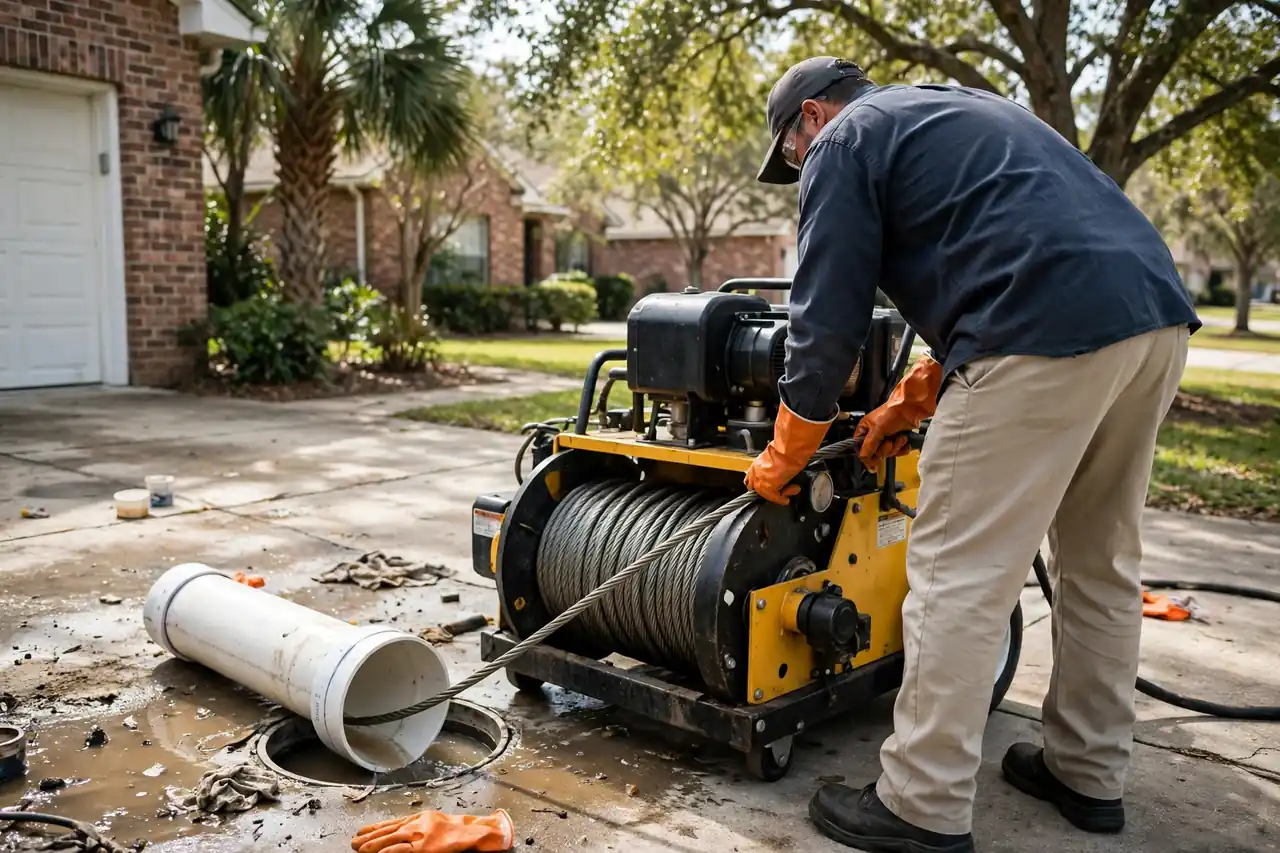
Clears scale and debris from drain lines after a repipe so the new pipe starts clean.
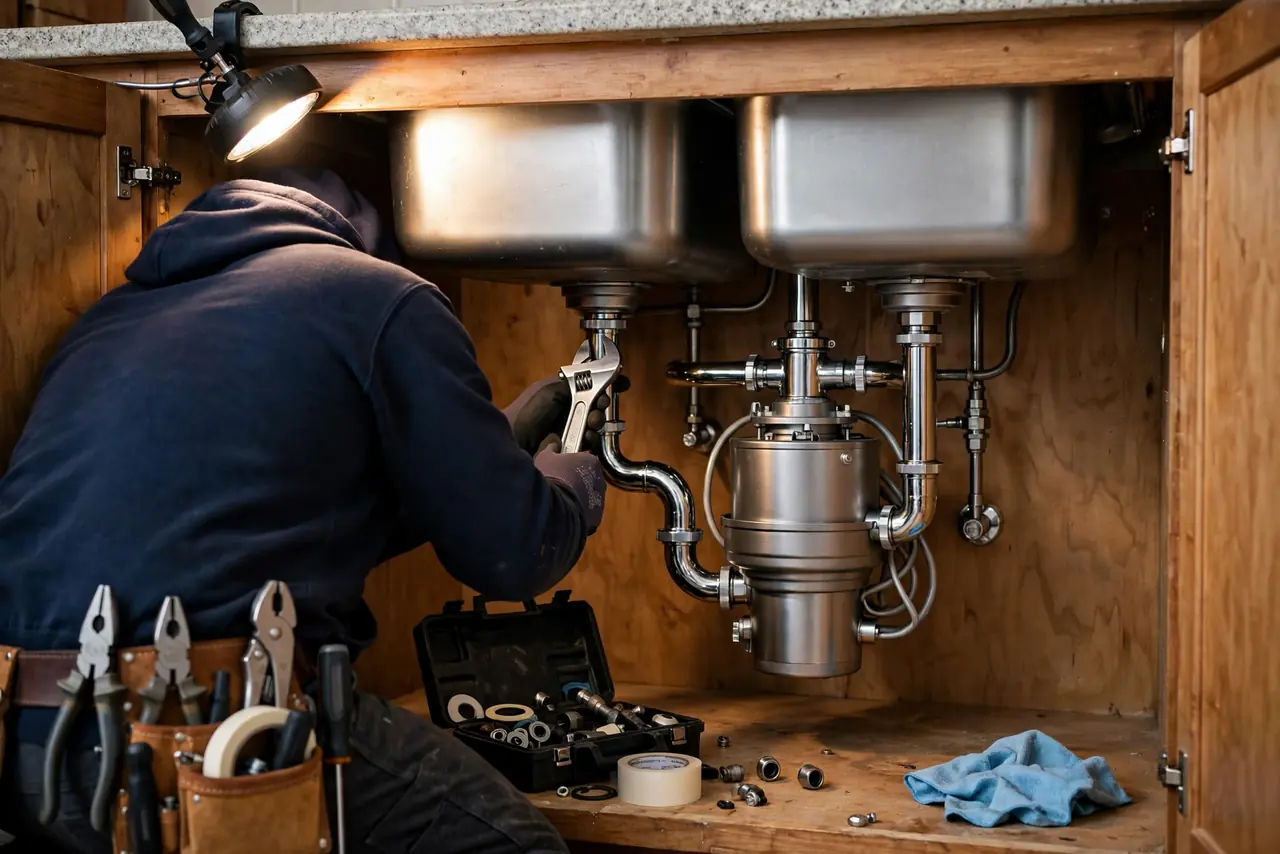
Push-to-connect and expansion fittings for PEX runs where a press tool will not fit. Code-approved and tested.
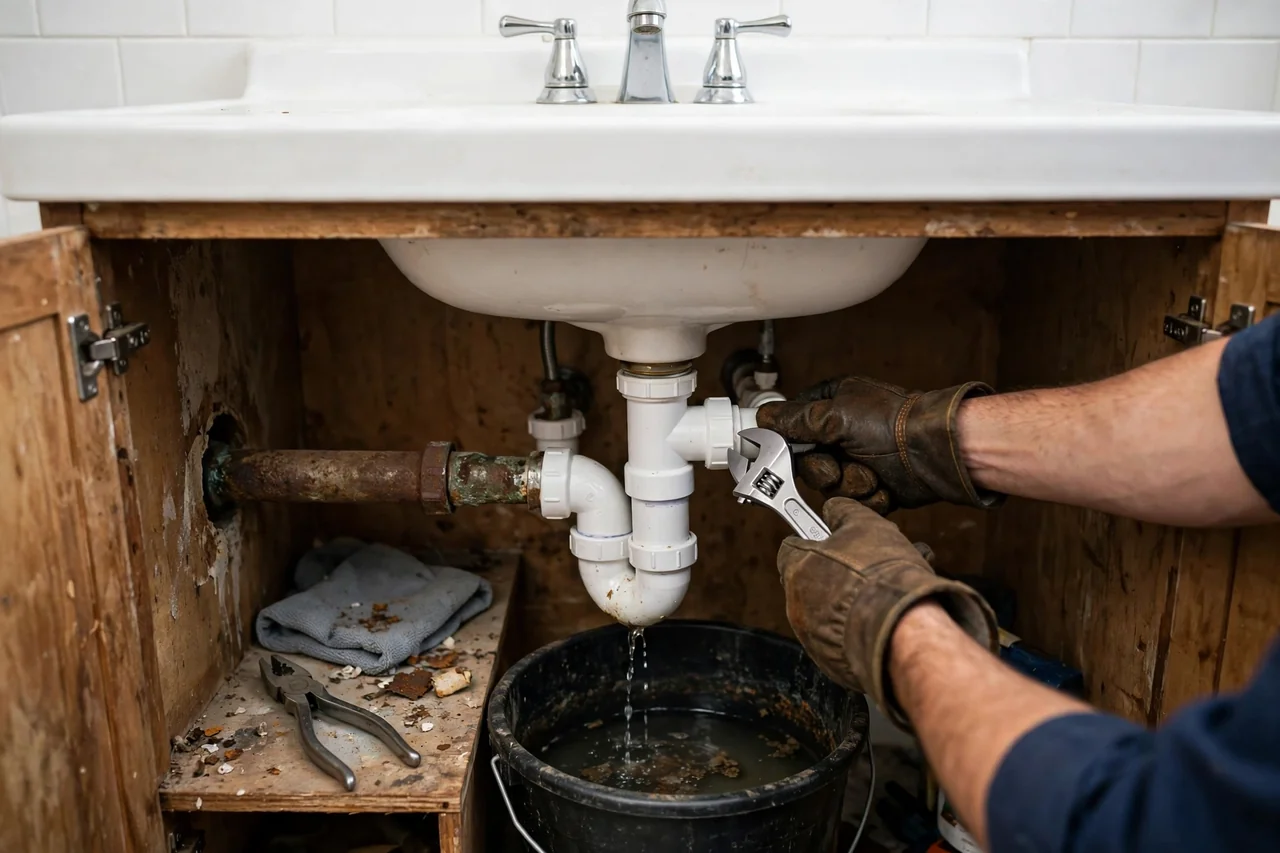
Every repipe is strapped, insulated, and tested to the 2021 UPC with Houston Amendments. That means the inspection passes and the line performs the way it should.
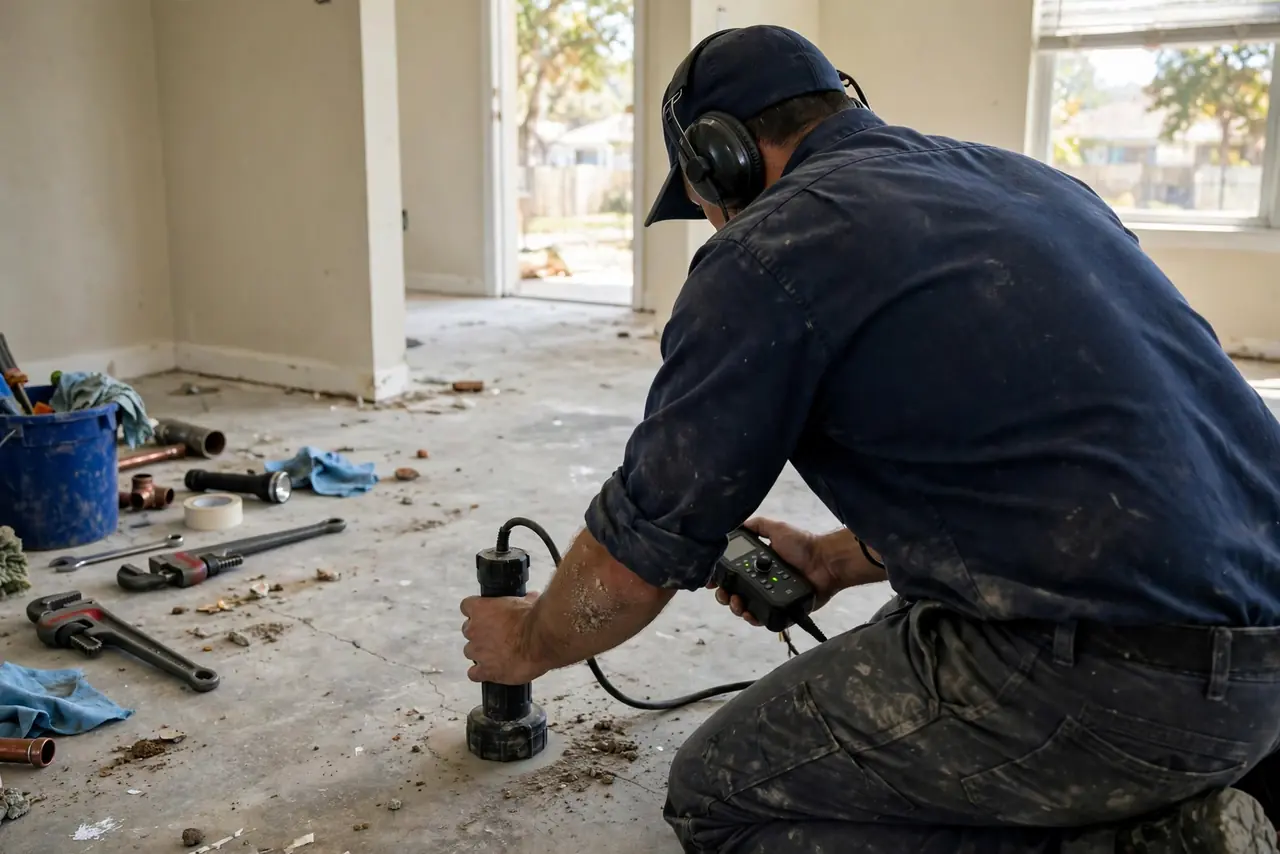
We test the new line at 100 psi for at least an hour before the wall goes back. Any joint that weeps gets redone, no exceptions.
We quote a whole house pipe replacement Houston TX with PEX tubing, run it through the attic and walls, and swap the shutoff valves at the same time. Clear water, full pressure, and no more pinhole leaks. The job takes three days and the drywall gets patched before we leave.
We locate the leak with a microphone, then reroute the line overhead instead of breaking the slab again. New copper pipe and press fittings go in. The slab stays intact, the leak stops, and the homeowner avoids a foundation repair bill.
We schedule the commercial repipe overnight, isolate the kitchen line, and install new copper with shutoff valves at each station. The restaurant opens on time the next morning with a line that passes inspection.
We shut off the water, replace the burst section, and insulate every exterior run on the property. Photos and a written report go to the owner. The tenant stays in the unit, the owner has documentation for insurance, and the line is protected for the next cold snap.
Galvanised and cast-iron replacement concentrates in pier-and-beam homes in the Heights, Montrose and the Third and Fifth Wards, while copper-under-slab replacement is the Sharpstown and Meyerland job. Either way, the replacement routes overhead, not back under the slab.
A 1948 home with original galvanized steel lines. Water ran rusty at every tap, pressure upstairs was weak, and the owner had paid for four pinhole repairs in two years.
We replaced the full supply system with PEX tubing in three days. Pressure at the second-floor shower went from a trickle to full flow, and the water ran clear at every fixture.
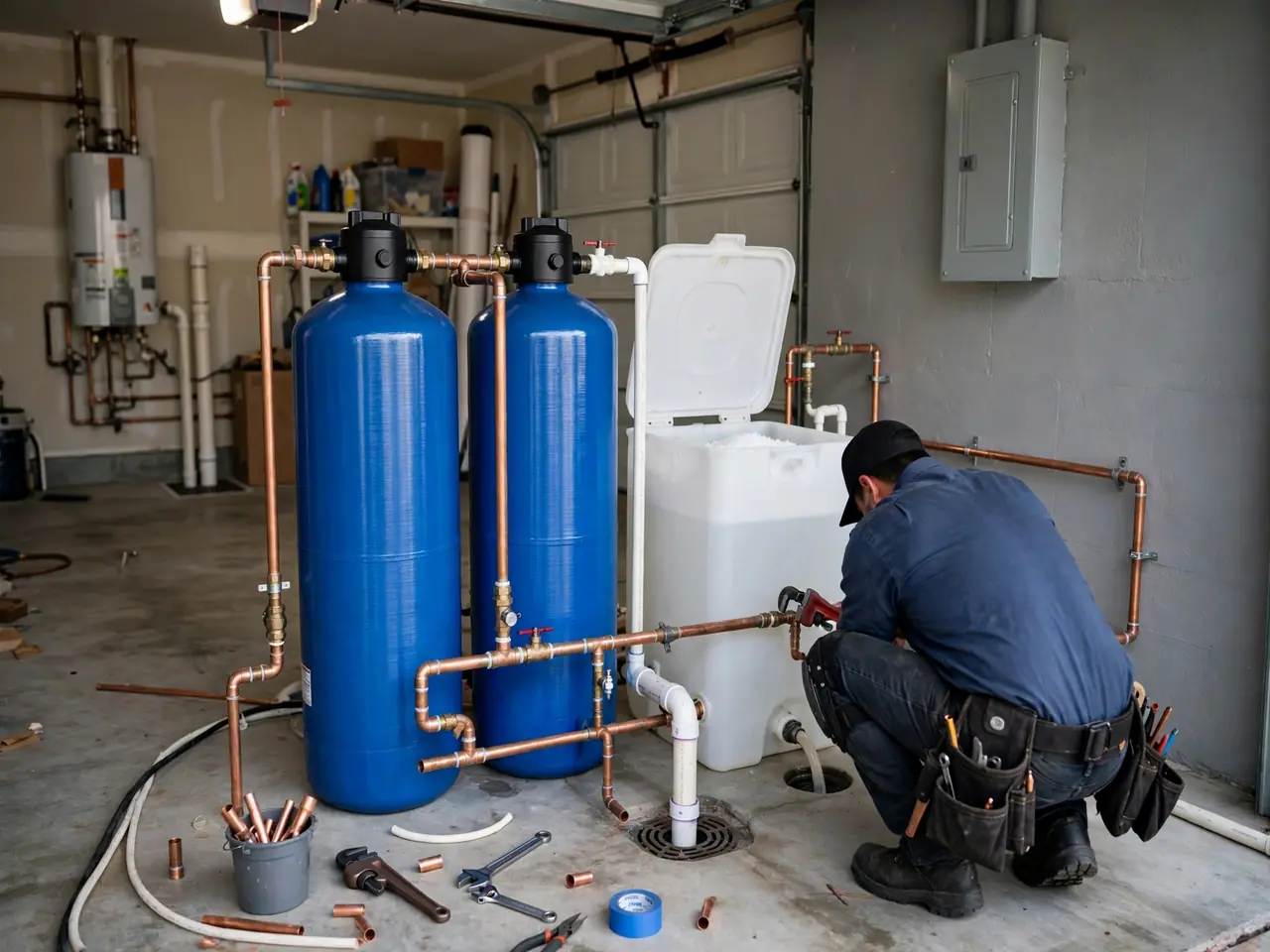
A water softener and an annual pressure check keep the new line in good shape. PEX does not corrode, so the main risk is freeze damage on exterior runs.
A slab leak under the living room floor had been patched twice. The homeowner did not want to break the slab a third time, and the flooring was starting to cup.
We rerouted the line through the attic with new copper pipe and press fittings. The slab stayed intact, the leak stopped, and the flooring dried out without replacement.
Keep an eye on water pressure and watch for new wet spots. An overhead reroute removes the slab from the equation, so future leaks show up in the attic, not the floor.
A restaurant with a failing supply line and a health inspection coming up. Closing for a week was not an option, and the line had been patched twice that year.
We ran the repipe overnight in two shifts, installed new copper with shutoff valves at each station, and pressure-tested before the morning shift. The restaurant opened on time.
Quarter-turn shutoff valves at each station make future repairs a quick isolation instead of a full shutdown. We recommend an annual pressure check on commercial lines.
Most of our repipe calls start with one of these four problems. If you recognize yours, the line is telling you something.
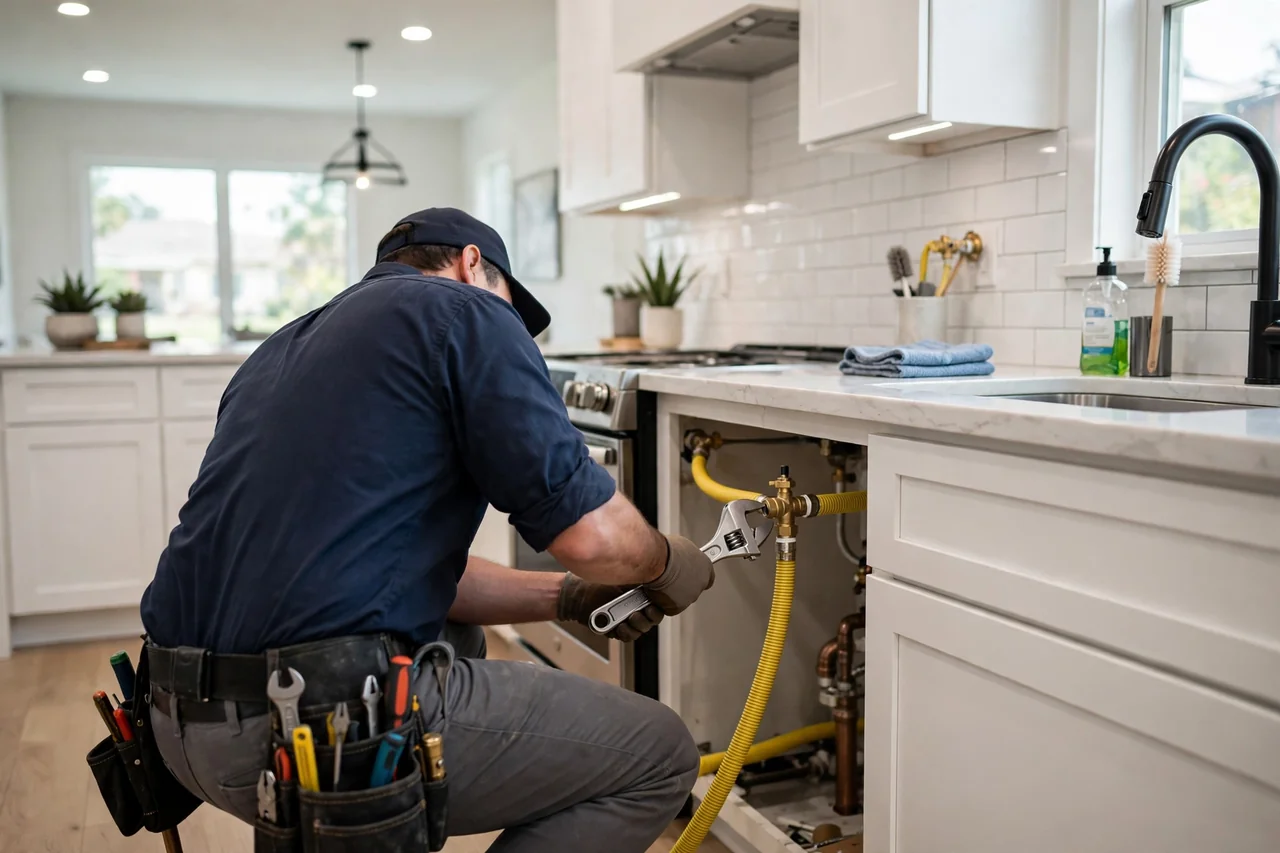
We scope the line, find the pattern, and replace the failing section or the whole run. One job, one bill, no more patch-and-pray. Each leak costs a repair call and risks water damage to drywall, flooring, and cabinets. Three leaks in a year usually means the whole run is failing.
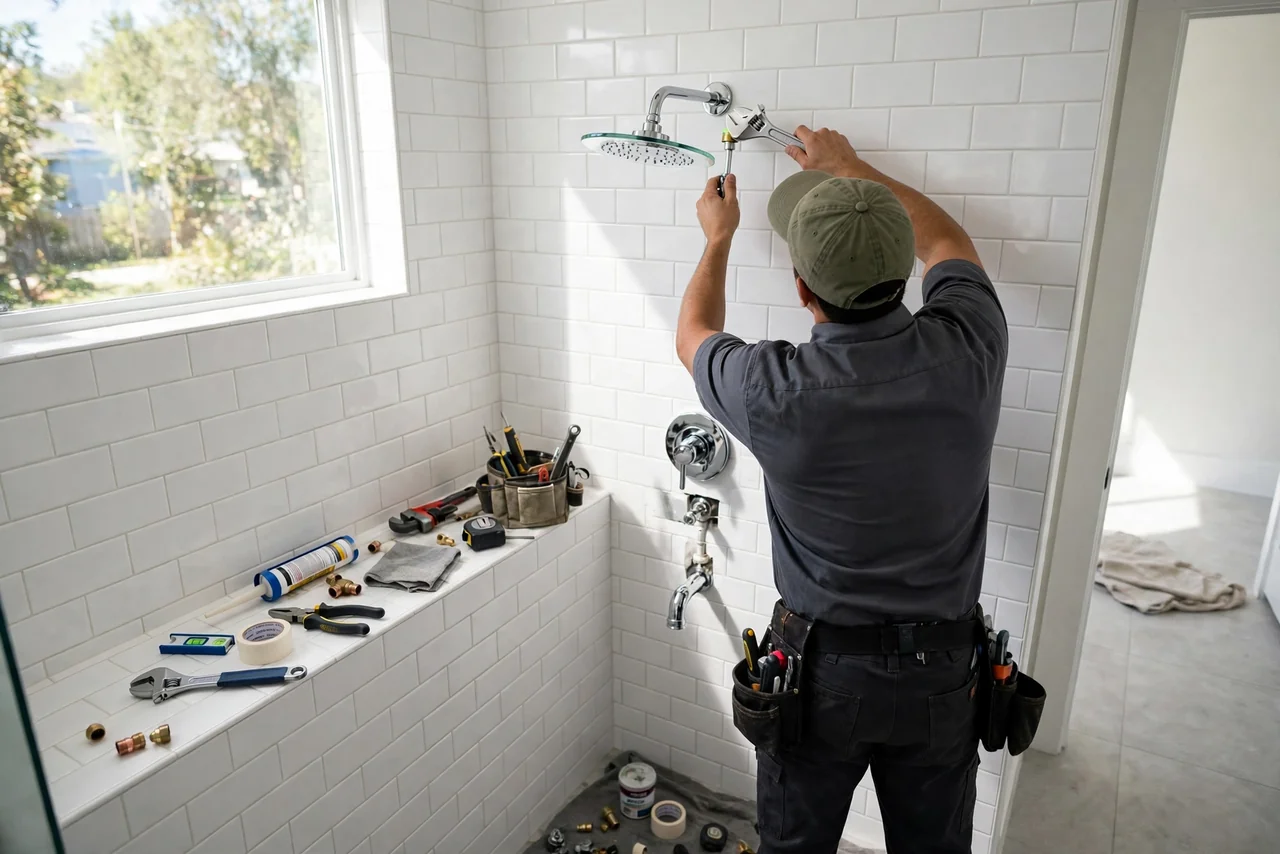
New copper or PEX restores full flow and clear water. We flush the system and test pressure at the furthest fixture before we leave. Corroded galvanized pipe narrows from the inside and sheds rust into the water. Shower pressure drops, and fixtures clog at the aerator.
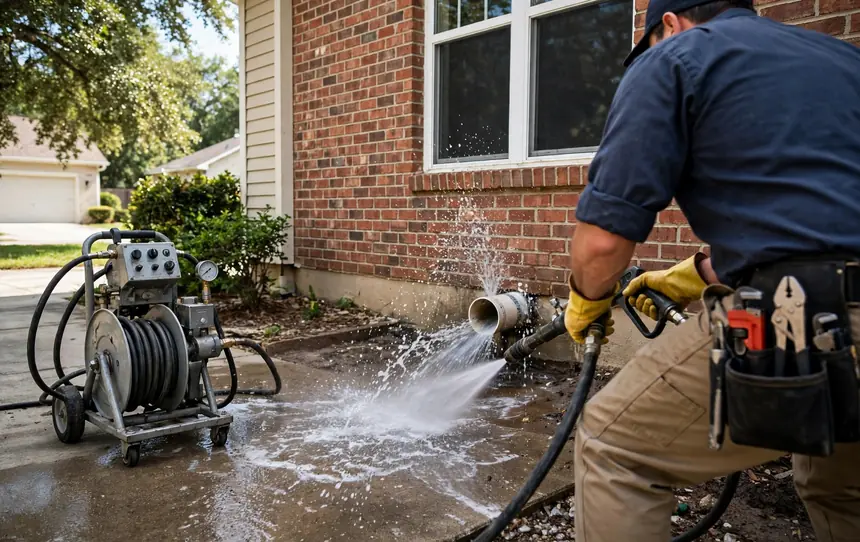
We locate the leak with a microphone, isolate the line, and reroute or replace it. The slab gets tested before we close up. A slab leak can run for weeks before the wet spot shows. By then the flooring is cupped and the repair bill has grown.
We replace the burst section, insulate the exterior runs, and check the rest of the line for freeze damage so it does not happen again next winter. Houston cold snaps crack unprotected exterior lines. Water pours into the wall or attic, and the damage is worse than the pipe itself.
One pinhole leak usually means five more are coming. Replacing the run removes the weak section entirely, so you stop paying for emergency pipe replacement Houston near me visits at 2 a.m. Most customers go from three leaks a year to zero.
Corroded steel lines narrow from the inside out. New PEX or copper restores full flow to showers and fixtures, and you will notice the difference at the second-floor bathroom within a day of the swap.
Rust-colored water and metallic taste come from the pipe, not the source. Once the old galvanized pipe is out, the water runs clear. We flush and test every fixture before we call the job done.
A slab leak under a Houston home can run for weeks before you see it. Replacing the line before it fails protects the concrete, the flooring, and the drywall above it. That is the difference between a repipe and a foundation repair bill.
Clear records you can keep and share.
Pipe, fixtures, and drywall patch spelled out
100 psi test logged before wall close
Before and after shots for your records
A single pinhole leak is a repair. A pattern of leaks is a replacement. The line is telling you which one you have.
Two or more leaks in the same run within a year means the pipe is failing. Patching again just delays the next call.
Rusty water at every tap points to a corroded main line. Clear water at one fixture points to a local repair.
Galvanized steel older than 40 years is near the end of its life. Copper with green corrosion is close behind.
Outside these areas? Call and ask if we can reach you. (346) 776-8560
When the failure runs along a section, not a single point: galvanised rusted through, copper with recurring pinholes, cast iron cracked end to end, or polybutylene with a known failure history. A single pinhole is a repair; a tired run is a replacement.
PEX is the common choice for whole-house replacement because it routes overhead and abandons the under-slab line. Copper remains right for some jobs. The choice depends on the house, the water and the run, and we explain both before you decide.
Polybutylene is grey plastic pipe, often with Quest fittings, fitted from the late 1970s to the mid-1990s. If you have it, replacement is the answer, not repair, because of its known sudden-failure history.
Yes. Estimates are free, and you approve the written scope before work starts. We are open Monday to Sunday, 7:00 AM to 10:00 PM.
Call (346) 776-8560 for a free estimate. We show you the failed section, explain repair versus replacement, and renew it properly, Monday to Sunday, 7:00 AM to 10:00 PM.
Call us at (346) 776-8560 to discuss pipe replacement or ask a question. We are open Monday to Sunday, 7:00 AM to 10:00 PM, and estimates are free.
The fastest way to book is a phone call. Tell us what is happening and we will give you a free estimate and a time that works, Monday to Sunday, 7:00 AM to 10:00 PM.
Open Mon–Sun, 7:00 AM–10:00 PM. Free estimates.