Written scope
Flat price with gas, venting, and permit included
A tankless water heater gives endless hot water, but only if the gas line, venting and descaling are right. El Primo Lalo Plumbing installs, repairs and descales tankless units in Houston, where hard water makes maintenance a recurring job, not an afterthought.
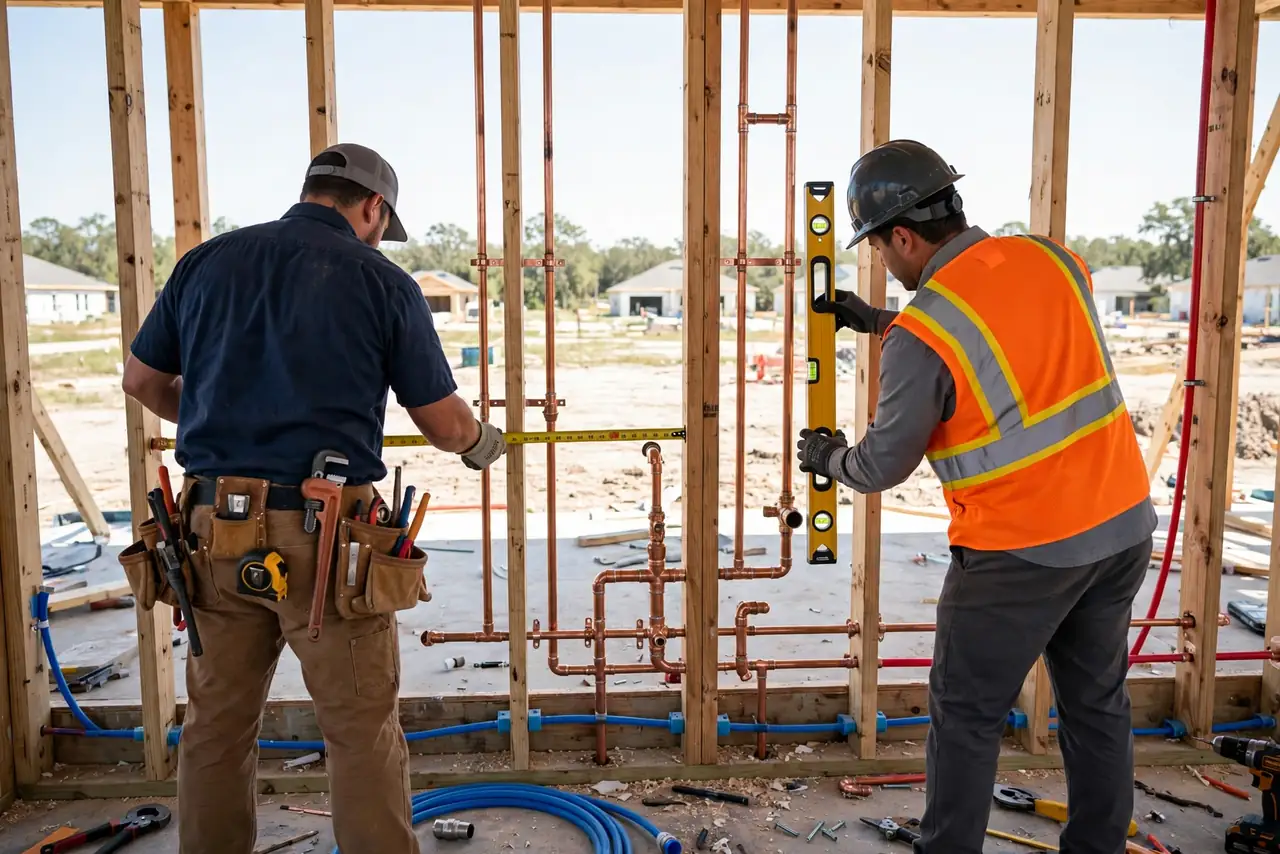
Every tankless job is different, but a standard install covers the unit, the connections, and the permit. Here's what's in the scope and what we quote separately if your home needs it.
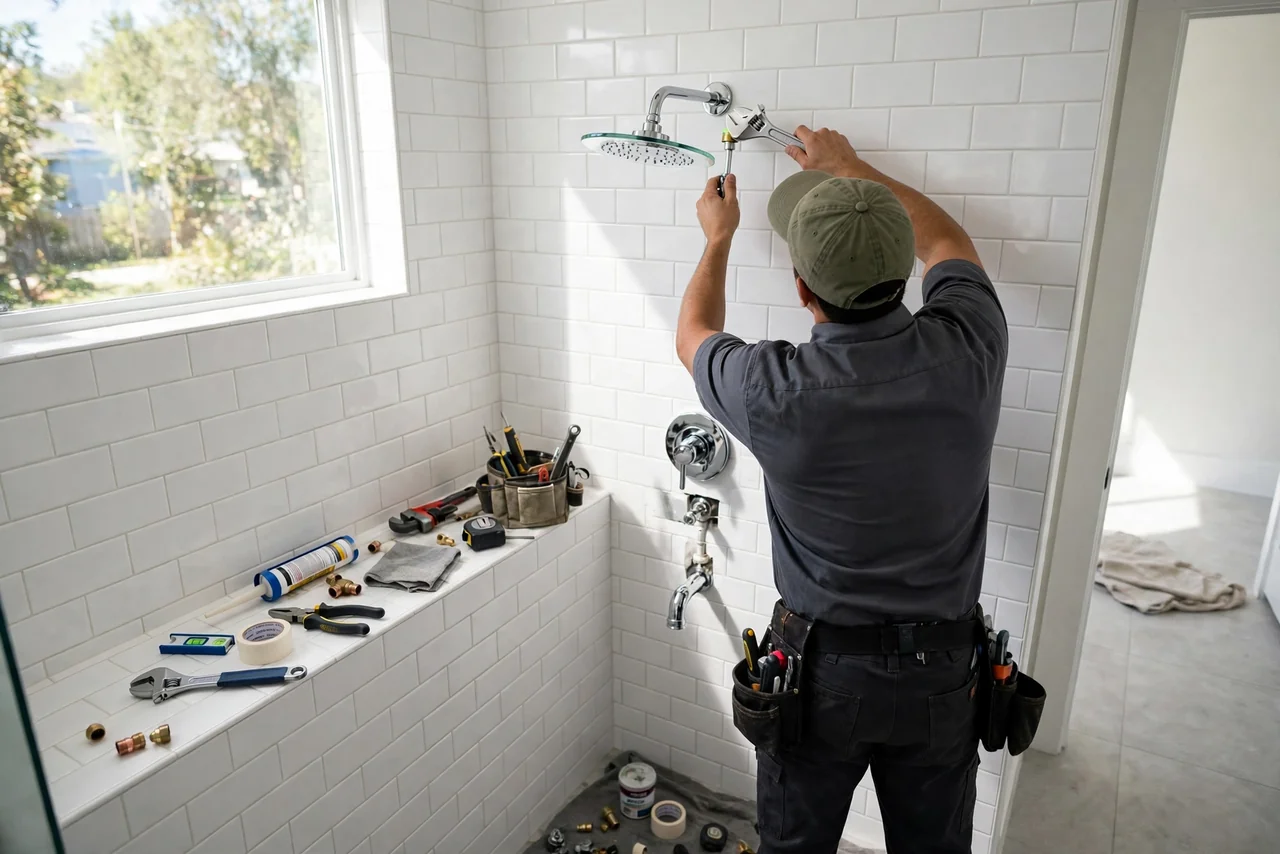
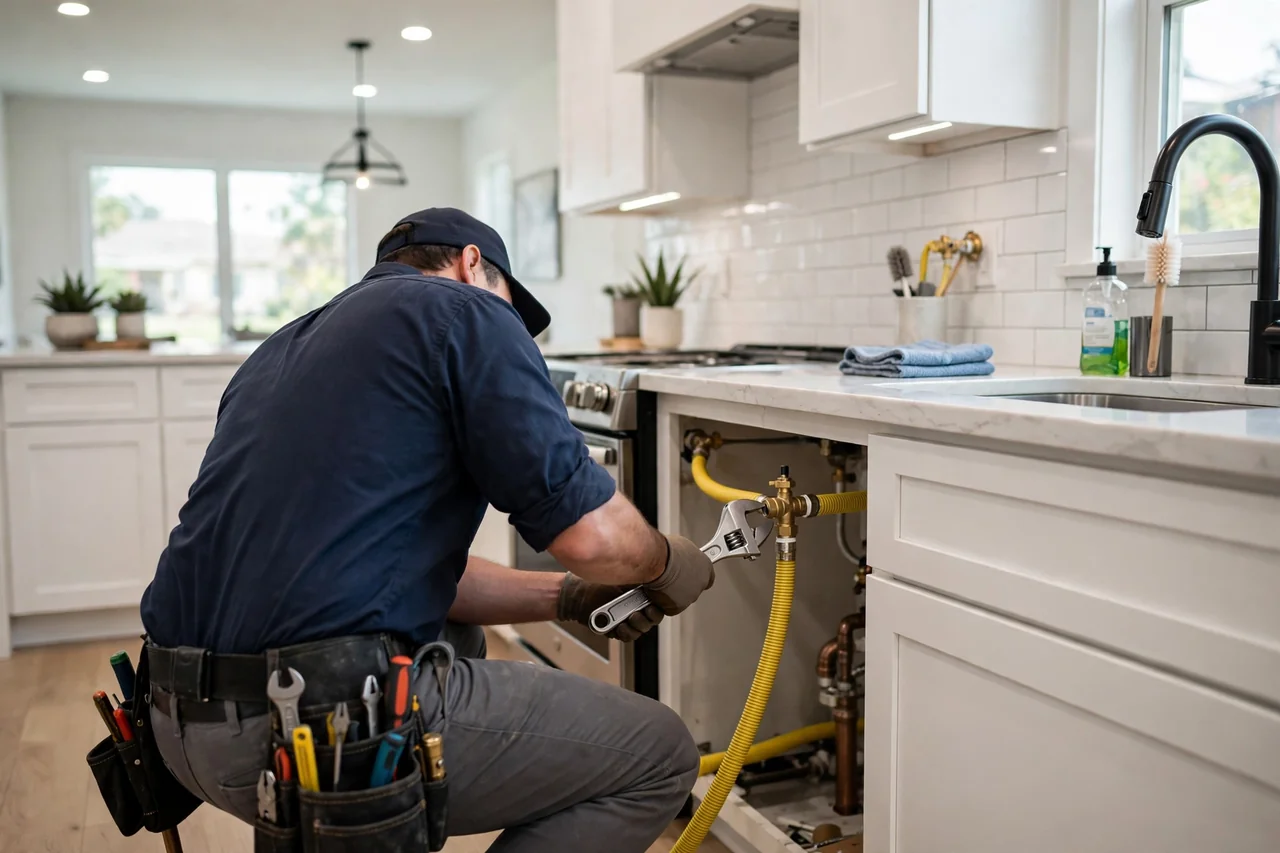
We install, repair, and descale tankless units for houses, townhomes, and condos across Houston. Whether your tank is failing or your tankless unit is throwing a code, we diagnose it and quote a written estimate before we start.
Restaurants, salons, and laundromats need hot water that keeps up with demand. We size and install tankless banks for commercial loads and handle the gas line and venting to match.
Houston's hard water, about 8 grains per gallon on average, is the main reason tankless units need attention here. Scale builds in the heat exchanger, and descaling is one of the most common tankless jobs in the city. A tank-to-tankless conversion also needs gas-line upsizing and venting work, which are the real cost drivers, and a permit like any water heater replacement.
Tankless suits homes with the gas capacity and venting for it, and households that want hot water on demand rather than a stored tank. It does not suit every home: older houses may need a gas-line upgrade first, and floodplain homes need the unit elevated. We walk through tank versus tankless with a free estimate before you decide, and we never publish a price, because the job depends on gas, venting and access.
Tankless is not a swap. Gas, venting and descaling decide whether it works.
Every job follows the same five steps, whether it's a straight swap or a full conversion from a tank. Here's what you can expect from the first call to the final walkthrough.
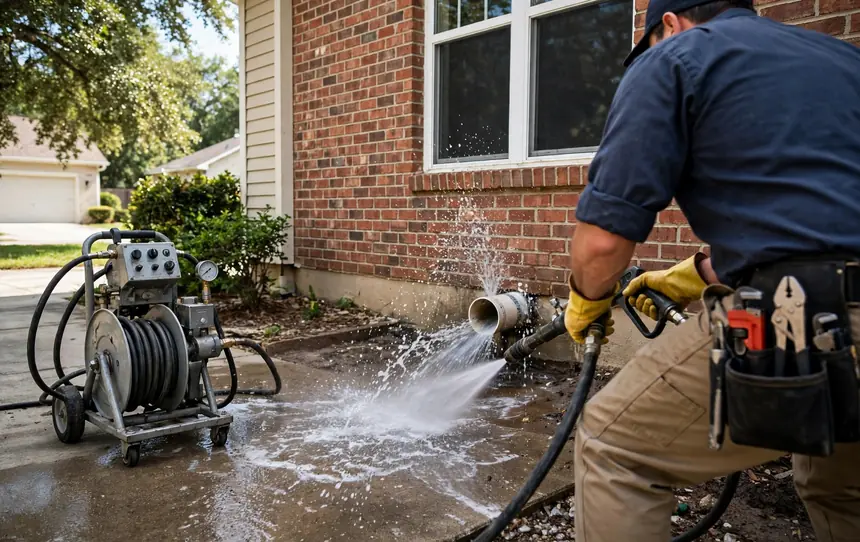
We ask about your current unit, gas type, and how many fixtures run at once. That tells us whether you need a 199,000 BTU unit or a smaller 160,000 BTU model, and whether the gas line needs to be upsized. Most calls take 10 to 15 minutes.
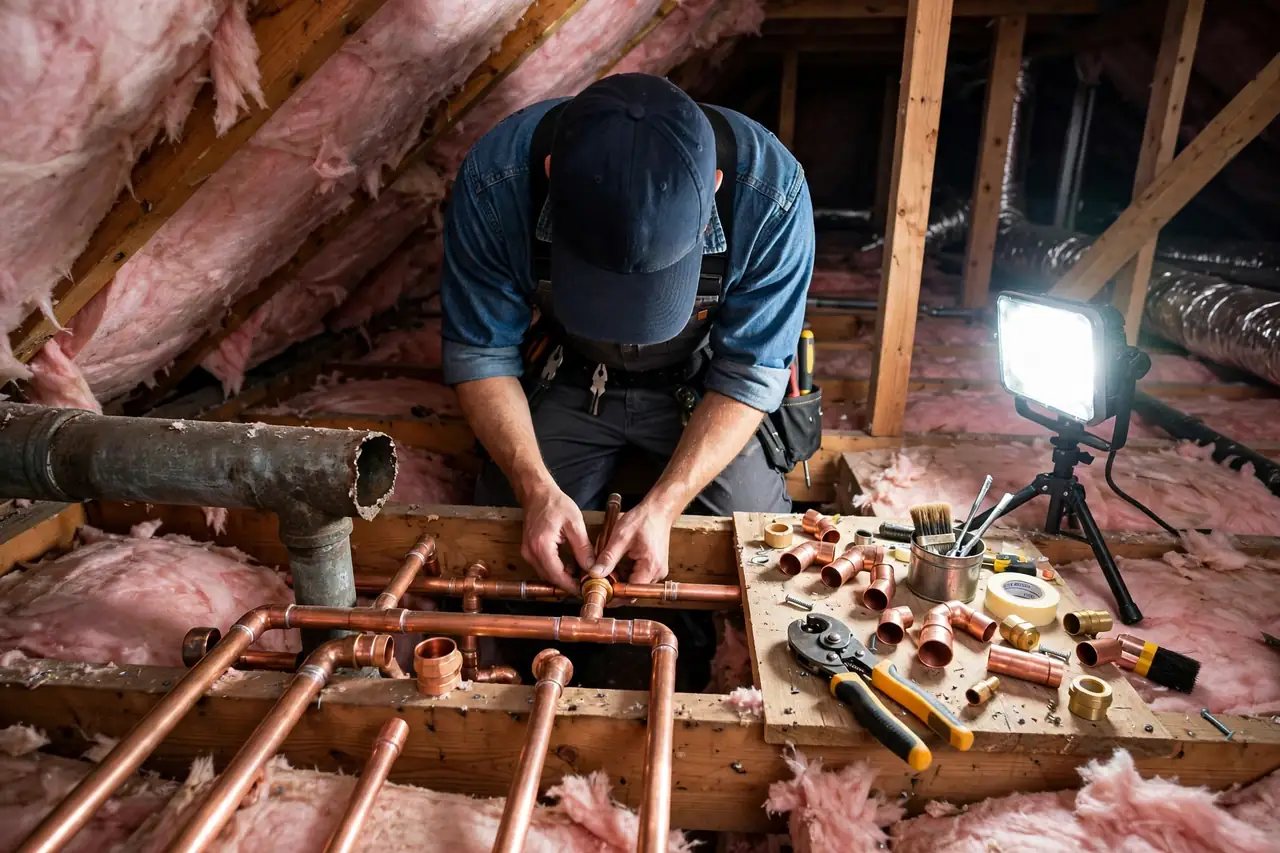
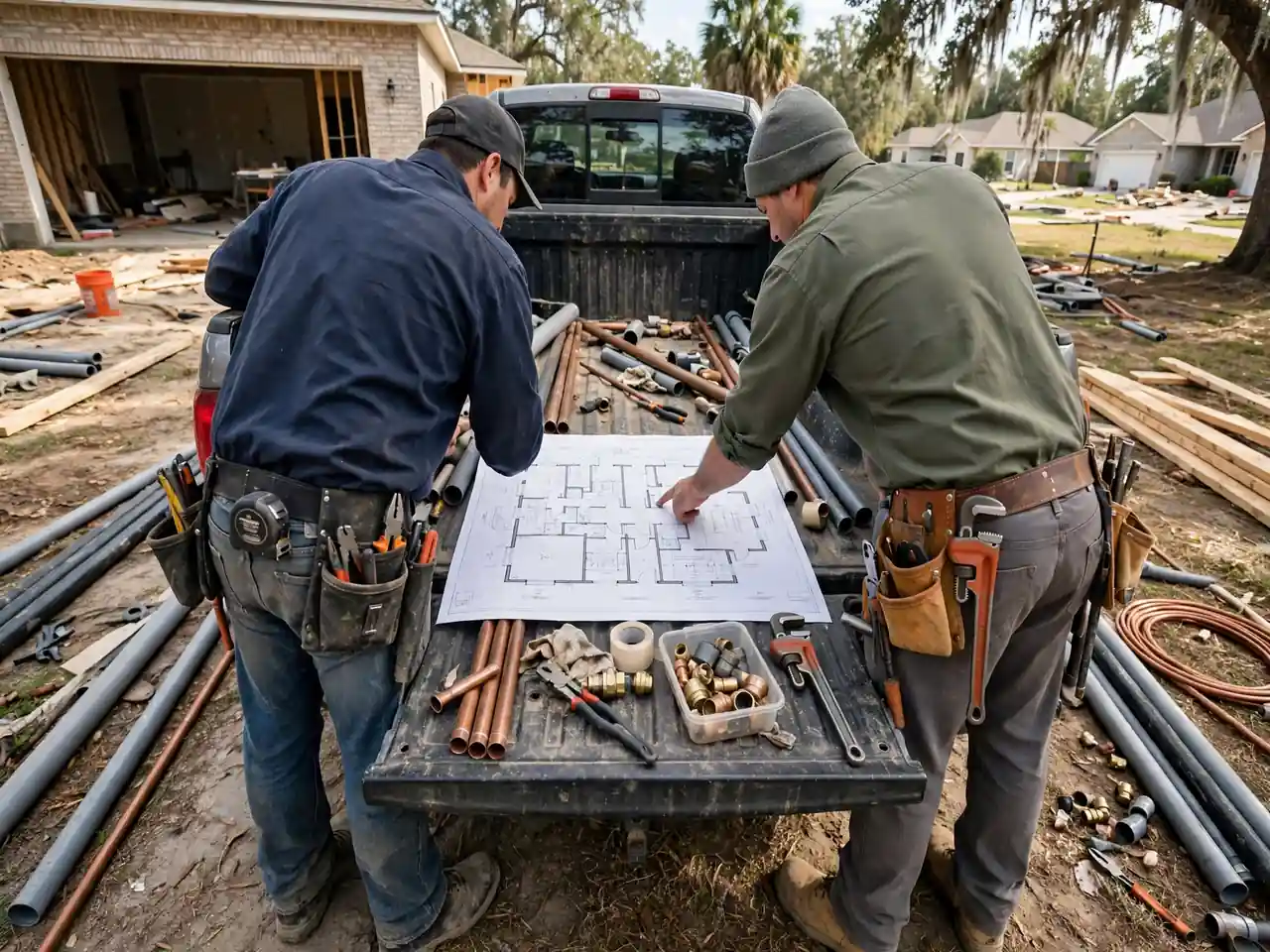
A technician checks gas pressure with a manometer, verifies venting options, and inspects the water lines and shutoff valves. We measure the wall space and confirm the electrical outlet. You get a written scope and a written estimate before we touch anything.
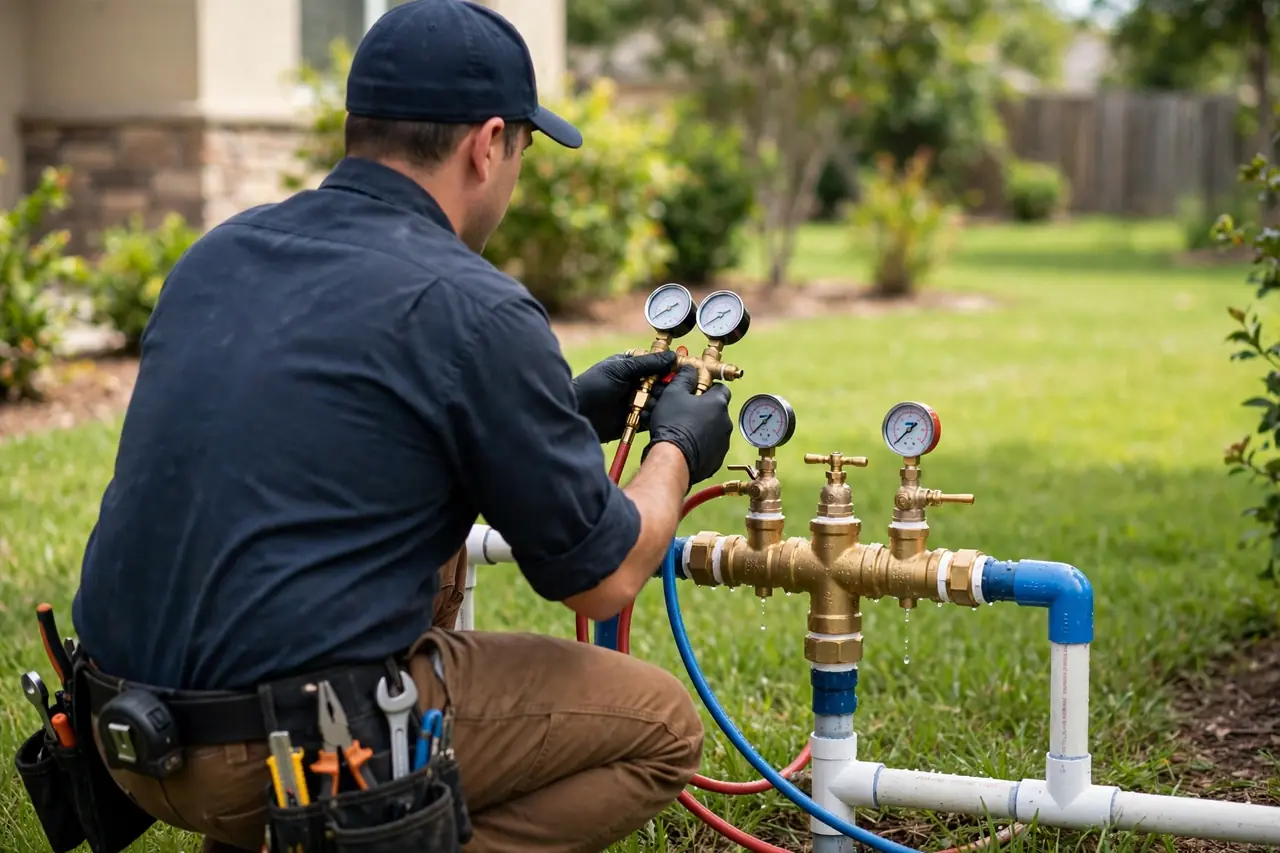
We pull the City of Houston permit and schedule the inspection. On install day, we shut off the gas and water, drain the old tank, and haul it out. Most tank removals take 45 minutes to an hour.
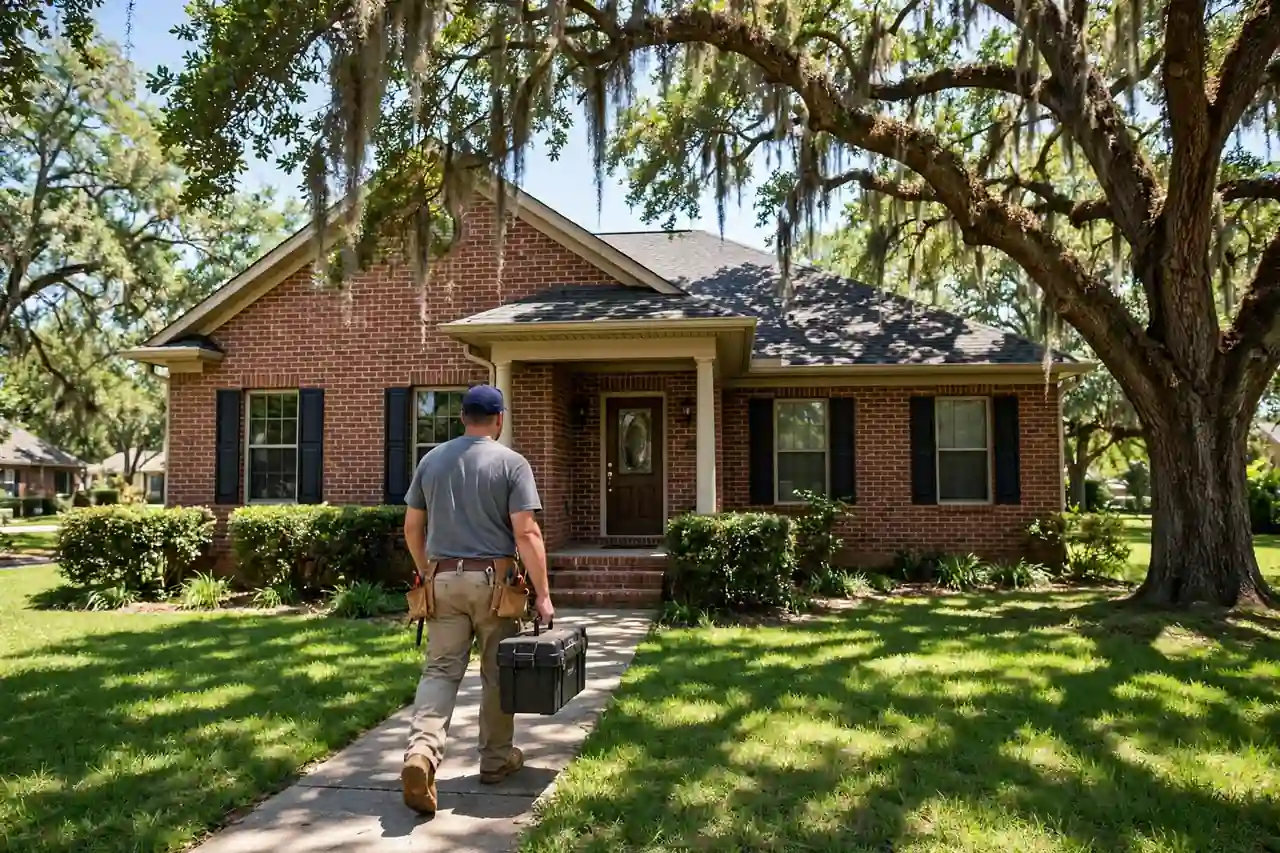
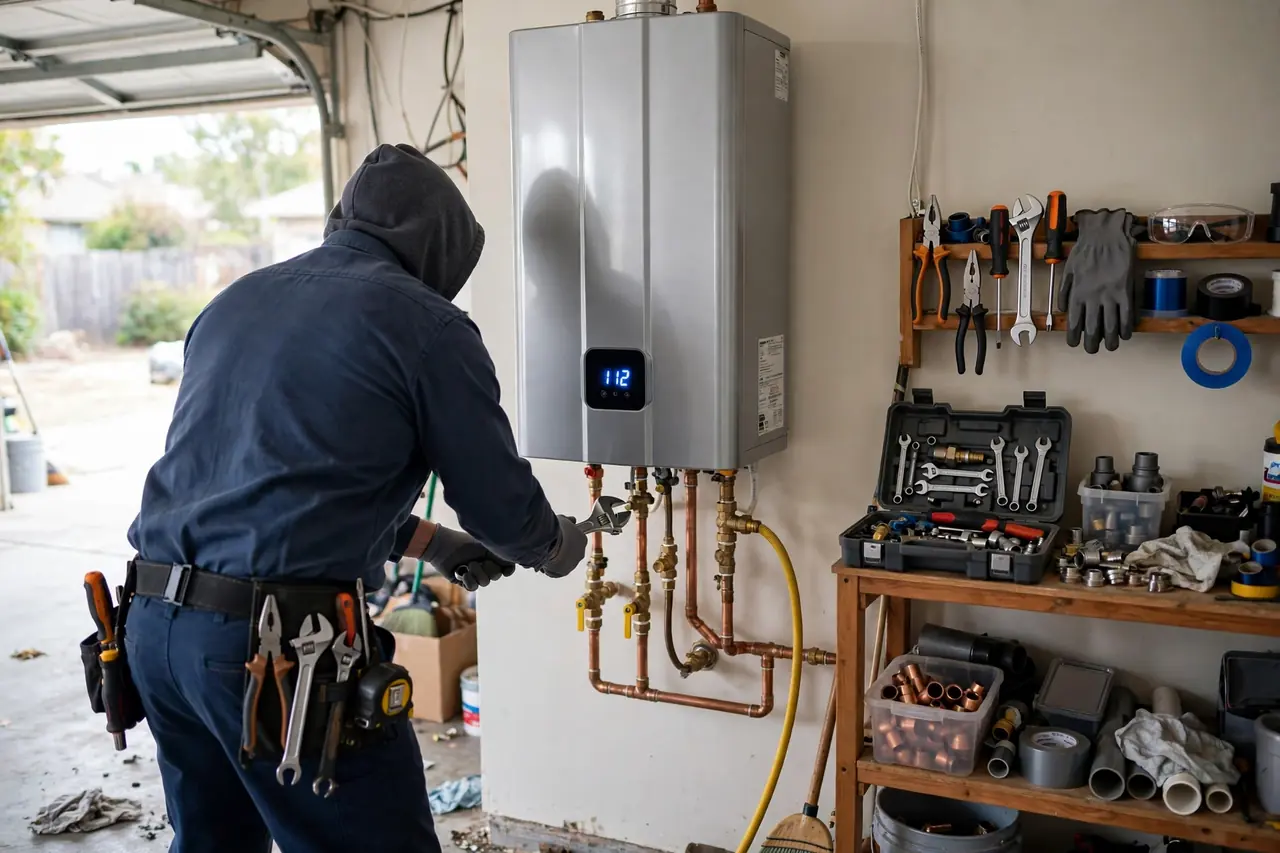
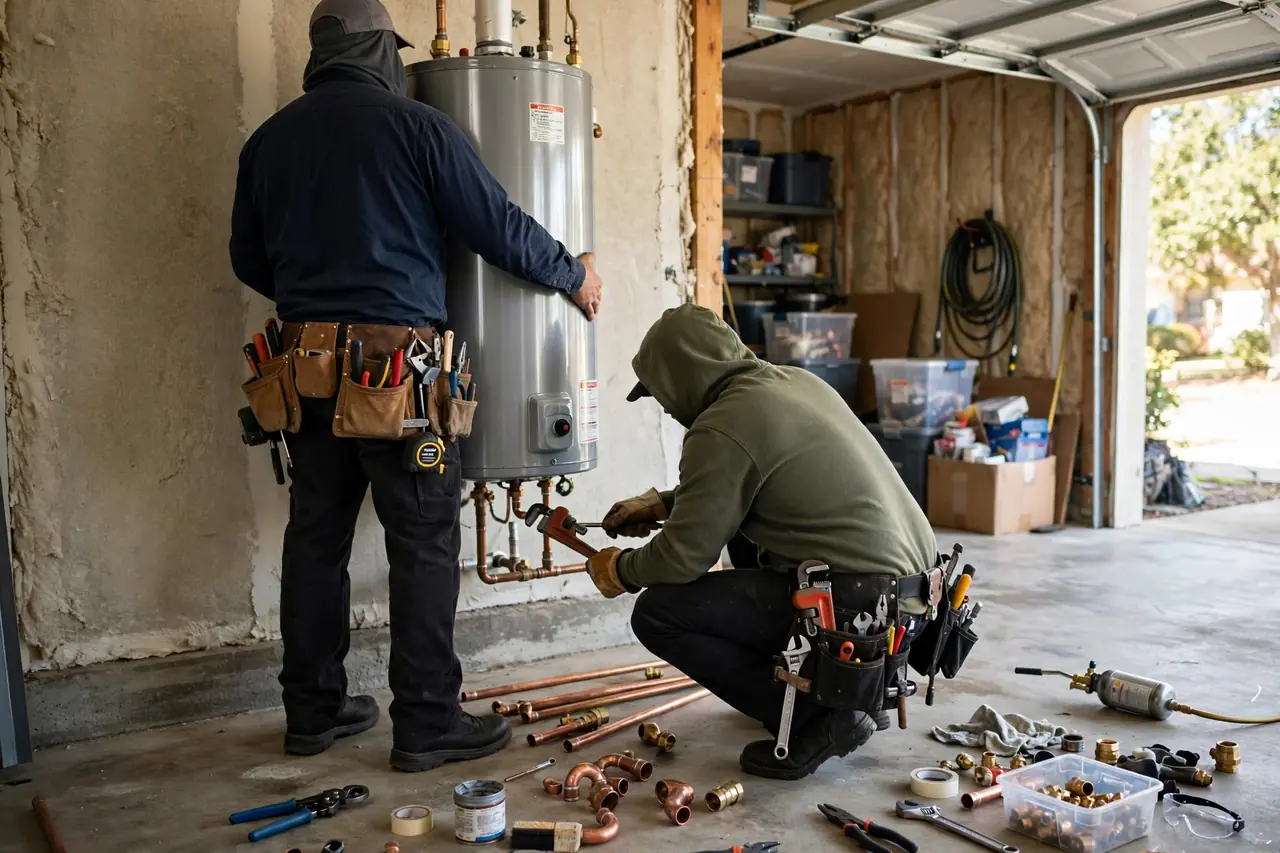
We mount the unit, run new gas and water lines, connect the vent, and set the condensate drain. Then we fire it up and test every fixture in the house, checking temperature at the tap and watching for pressure drops. A standard install runs 4 to 6 hours.
We show you the temperature setting, the error code screen, and the isolation valves. You get a descaling schedule based on your water hardness, usually every 12 months in Houston. We also register the manufacturer paperwork before we leave.
Measures gas pressure at the unit's inlet to confirm it matches the manufacturer's spec, usually 7 to 10 inches of water column for natural gas.
Tests the igniter, flame sensor, and gas valve electrically so we replace the failed part instead of guessing.
Circulates a vinegar solution through the heat exchanger to dissolve scale, which is the main cause of tankless failures in Houston's hard water.
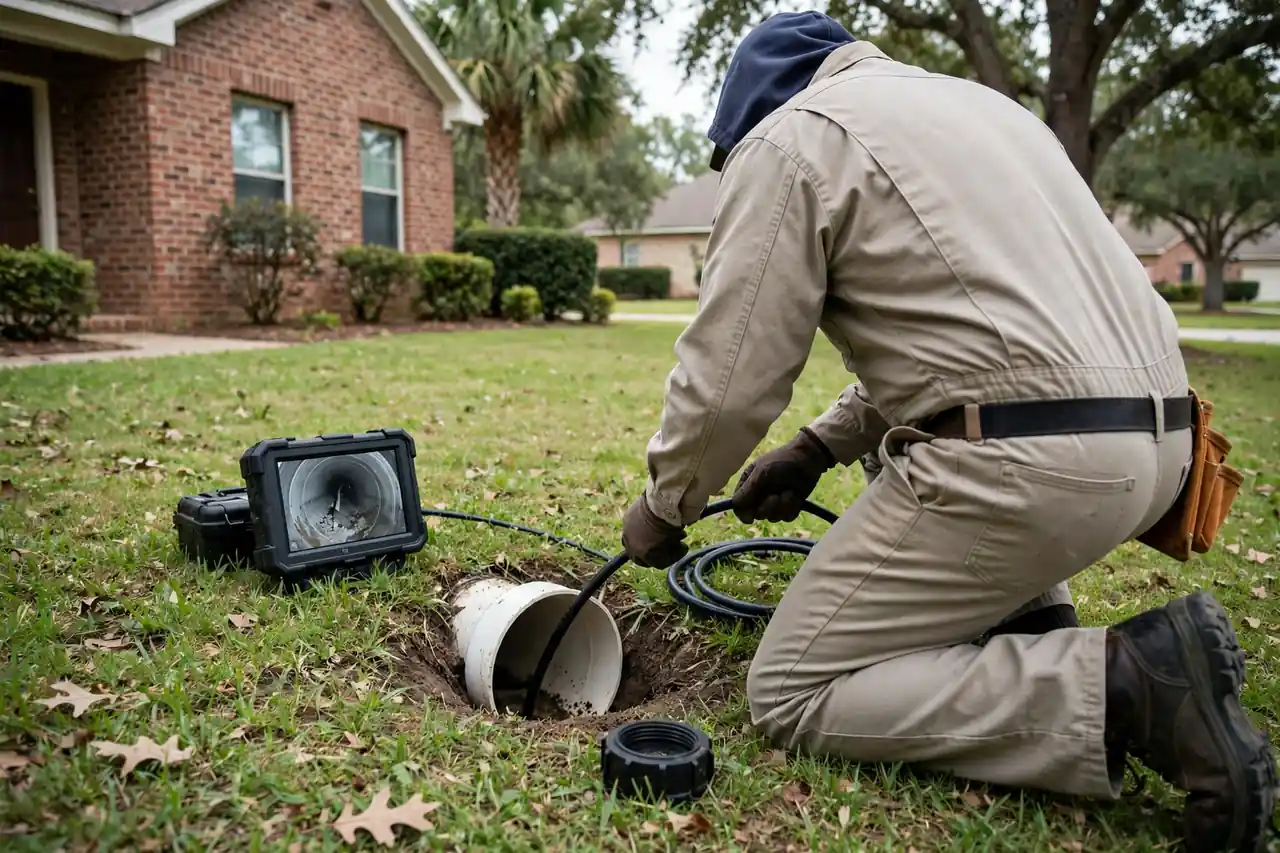
Finds hidden leaks in the wall or under the slab when a tankless install uncovers moisture that isn't from the unit itself.
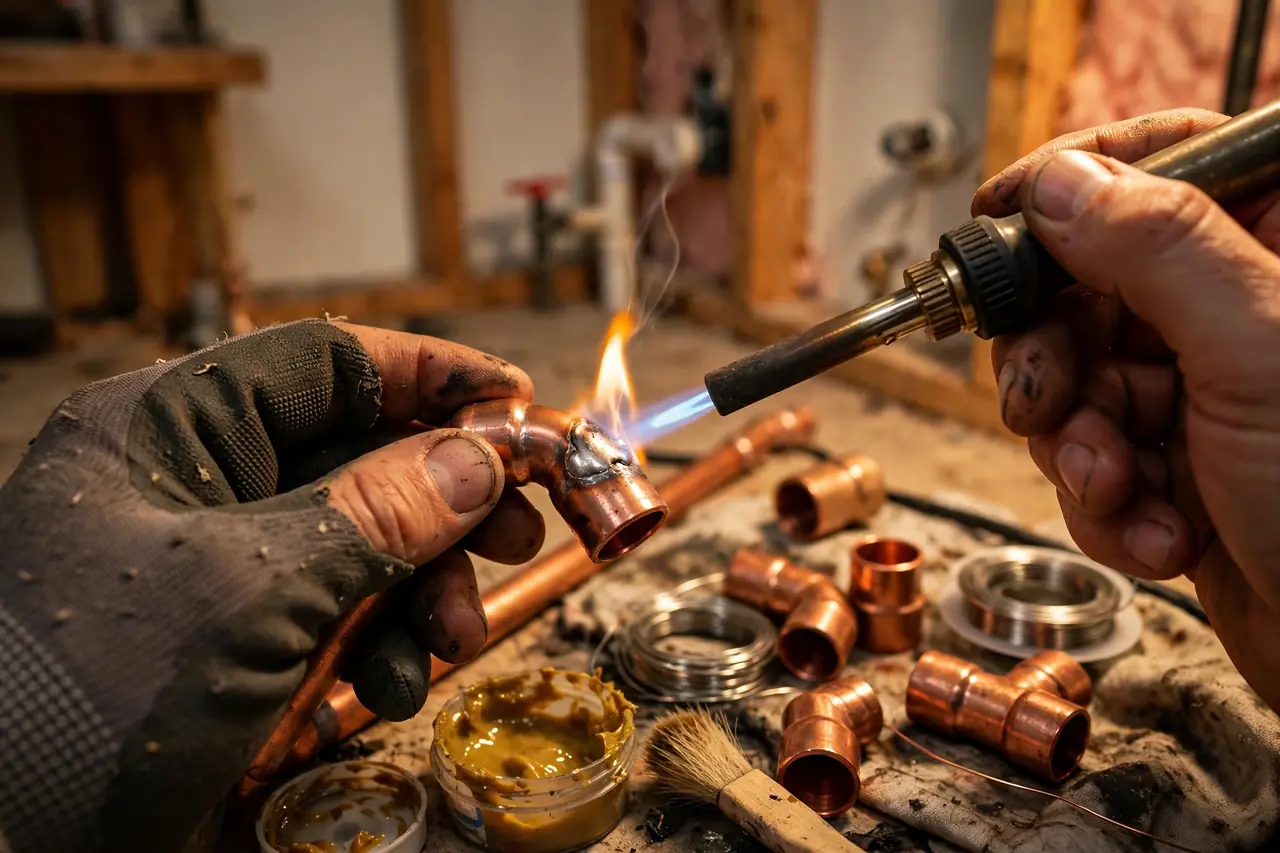
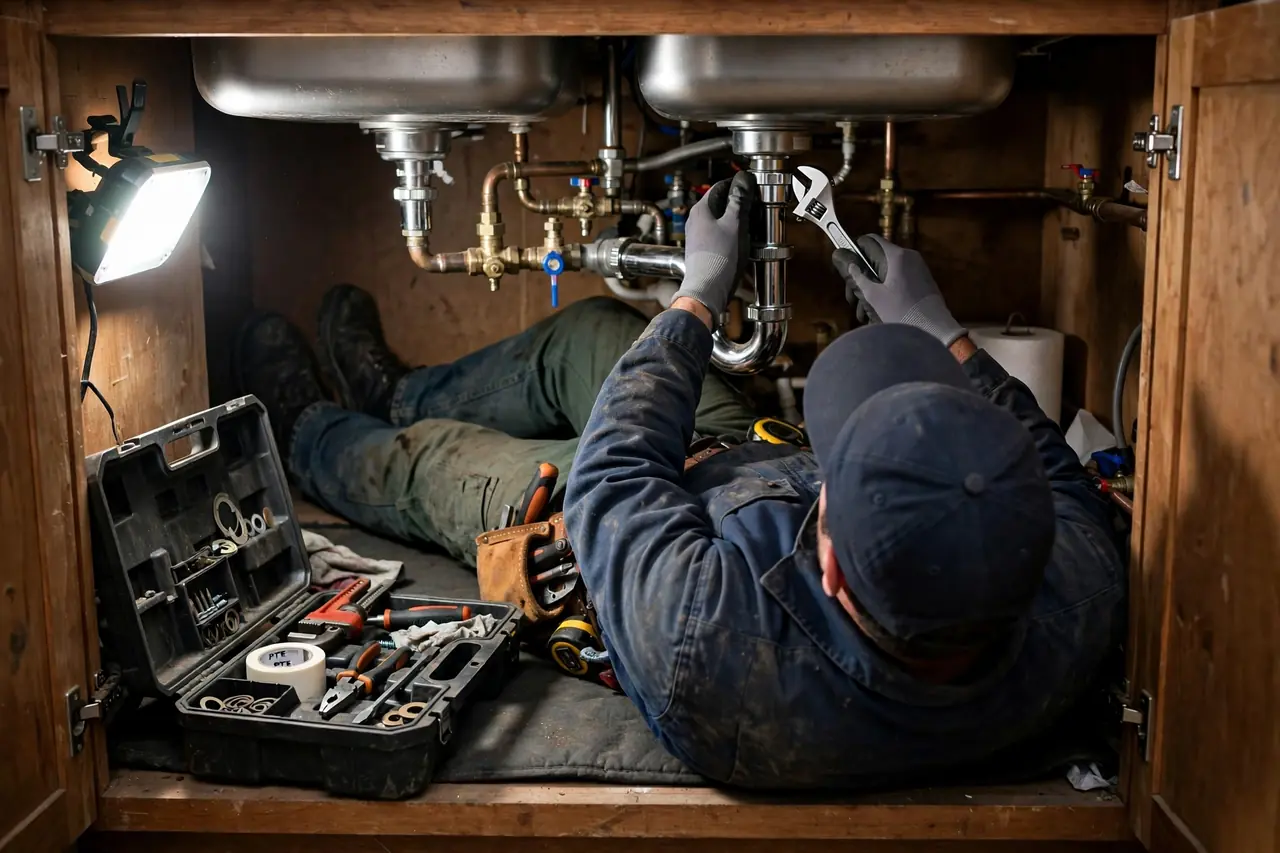
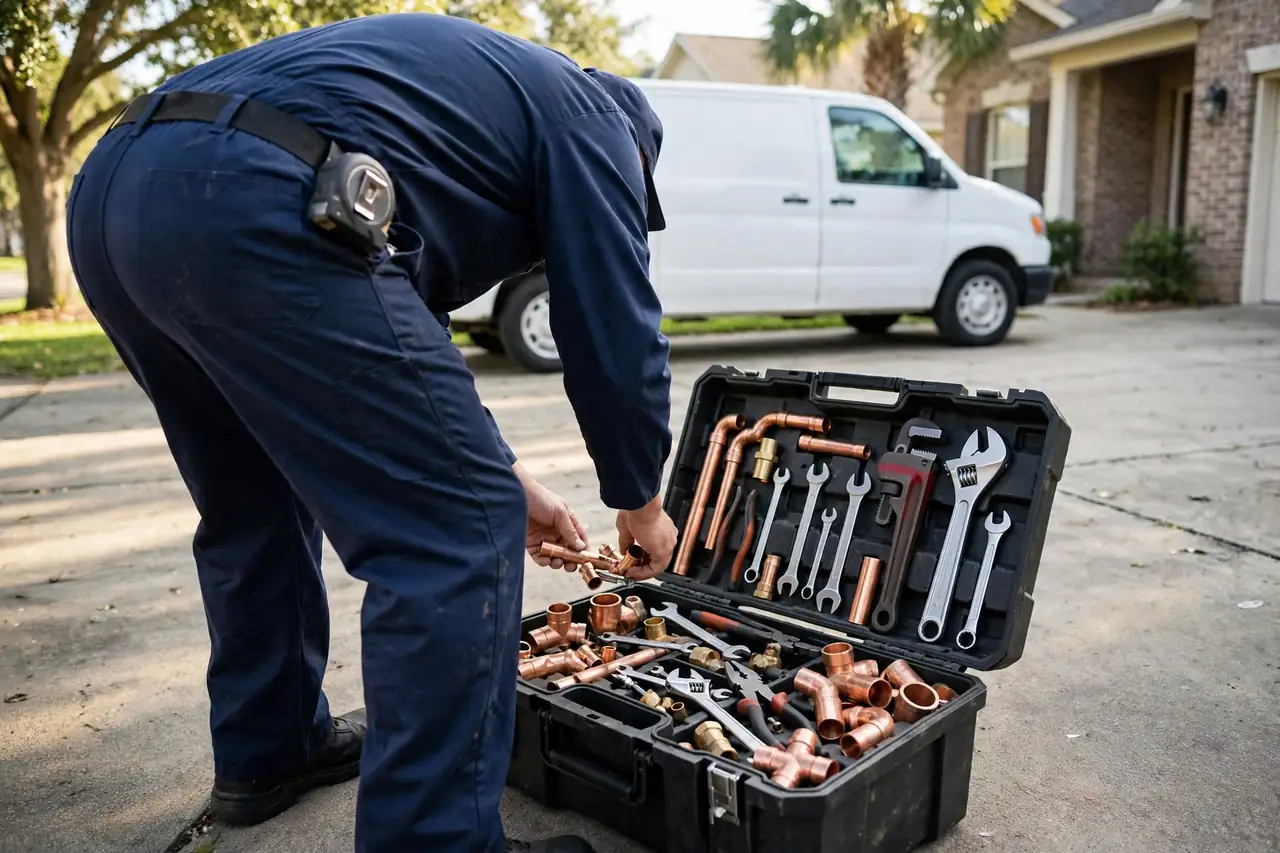
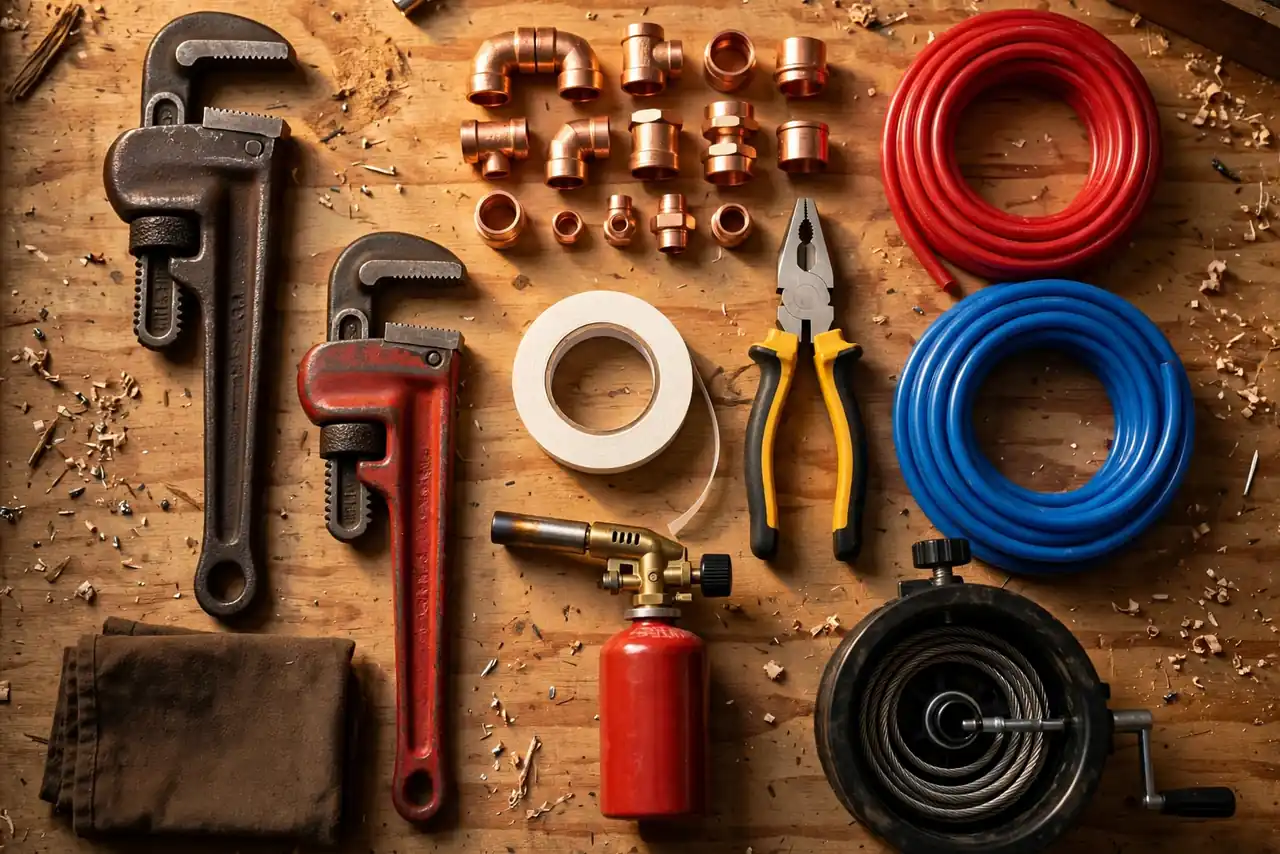
Makes copper connections without solder, which is faster and safer in tight garage or attic spaces where a torch is a fire risk.
Cuts copper and PEX cleanly so the connections seat properly and don't leak under pressure.

Checks the floor drain and condensate termination when a tankless flush backs up, so we know whether the issue is the unit or the drain line.
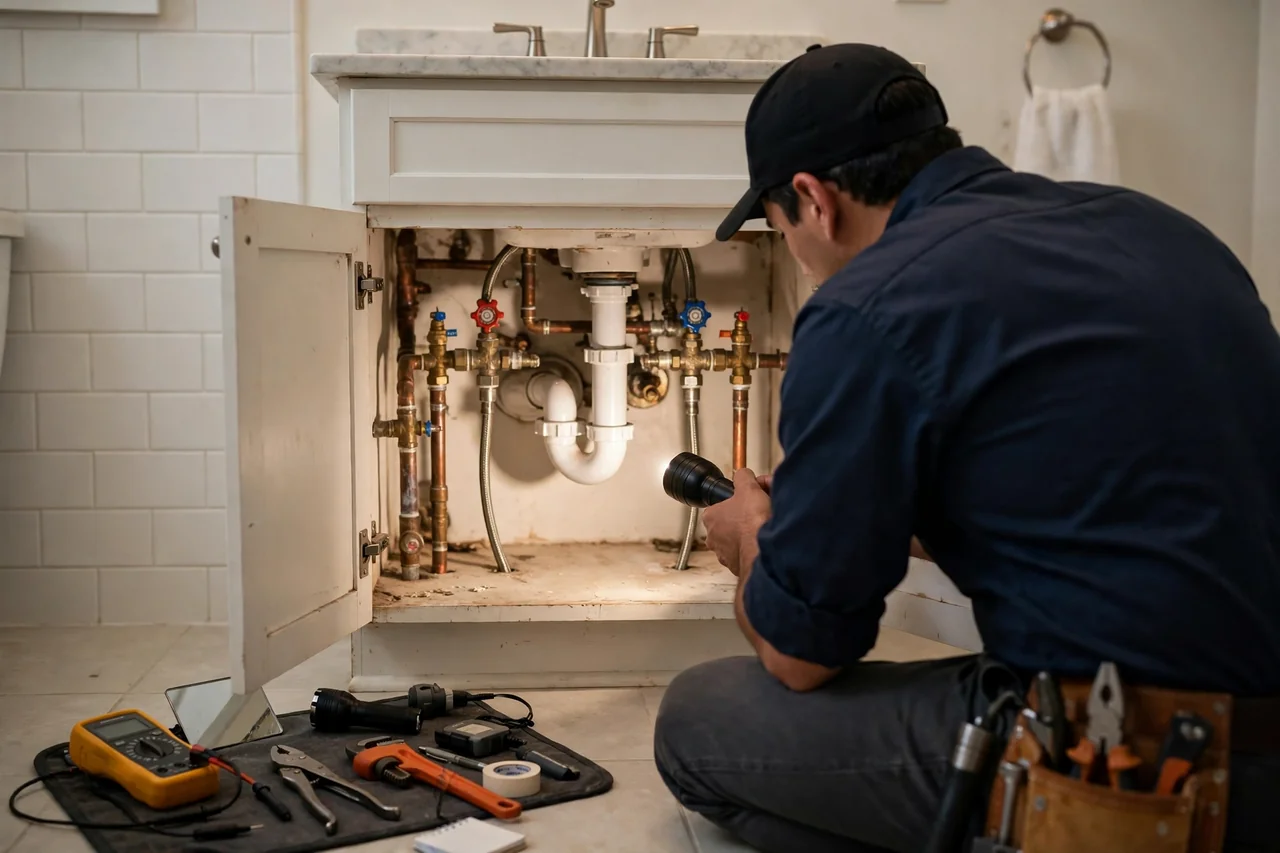
We size gas lines, vent the unit, and set clearances to the 2021 UPC with Houston Amendments, which is what the City of Houston inspector checks. That means the install passes the first time and holds up when you sell the house.
We pull the tank, check the gas line and venting for tankless readiness, and quote both a tank replacement and a tankless conversion so you can compare the numbers. Most homeowners pick tankless once they see the 20-year lifespan and the monthly gas savings, and they get it installed within a week.
We size a tankless unit to the household's peak demand, usually a 199,000 BTU model, and run the gas line and venting to match. Back-to-back showers and a running dishwasher no longer fight for hot water, and the gas bill drops 20 to 30 percent.
We work with the builder or contractor to size the unit, rough in the gas and venting, and coordinate the inspection with the City of Houston. The unit passes inspection first time and the homeowner gets a clean install with the registration paperwork filed.
We diagnose the code, test the component, and repair the actual failure instead of swapping the whole unit. Most repairs cost far less than a replacement.
Tankless is strongest in newer and larger homes in Memorial, River Oaks and the Galleria area, where gas capacity and venting allow it, and in the Heights where conversions need careful gas sizing. Descaling is the recurring job everywhere, because hard water is city-wide.
A family of five in Meyerland had a 12-year-old 50-gallon tank that ran out of hot water by the third shower. The gas line was sized for the tank, and the venting ran through the attic.
We installed a 199,000 BTU tankless unit on the garage wall, upsized the gas line to 3/4 inch, and ran new PVC venting. The family now runs three showers and a dishwasher at once with no temperature drop.
We set them on a 12-month descale and showed them how to check the inlet filter every six months. The unit is registered with the manufacturer in full.
A homeowner in the Energy Corridor had a tankless unit throwing a code and shutting off mid-shower. The first company quoted a full replacement.
We found a clogged flow sensor and a scale-bound heat exchanger. We replaced the sensor, descaled the exchanger, and reset the unit. The repair cost far less than a replacement, and the unit has run without a code since.
We installed isolation valves and set a descaling reminder. The homeowner now flushes the unit every 12 months instead of waiting for a failure.
A 1940s bungalow in the Heights had a tank in the attic and a 1/2-inch gas line that couldn't feed a tankless unit. The attic heat had already killed one tank's electronics.
We ran a new 3/4-inch gas line from the meter, mounted the tankless unit on the exterior wall, and vented it through the roof. The attic is now clear and the homeowner gained storage space.
The exterior mount stays cooler than the attic, and we set the homeowner on an annual descale. The unit has run two summers without an issue.
Tankless units fail in predictable ways, and most of them trace back to water quality, gas pressure, or a part that wore out. Here's what we see most often on Houston calls.
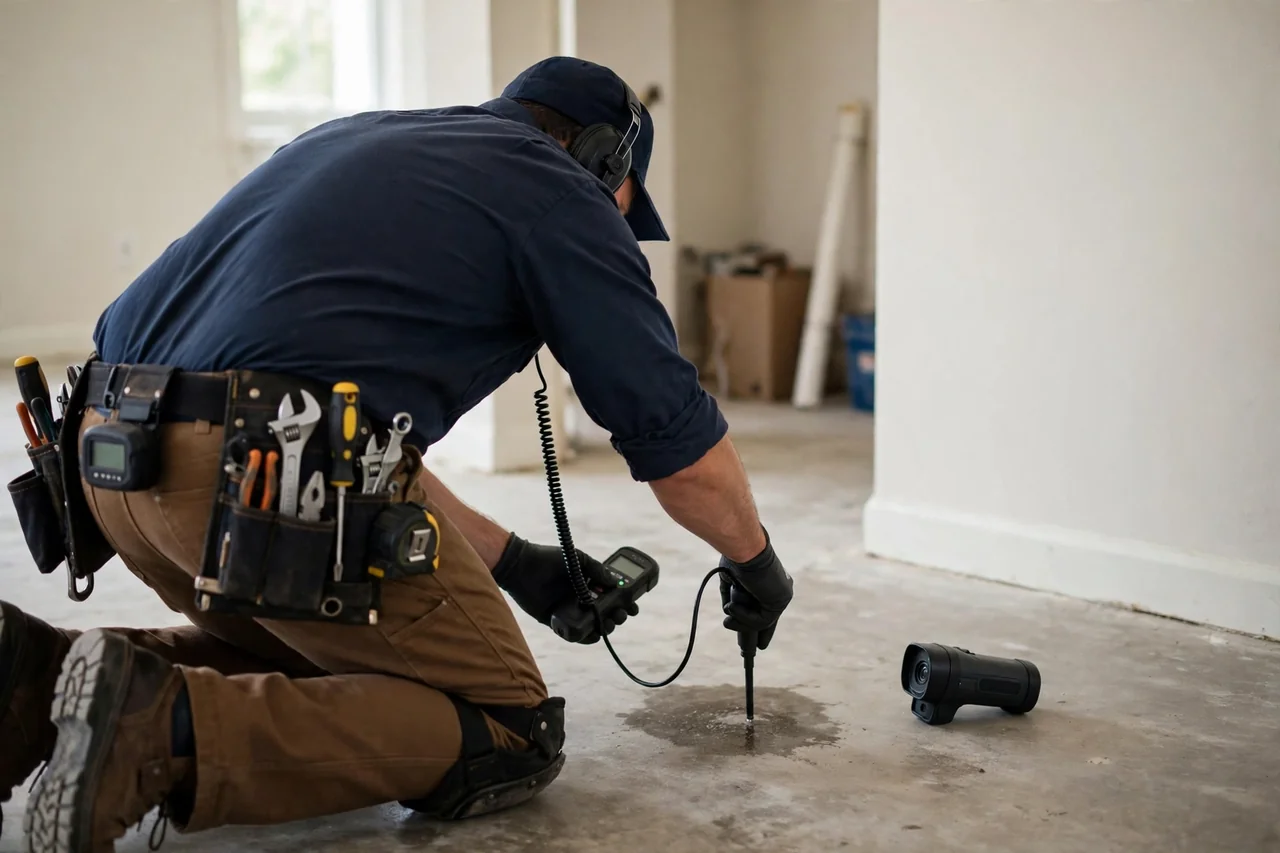
We pull the error codes, test the flow sensor and inlet filter, and descale the heat exchanger with a vinegar flush. Most of these repairs finish in one visit for a written estimate. A cold shower is annoying, but the underlying cause, usually a clogged flow sensor or a scale-bound heat exchanger, gets worse and can crack the exchanger if ignored.
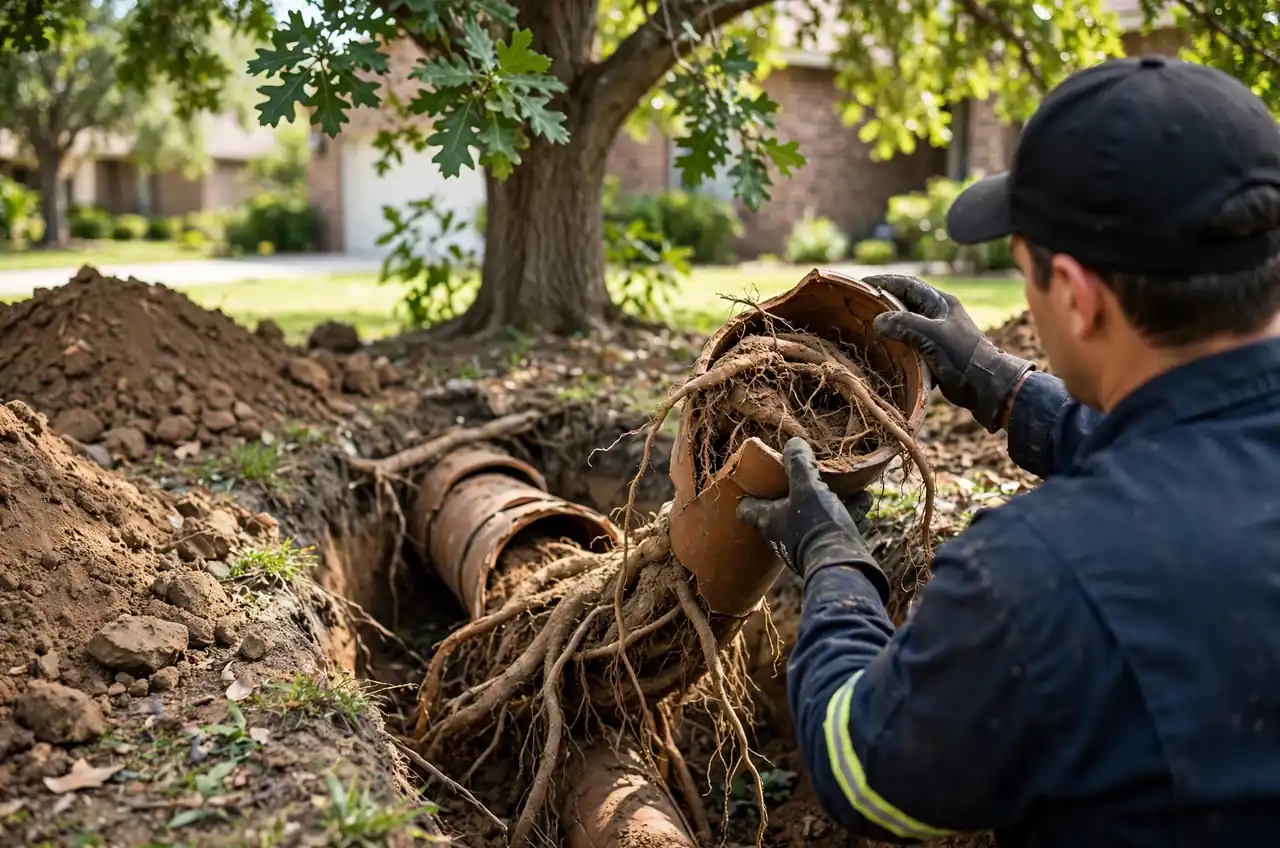
We read the manufacturer code, test the component with a multimeter, and replace only the failed part. We stock common igniters, flow sensors, and gas valves for tankless units. Some codes are minor, like a dirty filter, and some point to a failed gas valve or igniter. Guessing at the code can lead to a parts swap that doesn't fix the problem.
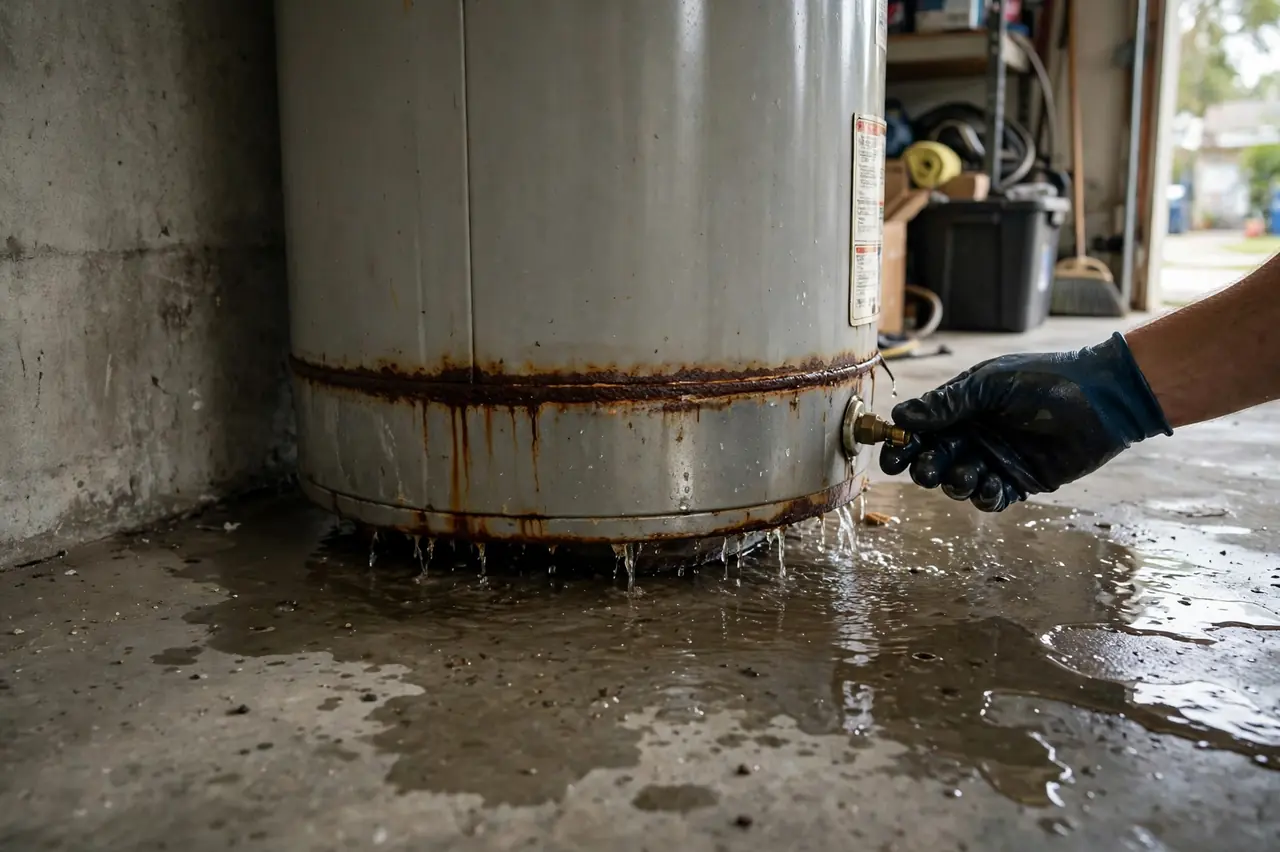
We clean the inlet filter, check the supply line size against the unit's GPM rating, and flush the lines. If the line is undersized, we quote a repipe of the run to the unit. Low pressure at the tap usually means a restricted inlet filter or a supply line that's too small for the unit's demand. It gets worse as scale builds up.
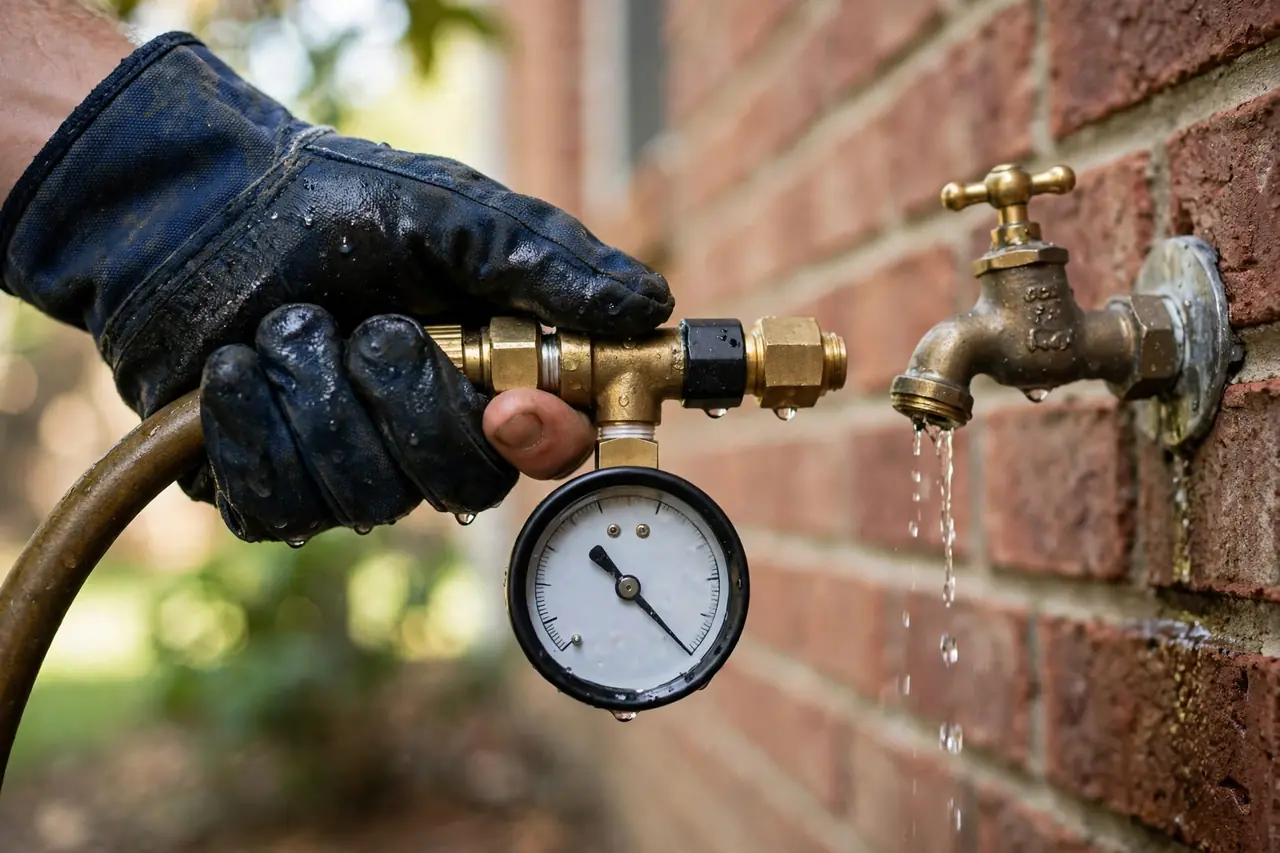
We trace the leak with a moisture meter, clear the condensate trap, and re-route the drain to a proper termination. If the trap is cracked, we replace it. A leaking condensate line can drip onto drywall, framing, or a garage floor and cause damage that costs more than the repair.
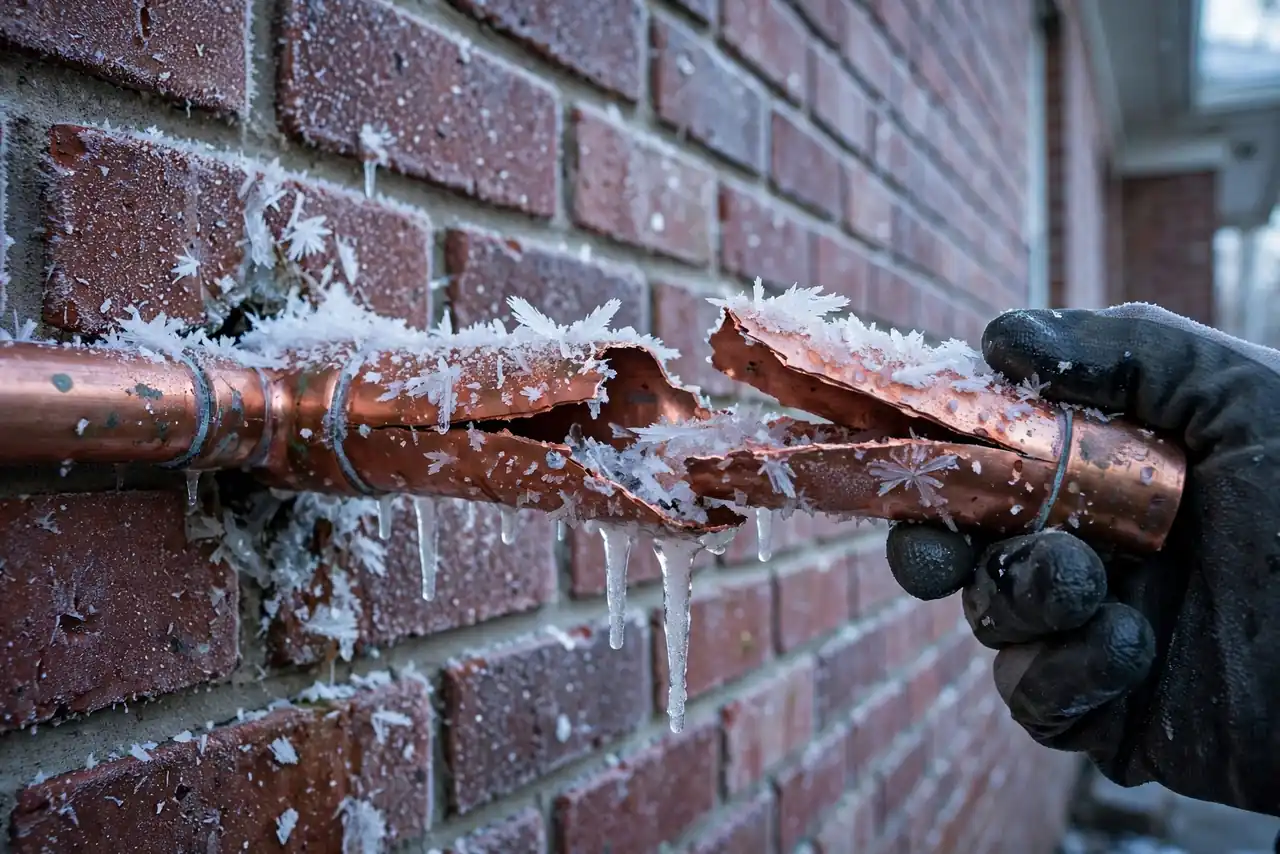
We check gas pressure with a manometer, test the igniter and flame sensor, and verify the electrical supply. Most no-fire calls trace to a failed igniter or a gas valve that needs replacement. No hot water for the whole house, and if it's a gas issue, there may be a safety concern beyond the water heater.
A properly sized tankless unit delivers hot water at 7 to 11 gallons per minute, so back-to-back showers and a running dishwasher don't fight each other. No more waiting 30 minutes for the tank to recover after the last person showers.
Tankless units run 20 to 30 percent more efficient than a standard tank because they don't keep 50 gallons hot all day. For a family of four in Houston, that shows up as real savings on the CenterPoint gas bill each month.
A tank lasts 8 to 12 years in Houston's hard water. A tankless unit with annual descaling runs 20 years or more. That's one install instead of two, and no emergency replacement in the middle of a holiday weekend.
A tankless unit hangs on the wall and takes up about 2 square feet. In a Heights bungalow or a Montrose townhome where the garage is tight, that space goes back to storage, a workshop bench, or a second car.
Clear records you can keep and share.
Flat price with gas, venting, and permit included
City of Houston permit pulled and inspection met
12-month flush plan with isolation valves installed
A tankless unit is sized by flow rate and temperature rise, not by how many bathrooms you have. Getting that number wrong is why some units run cold when two showers run at once.
A unit rated at 7 GPM delivers 7 gallons per minute at a specific temperature rise. In Houston, incoming water runs about 70 degrees, so the rise to 120 degrees is 50 degrees.
A 199,000 BTU unit needs a larger gas line than a 50-gallon tank. If the line is undersized, the unit short-cycles or won't fire, and the fix is a new gas run.
City of Houston water averages about 8 grains per gallon of hardness (about 135.5 mg/L in the City's Main System report), and groundwater-fed districts can run harder — either way, scale builds on the heat exchanger. Annual descaling with isolation valves is the difference between a 20-year unit and a 10-year one.
A tankless unit is not a tank with the tank removed. Here is how the two compare on the points that decide the choice.
| Tank water heater | Tankless water heater | |
|---|---|---|
| How it heats | A tank keeps a tank of water hot around the clock, so hot water is ready when a tap opens. | A tankless unit heats water on demand, and gives endless hot water only if the gas line, venting and descaling are right. |
| Sizing | Sized by the tank, for example a 50-gallon tank. | Sized by flow rate and temperature rise, not by how many bathrooms you have. A unit rated at 7 GPM delivers 7 gallons per minute at a specific temperature rise; in Houston the incoming water runs about 70 degrees, so the rise to 120 degrees is 50 degrees. Getting that number wrong is why some units run cold when two showers run at once. |
| Gas line | Runs on the gas line sized for the tank. | A 199,000 BTU unit needs a larger gas line than a 50-gallon tank. If the line is undersized, the unit short-cycles or will not fire, and the fix is a new gas run. |
| Hard water | Sediment builds up in the tank and wears the unit down. | Houston water is hard, which scales the heat exchanger. Annual descaling with isolation valves is the difference between a 20-year unit and a 10-year one. |
| When it fits | The right call when a part failure on a younger unit is worth fixing, and when the tank itself is sound. | The right call where endless hot water matters and the gas line, venting and descaling schedule are handled properly. |

Outside these areas? Call and ask if we can reach you. (346) 776-8560
Hard water makes descaling a recurring job here, not a one-off. How often depends on your water hardness and use. We check the unit, descale it, and give you a maintenance interval for your home rather than a generic number.
It depends on household size, gas capacity, venting and flood elevation. Tankless needs a correctly sized gas line and proper venting, and hard water makes descaling routine. We compare both options with a free estimate before you decide.
Yes. Like any water heater replacement, a tankless install needs a City permit pulled by a master plumber registered with the City, plus an inspection. Gas-line work is part of the same permit and inspection sequence.
Scale in the heat exchanger, gas supply problems and venting issues are the common causes in Houston. An error code is a symptom, not a diagnosis; we read the code, check gas, venting and scale, and fix the cause.
Call (346) 776-8560 for a free estimate on tankless install, repair or descaling. We check gas, venting and scale before we recommend anything, Monday to Sunday, 7:00 AM to 10:00 PM.
Call us at (346) 776-8560 to book tankless water heater service or ask a question. We are open Monday to Sunday, 7:00 AM to 10:00 PM, and estimates are free.
The fastest way to book is a phone call. Tell us what is happening and we will give you a free estimate and a time that works, Monday to Sunday, 7:00 AM to 10:00 PM.
Open Mon–Sun, 7:00 AM–10:00 PM. Free estimates.