Repair TipsLocal Guides
Why does my toilet keep running after I flush it
A toilet that keeps running after a flush is usually a worn flapper, a stuck fill valve, or a bad seal. Here's how to diagnose and fix it in Houston.
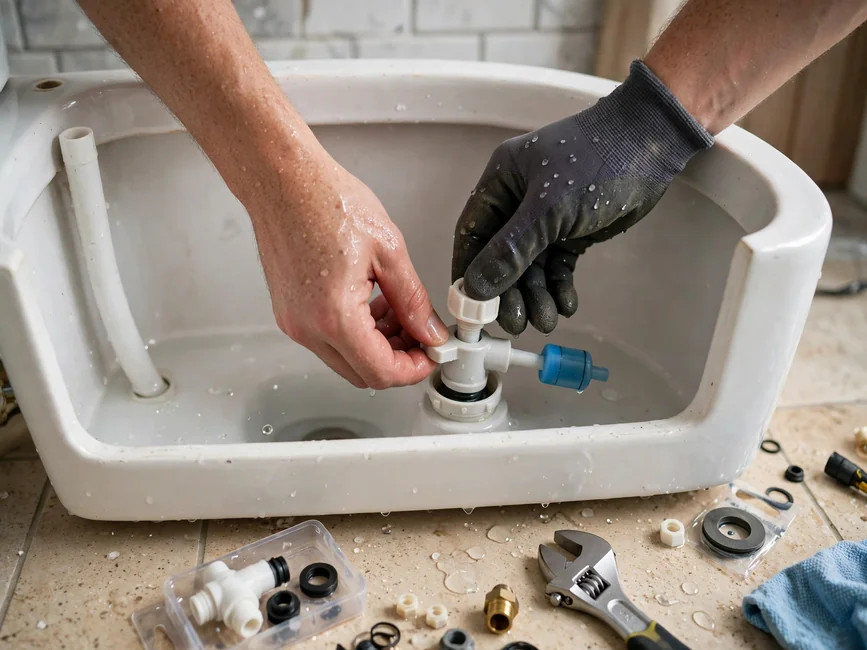
A toilet that keeps running after a flush is almost always caused by a flapper that no longer seals, a fill valve that won't shut off, or a stuck float. Those three parts fail far more often than anything inside the bowl, and each one is fixable. In Houston, the hard water and year-round humidity speed up the wear on rubber seals, so we see running toilets here more often than homeowners expect. This post walks through how to figure out which part is failing, how to fix it yourself if you want to, and when it makes more sense to call us.
The Usual Suspects: What Makes a Toilet Run
A running toilet in Houston is a tank problem, not a bowl problem. Water keeps flowing because something in the tank is telling the fill valve to stay open. Here are the parts that cause it, in order of how often we find them.
- Flapper: The rubber flap at the bottom of the tank. It lifts when you flush and drops back down to seal. A warped or mineral-crusted flapper lets water trickle into the bowl continuously.
- Fill valve: The tall assembly that refills the tank after a flush. If the valve's seal wears out or sediment jams it, water runs and never stops.
- Float: The ball or cup that rises with the water level and signals the fill valve to close. A misadjusted or waterlogged float keeps the valve open.
- Overflow tube: The vertical tube in the center of the tank. If the water level is set too high, it spills into the tube and drains into the bowl nonstop.
- Chain or handle: A chain that's too short holds the flapper open. A handle that sticks keeps the chain taut.
Most of these parts are inexpensive at a Houston hardware store. The diagnosis is the hard part, not the repair.
How to Diagnose a Running Toilet in Houston
Diagnosing a running toilet in Houston takes about five minutes and one drop of food coloring. You don't need special tools. Work through these steps in order and you'll know which part is failing before you buy anything.
Step 1: The Dye Test
Drop a few drops of food coloring into the tank, wait 15 minutes without flushing, and look in the bowl. If color appears in the bowl water, the flapper is leaking. That's the most common cause we find on toilet repair Houston TX calls, and it's the cheapest to fix.
Step 2: Watch the Water Level
Pop the tank lid off and flush. The water should rise to about an inch below the top of the overflow tube, then stop. If it keeps rising and spills into the tube, the fill valve or float is the problem. If it stops but you still hear water moving, the flapper is leaking.
Step 3: Listen After the Flush
A healthy toilet goes quiet within 30 to 60 seconds of a flush. If you hear a hiss or trickle that never stops, the fill valve is running. If you hear a periodic short burst every few minutes, the flapper is leaking and the valve is topping off the tank.
Step 4: Check the Chain and Handle
Lift the lid and look at the chain. It should have a little slack, about half an inch, when the flapper is closed. If it's tight, the flapper can't seat. Jiggle the handle, too. A sticky handle is a 10-minute fix.
How to Fix a Running Toilet in Houston
Fixing a running toilet in Houston is a DIY job for most homeowners, and the parts are cheap. Shut off the water at the valve behind the toilet before you start. Here's what each repair looks like.
Replacing the Flapper
Turn off the water, flush to empty the tank, unhook the old flapper from the overflow tube, and take it to the hardware store to match the size. Install the new one the same way the old one came off. Turn the water back on, flush, and run the dye test again. Total time: 15 minutes.
Replacing the Fill Valve
Shut off the water, empty the tank, and disconnect the supply line. Unscrew the old valve from under the tank, install the new one, and reconnect the supply. Set the float so the water level sits about an inch below the overflow tube. Total time: 30 to 45 minutes.
Adjusting the Float
If the float is just set too high, you don't need a new part. Turn the adjustment screw or slide the float down until the water stops about an inch below the overflow tube. Flush and check. Total time: 5 minutes. Cost: nothing.
Fixing the Chain and Handle
Shorten or lengthen the chain so it has a half-inch of slack when the flapper is closed. If the handle sticks, tighten the nut inside the tank or replace the handle. Total time: 10 minutes.
If the tank itself is cracked or the toilet is 20-plus years old and the parts are discontinued, replacement is often the better call. We handle toilet installation Houston TX and can tell you on the first visit whether a repair or replacement makes more sense.
Why Houston Water Makes a Difference
Houston water is hard, and that shortens the life of every rubber part in your toilet tank. The calcium and magnesium in the water leave mineral deposits on the flapper and valve seat, which keeps the flapper from sealing flat. We see flappers fail here in two to three years, while the same part in a soft-water city can last five or more.
The humidity doesn't help either. A toilet in a garage apartment or a rarely used guest bathroom stays damp, and rubber parts degrade faster when they never fully dry out. If you have a toilet in a spare room, flush it once a week. It sounds small, but it keeps the flapper from sticking to the valve seat.
Homes in older Houston neighborhoods, especially those built before 1980, often still have original brass fill valves. Those valves are durable but the rubber seals inside them are not, and replacement parts can be hard to find. If your toilet is that old and running, a full valve replacement is usually the right move.
Common Mistakes to Avoid
The most common mistake we see on running toilet calls in Houston is replacing the flapper without checking the valve seat. If the seat is rough or mineral-crusted, a new flapper won't seal either, and you'll be back where you started in a week. Run your finger around the seat. If it feels rough, clean it with a scouring pad or replace the seat.
Other mistakes we see:
- Over-tightening the chain. A tight chain holds the flapper open. Leave slack.
- Setting the water level too high. Water spills into the overflow tube and runs forever. Keep it an inch below the top.
- Ignoring a running toilet for months. A running toilet can waste 200 gallons a day or more. That shows up on your Houston water bill fast.
- Using the wrong flapper size. Flappers are not universal. Match the old one exactly.
- Skipping the shutoff valve. If you don't shut off the water first, you'll flood the bathroom.
One more: don't pour chemical drain cleaner into the tank to "clean" the parts. It doesn't help and it can damage the rubber.
When to Call a Professional
Call a professional when you've replaced the flapper and the toilet still runs, when the tank is cracked, or when the shutoff valve behind the toilet won't close. Those are the three situations where DIY turns into a bigger repair. A shutoff valve that won't close means you can't isolate the toilet, and that's a job for someone with the right tools.
We also get calls when a running toilet is paired with a high water bill and the homeowner can't find the source. Sometimes the toilet is one of several leaks. We can check the whole system while we're there. If you're dealing with a running toilet alongside other issues, our plumbing repairs Houston TX team handles the full list in one visit.
El Primo Lalo Plumbing is a local Houston plumbing company. We diagnose the problem, give you a free estimate before we start, and fix it when the parts are on the truck.
Frequently Asked Questions
Why does my toilet keep running after I flush it in Houston?
The flapper is the most likely cause. Houston's hard water coats the rubber with minerals, so it stops sealing flat. A fill valve that won't shut off or a float set too high are the next most common causes. The dye test tells you which one in 15 minutes.
How do I fix a running toilet in Houston TX?
Shut off the water, empty the tank, and replace the flapper first. That fixes most running toilets. If it still runs, replace the fill valve. Both are 15- to 45-minute jobs with basic tools.
Can a running toilet raise my water bill in Houston Texas?
Yes. A running toilet can waste 200 gallons a day or more. That shows up on your Houston water bill fast — fixing it usually pays for itself in the first billing cycle.
Who repairs running toilets in Houston?
El Primo Lalo Plumbing repairs running toilets across Houston. We handle flappers, fill valves, floats, and full toilet replacements. Call (346) 776-8560 and we'll get it scheduled.
When should I call a plumber for a running toilet?
When you have replaced the flapper and the toilet still runs, when the tank is cracked, or when the shutoff valve behind the toilet will not close. Call (346) 776-8560 and we will diagnose it and give you a free estimate.
Get Help with Plumbing in Houston
A running toilet is a small problem that gets expensive fast. If you've tried the dye test and the flapper swap and it's still running, call us. We'll find the cause, fix it, and check the rest of your plumbing while we're there. For a Houston plumber who shows up when we say we will, call El Primo Lalo Plumbing at (346) 776-8560.
We take calls Monday through Sunday, 7:00 AM to 10:00 PM.